Memory is rarely simple or one-dimensional. Rather, it is multi-layered and informed by various historical and ideological lenses. Similarly, the experience of people in Derry has been framed by the existence of walls, which have characterized the long-standing conflict between Catholic nationalists and Protestant unionists throughout Northern Ireland. The city’s first walls were built four hundred years ago to shelter Protestant settlers from the predominately Catholic population of the region, and the fortifications successfully protected residents during the Catholic King James II’s siege in the late 1680s (https://discovernorthernireland.com/17th-Century-City-Walls-Londonderry-Derry-P7097/; https://www.culturenorthernireland.org/features/heritage/siege-derry).
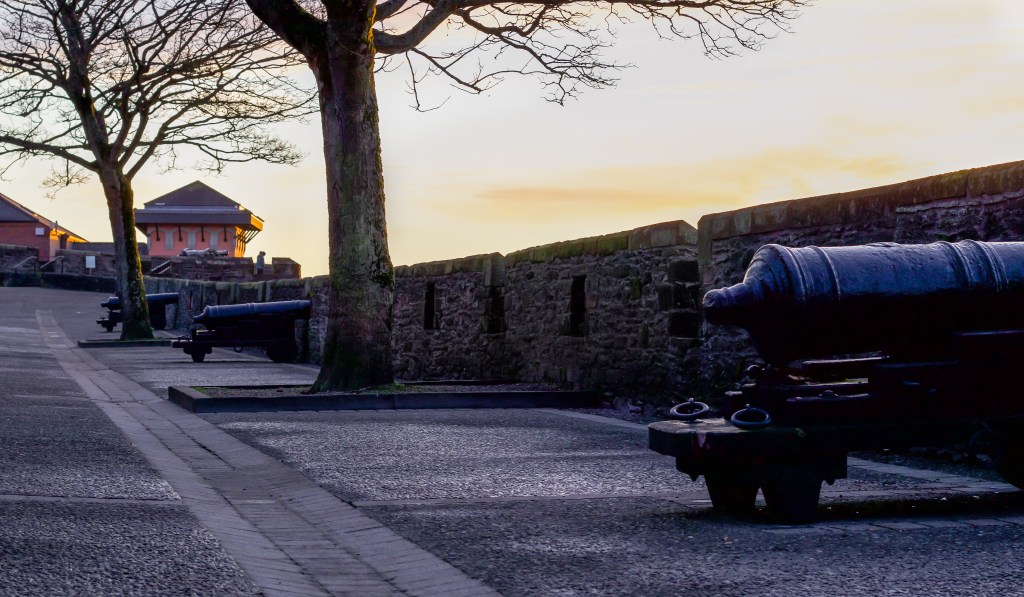
Although the era of vast battles and siege warfare had long since passed by the mid-twentieth century, walls once again hallmarked conflict during the time of the Troubles. The city walls themselves served as lookout points and defensive positions for British security forces against republican opposition, and a so-called “peace wall” was erected in the Protestant Fountain estate in the 1970s (Tower Museum; Derry Peace Wall, plaques on Bishop Street Within).
In the years since the signing of the Good Friday Agreement in 1998, walls continue to symbolize political division, as well as efforts to foster peace, through the creation of murals. One such painting, located in the Fountain district, proclaims that Derry loyalists are “still under siege” and recalls the Catholic attack on the city centuries prior with the words “no surrender.” In contrast, a mural in the Bogside area portrays the “Death of Innocence,” depicting fourteen-year-old Annette McGavigan, who was killed during riots in 1971, in remembrance of all child victims of the Troubles (https://www.irishtimes.com/news/mural-for-the-child-victims-of-troubles-1.222763).
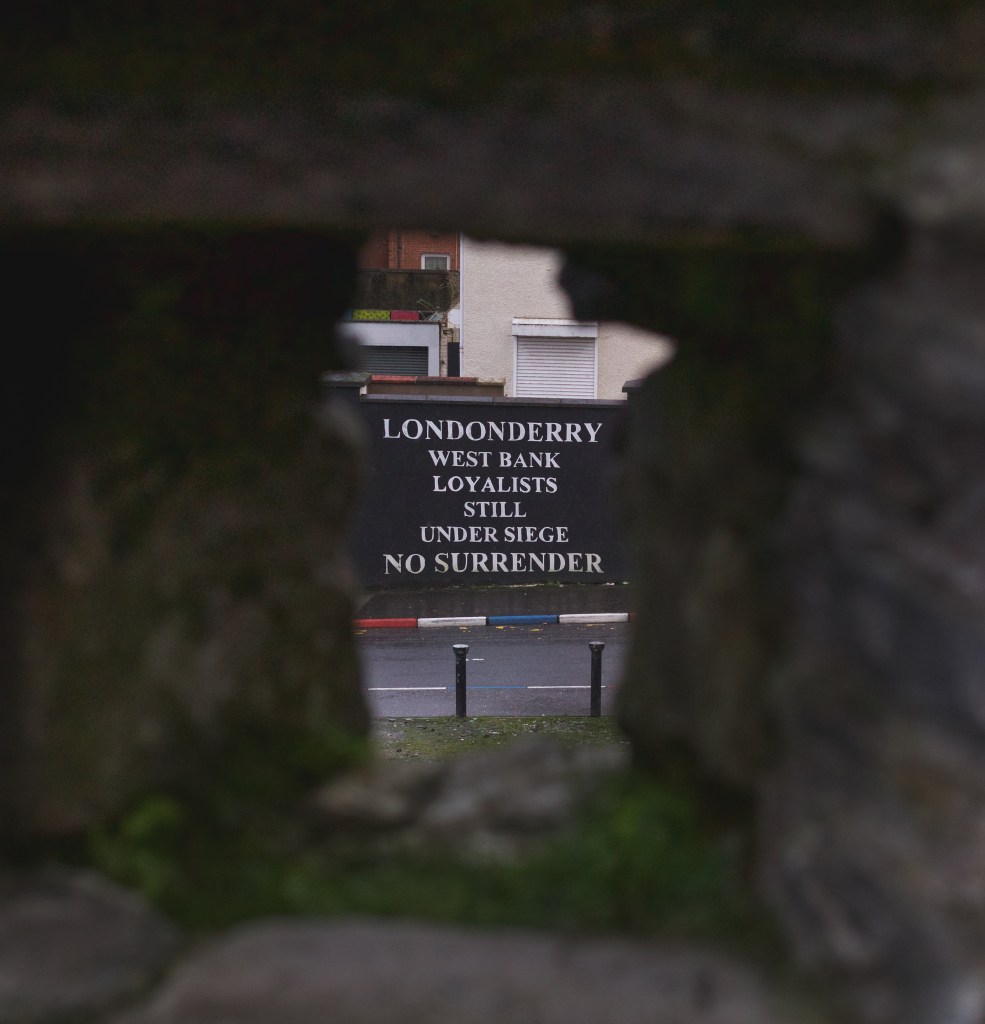
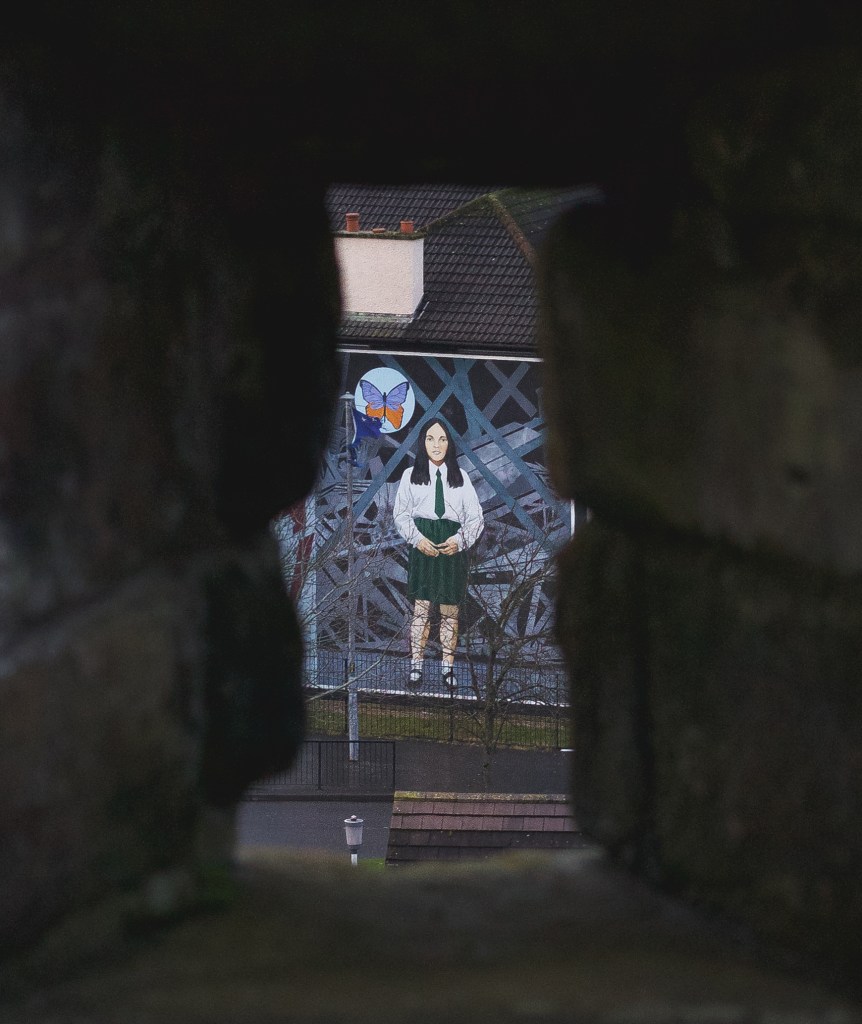
Views of murals from openings in the city walls.
Indeed, walls have transformed from physical barriers to canvasses for self-expression, political discourse, and remembrance, embodying the ever-present legacy of conflict in Derry.
 SOCI 387 Diversity, Conflict, and Peace in Northern Ireland