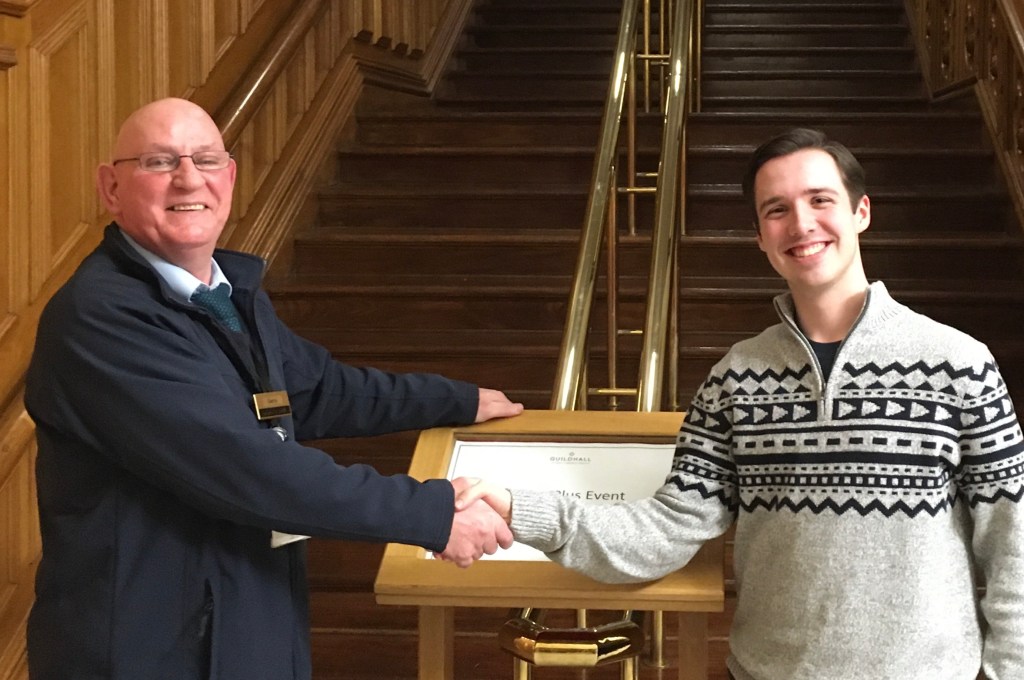
Meet Gerry, a tour guide at Derry’s Guildhall and the Tower Museum. Born in the Creggan, he witnessed the oppression of the Catholic community from an early age. When violence broke out at the height of the Troubles, an eleven-year-old Gerry and his friends, having no understanding of the political forces in conflict with one another, saw the fighting simply as an adventure. But as Gerry grew older, he came to recognize the deep divisions that he and other children, on both sides, were being taught as a fact of everyday life: Our cause is good, and theirs is evil.
“People say bullets have your name on it, but in Northern Ireland the bullet says ‘to whom it may concern.’”
As we have learned, sectarianism has deep roots in Derry, but the division came to a boiling point as Gerry reached adolescence. Taking inspiration from American civil rights movements, the Catholic community spoke out against the injustices of unionist government, and eventually the British Army was deployed to restore order. If the government would have only given the Catholics “one more slice of cake,” Gerry explained, perhaps the violence could have been prevented. Sadly, neither side yielded any political ground, and fighting erupted in the streets of Northern Ireland.
Gerry felt the foreboding skies over Derry grow darker when his father, an innocent bystander, was caught in the crossfire of a gun battle between British and republican forces. “People say bullets have your name on it, but in Northern Ireland the bullet says ‘to whom it may concern.’” Indeed, the widespread violence was no respecter of persons, and Gerry had considerable cause to feel hatred during that time, being repeatedly stopped and arrested by British patrols.
In the months following his father’s death, Gerry approached a crossroads: He could either harbor anger towards those who had hurt him, his family, and his community, or he could try to broaden his “sight.” He chose the latter path and soon dove into Irish history in hopes of understanding the longstanding conflict from various perspectives, even that of Protestants. Years later, he discovered what he believes to be the core of the conflict. Throughout Ireland’s history, Gerry told me, there have lived three peoples: the Presbyterian Scottish, the Anglican English, and the Catholic Irish. After James I ordered the Plantation of Ulster, which gave Anglicans dominance on the island, the three groups fell out of touch with one concept—trust. In Gerry’s opinion, the Troubles occurred because of a lack of trust between Catholic nationalists and Protestant unionists. In recent times, only two men, Ian Paisley and Martin McGuinness, have been able to rediscover that invaluable ideal.
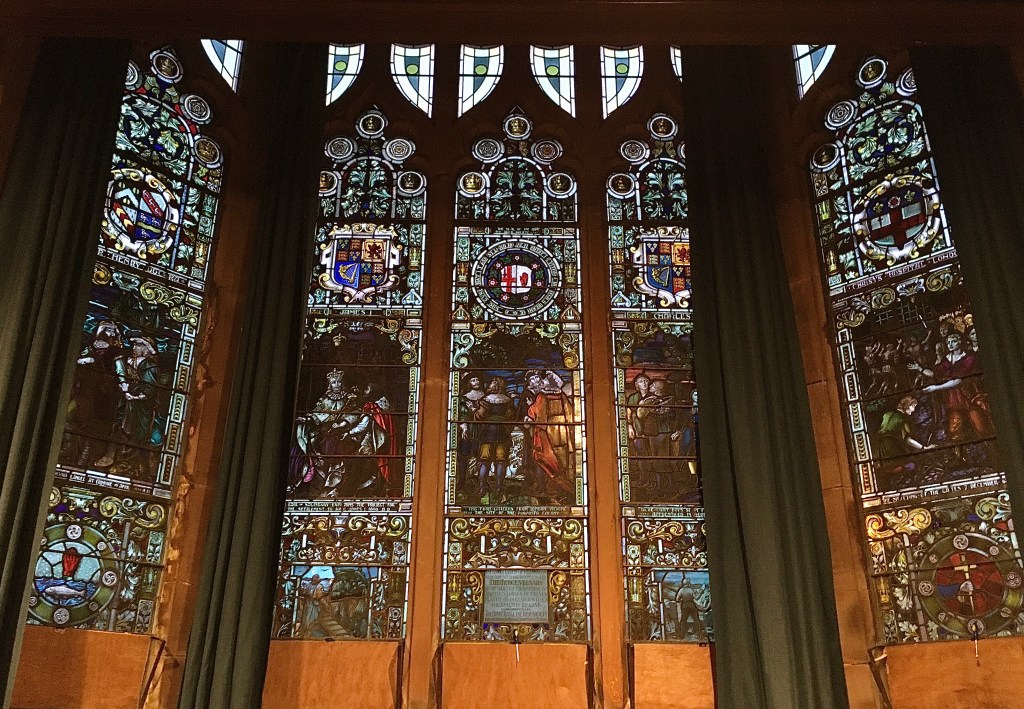
Nevertheless, Gerry has a message of hope for the people on his tours, that peace can be achieved in Northern Ireland. Trust is essential to any effort for reconciliation, as is the ability to let go of the past. Ultimately, however, all human beings—including members of the IRA, the RUC, and the UDA—are flawed creatures. The human answer to difference is conflict, and so we must trust in a higher Power in order to find forgiveness, for ourselves and for others. Only God can provide lasting healing and peace, and His love will never end. This is even echoed in Northern Ireland’s national motto “Quis separabit?”, which is derived from the Latin translation of Romans 8:35, “Who shall separate us from the love of Christ?” [1].
Gerry has much hope for the future of his homeland, and he encourages others to heed the words of the apostle Paul in his letter to the Philippians: Forget what is behind, move toward what is ahead, and make peace in Northern Ireland.
 SOCI 387 Diversity, Conflict, and Peace in Northern Ireland