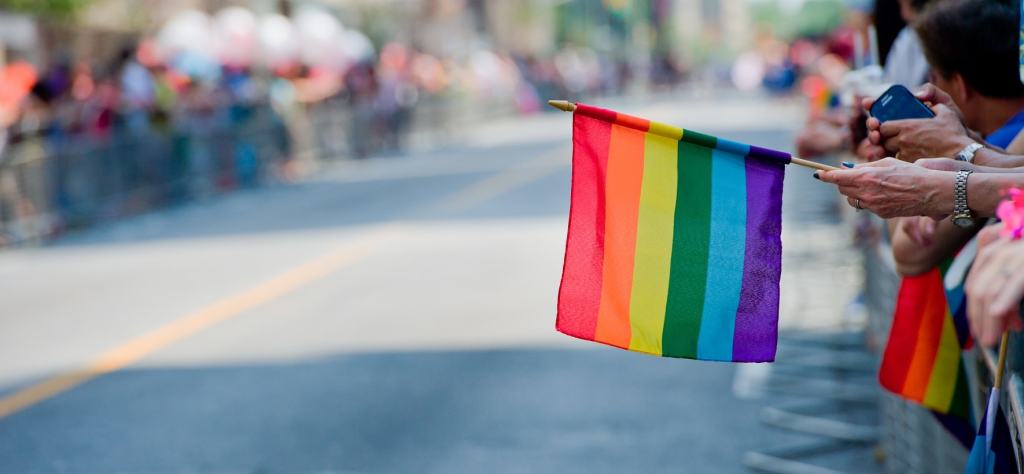
Since the Good Friday Agreement, Northern Ireland has spent much of its sociopolitical and cultural efforts on peace-building and reconciliation between the Catholics/Nationalists and the Protestants/Unionists. The Troubles were a time so focused on the conflict between these two groups, that progress for other minority groups was neglected. It has been expressed to me by locals that Derry is a generation behind the United States when it comes to “human rights” issues and I believe this is partly due to The Troubles.
While engaging in conversation with a local community leader in Derry who works with the LGBTQ+ community, I learned that the sectarian society, in combination with the stigma surrounding a non-religious identity, creates a conflicting dichotomy for the LGBTQ+ youth in Northern Ireland. In my experience in America, LGBTQ+ individuals often find comfort in a community outside of a religious context, but in a sectarian society such as Derry, that isn’t always an option for LGBTQ+ individuals. In some instances, upon coming out, LGBTQ+ youth in Derry experience an exclusion from their religious community as their church still opposes non-heterosexual identities. I found this to be disheartening, and when I expressed this to the local community leader, she expressed hope in the way that people’s opinions are changing. Additionally, in our conversation, there was an emphasis on the youth today explicitly and how they can enact the change that they feel is necessary.
As a member of the younger generation that she was referring to, I appreciated her encouragement, but also I felt a fair bit of pressure. While hope in the younger generation has been expressed, change does not solely rest in their hands. In fact, as of January 13, 2020, same-sex marriages are legal in Northern Ireland, which was a win for the LGBTQ+ community. This video provides a history of the Northern Ireland same-sex marriage debate.
Beyond legislature though, there are local community groups working to promote a cultural shift in Northern Ireland surrounding the LGBTQ+ community, as well as providing support for members of that community in ways that the government has yet to do so. The Rainbow Project, one of these organizations in Derry, describes themselves as a “health organisation that works to improve the physical, mental & emotional health and well-being of lesbian, gay, bisexual and/or transgender people in Northern Ireland” (https://www.rainbow-project.org/about-us). To learn more about the work that they are doing, follow this link to a video that describes their services, or feel free to use the link to explore their wesbite.
Ultimately, the LGBTQ+ community in Northern Ireland has not progressed as far when compared to other countries. However, progress is beginning to be and continuing to be made, and the invididuals in Derry do express a hope for the future LGBTQ+ community. Additionally, through the community leaders that I have met while in Derry, I also have hope for the future of minority groups in Northern Ireland.
 SOCI 387 Diversity, Conflict, and Peace in Northern Ireland