Forgive and Go Forward

“It is not “forgive and forget” as if nothing wrong had ever happened, but “forgive and go forward,” building on the mistakes of the past and the energy generated by reconciliation to create a new future.” -Alan Paton

Over the past month here in Northern Ireland I have learned so much about the people and the culture here. As a social worker I am always interested in learning more about how a person’s environment impacts who they are. The people of Northern Ireland have shown me how resilient they are even after going through so many traumatic experiences. I have learned how important dialogue is in the healing and restoration process, which I hope to use more of in my work with youth at my internship with Communities in Schools. The people here have taught me a lot about forgiveness as well. In one of our sessions Richard Moore said “I am a victim of the Northern Ireland conflict, but I refuse to be a victim of anger.” This quote really stuck with me because I think this may be the key to peace building in Northern Ireland. I think this mindset is needed to encourage the healing process for all and move past the trauma of the past. 
In addition to learning a ton about Northern Ireland, I have learned a lot about myself along the way as well. This experience has taught me about how much I take for granted my life in Washington. We are so lucky to live in a place with relatively low conflict compared to what the people here have had to go through. This experience has made me want to explore more career paths that involve peace and reconciliation within communities. Lastly, this trip has allowed me to build friendships with some of the most intelligent, kind, and positive people. Every person in this group has taught me something different and I am so grateful to have gotten to learn from, and along with, this group of incredible students and professors. I have had the best time ever and I cannot wait to come back to visit one day!
How Do I Even Begin?…

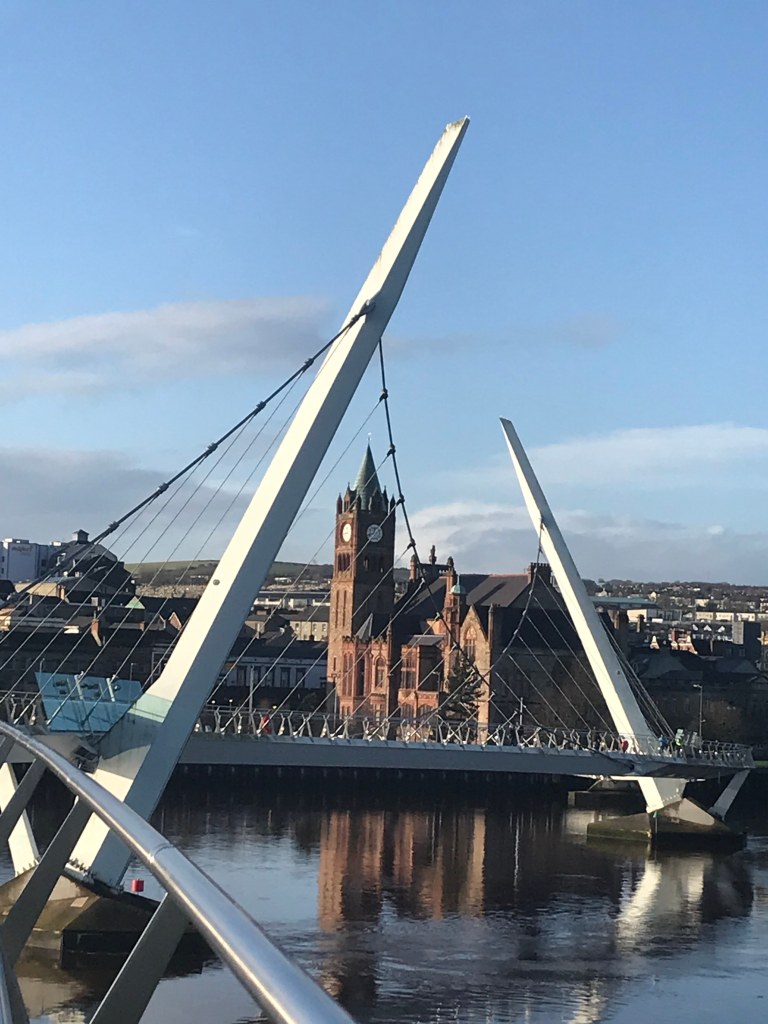
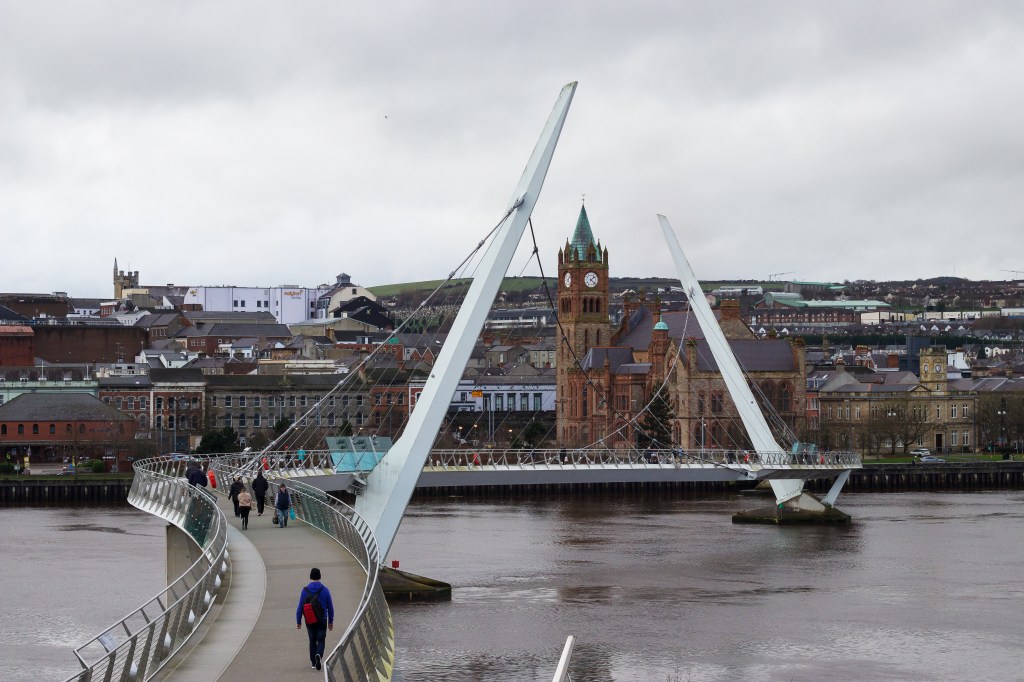
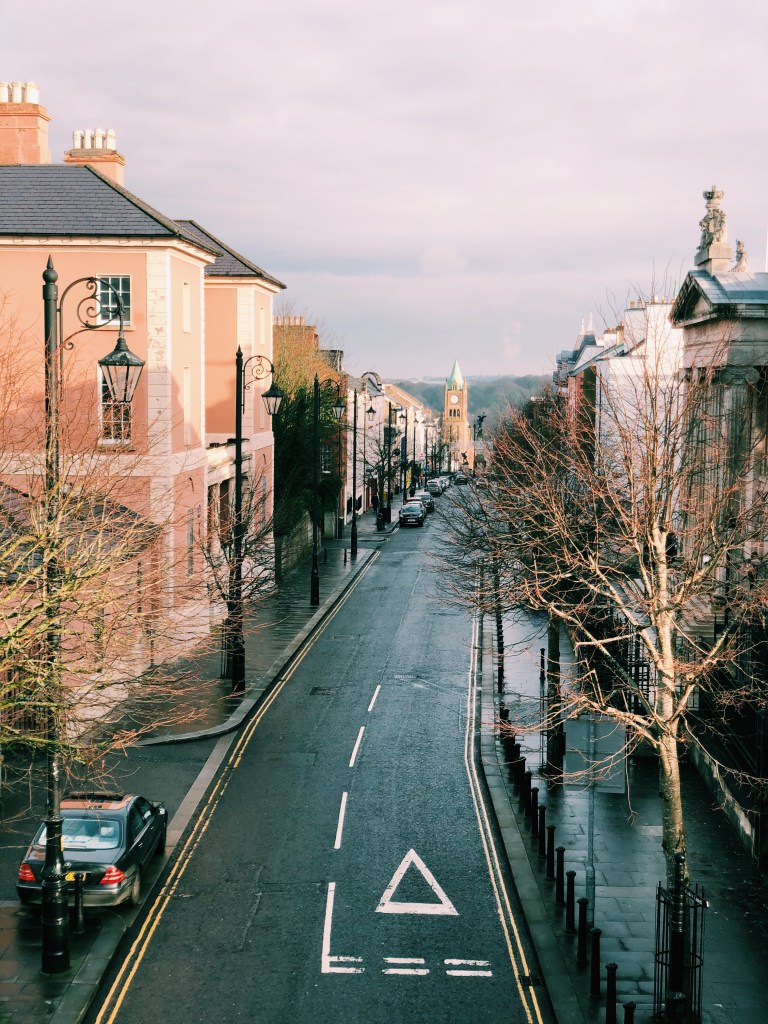
Guild Hall from the Derry Peace Bridge

I’m sitting here, with a half finished cup of coffee, and still don’t know how I am going to sum up this experience in one blog post. This trip has changed me in ways that I can’t explain. It has opened my eyes to a country’s experience with trauma and pain, and how individuals and organizations have begun to cope with that. It has shown me a group of truly authentic people eager to share their stories, and eager to hear my own. It has opened my eyes to a beautiful location in the world with geographic features that often resemble the residents of this country: tough, resilient, and deeply stunning.

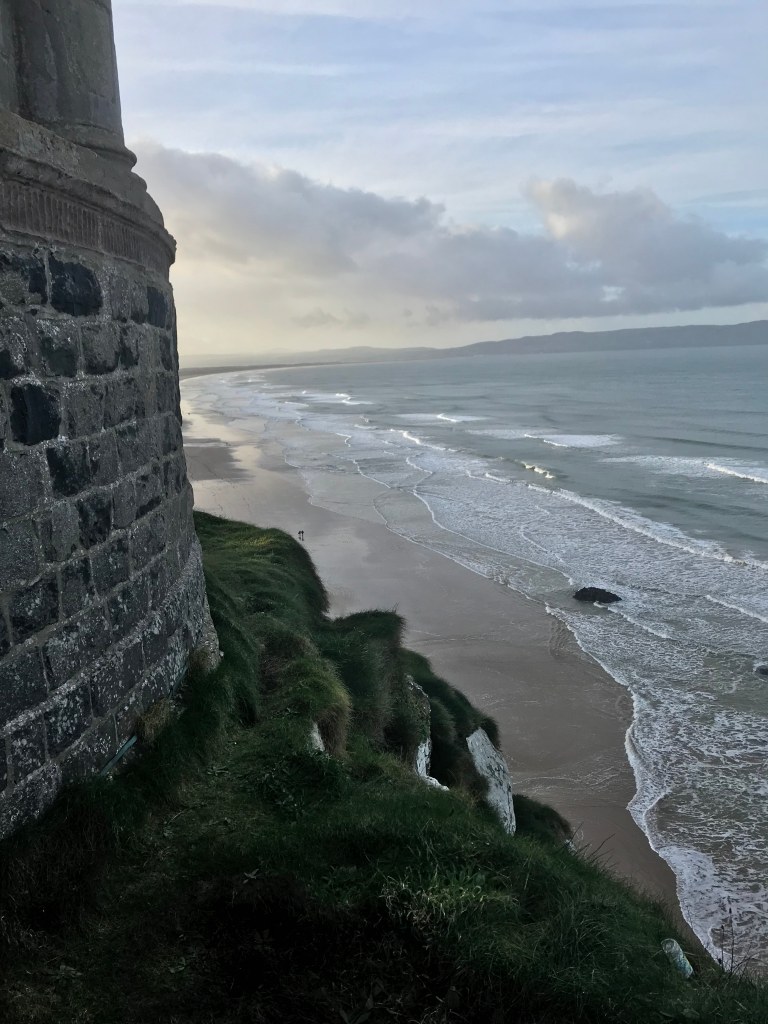
Mussenden Temple at Castlerock

This trip was by no means an easy one. Between lectures, activities, and experiences we were constantly hearing about the depth of the issues here in Northern Ireland and how difficult it had been and will be for peace building residents here to continue their work. It would be difficult if not impossible to find an individual here in Derry unaffected by the Troubles. The wounds are deep and personal, which does not lend itself easily to peace building, communication, and collaboration projects. The narrative of “us and them” is still prevalent in the community.

Despite all of these issues, though, I do see hope for this place. The people here, regardless of “side,” are set to never repeat the violence like they did years ago. The progress is slow, and institutions are still set in the binary way of thought, but there are those who are choosing to step outside of the “us and them” mentality to help create a holistic and inclusive community. There is hard work being done by individuals who see the value in their constant efforts. There are those who share their story and allow others to share theirs in hopes for a better future. For me, hearing the stories of these brilliant and hopeful people was my favorite part of the class.

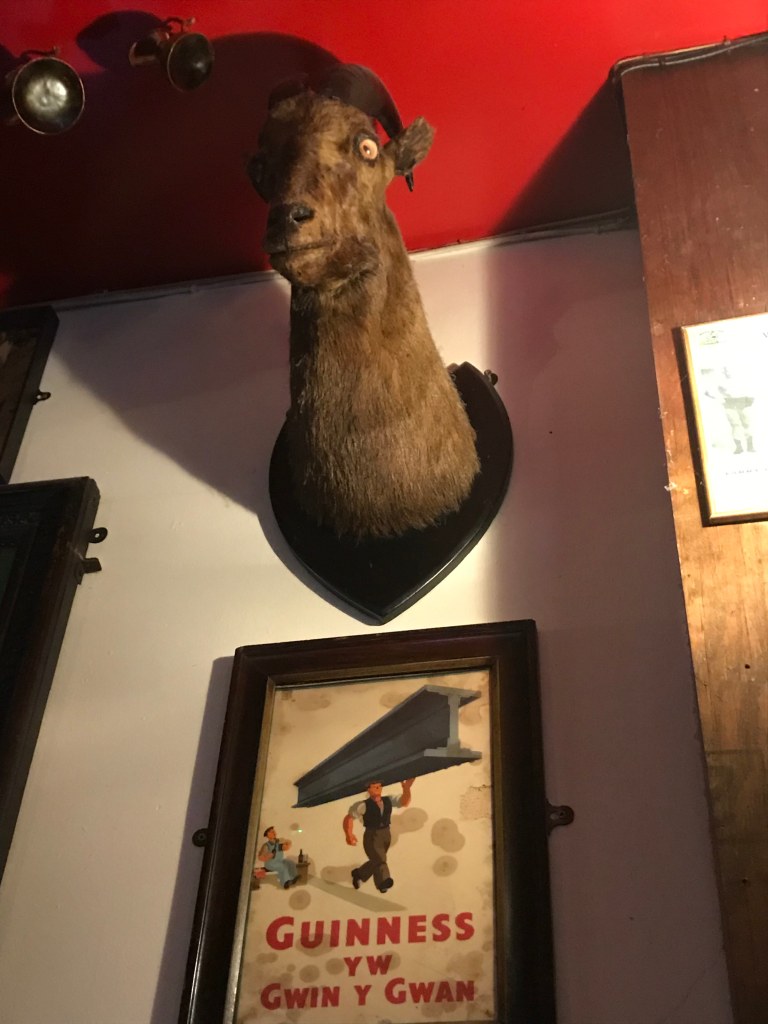
This Goat at Peader O’Donnell’s Seems Surprised to See so Many American Students in Derry!

All I can say now is thank you. Thank you to Professor LG, Ann, and Brian for leading us on this crazy adventure and refusing to allow us to complacently spend time in this city without understanding the history, sociology, and politics of this place first. Thank you to my classmates for constantly changing and challenging my perspective. Thank you to all of our speakers and workshop leaders who shared their personal experiences with us and helped us get a glimpse of Derry. And thank you to the people of Derry, with rich stories and boisterous laughter that made this trip truly unique and special.

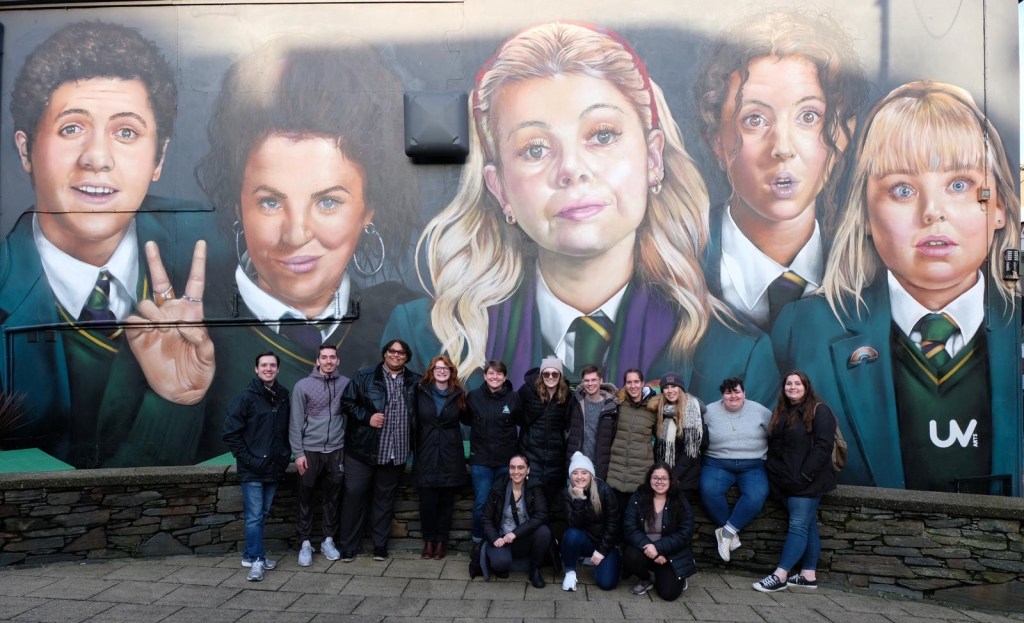
Our Class next to the Derry Girls Mural: Photo by Professor LG

Peace Out: A Final Reflection on Our Time in Derry

In a country fraught with conflict, it sounds odd to say that I have found peace here. It is hard to explain, really, but my experiences in Derry have given me a sense of hope and assurance that I had not expected to receive. My definition of peace itself has been broadened over the course of the month, granting me a fresh understanding that incorporates ideas of perseverance, listening, and trust.

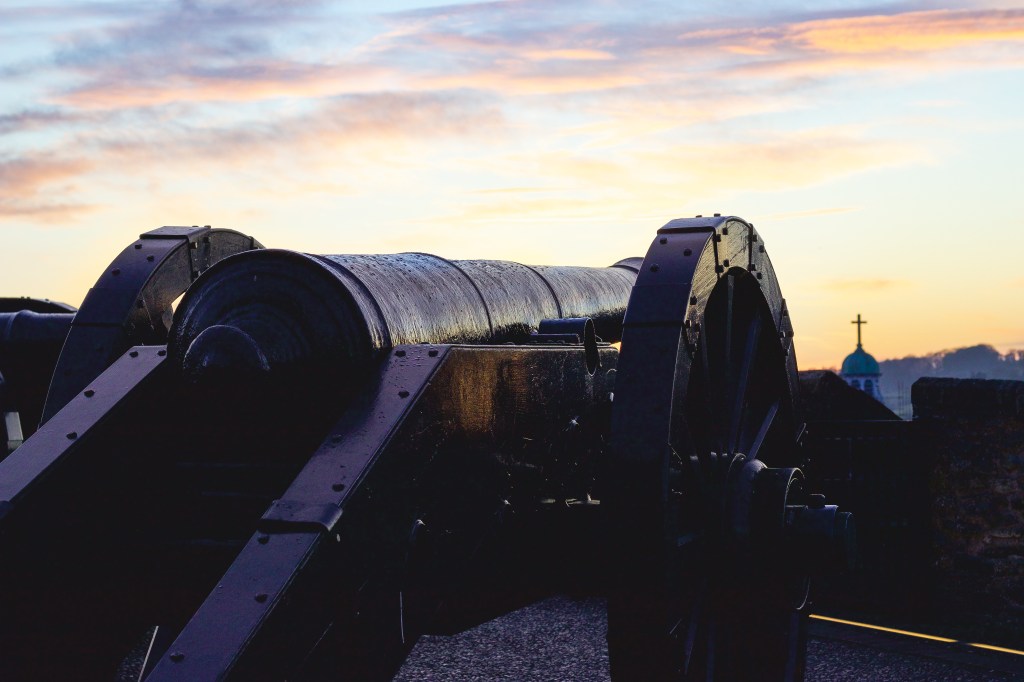
“Roaring Meg” at Double Bastion

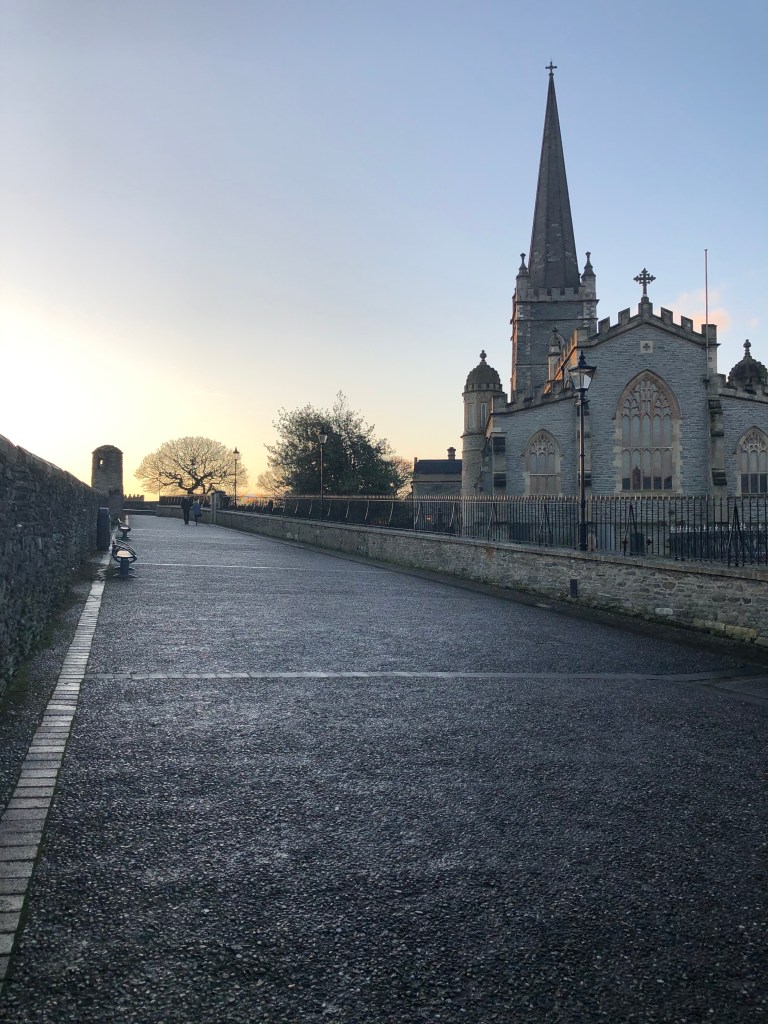
For me, the single most significant landmark in the city is the walls. Being the subject of my first blog post, Derry’s fortifications have been a place where I can walk, reflect, and take in the various sights within and outside of the city center. The walls also figure into a greater overarching theme of perseverance that appears throughout Derry’s history: In 1689, starving residents withstood James II’s months-long siege, and their survival prevented him from conquering Ireland, Britain, and ultimately Western Europe. Three centuries later, during the Troubles, individuals of both CNR and PUL communities endured much violence and suffering amidst riots and street warfare. Today, people such as Eamonn Baker, Maureen and Richie Hetherington, and many others tirelessly promote peace and reconciliation in the region.

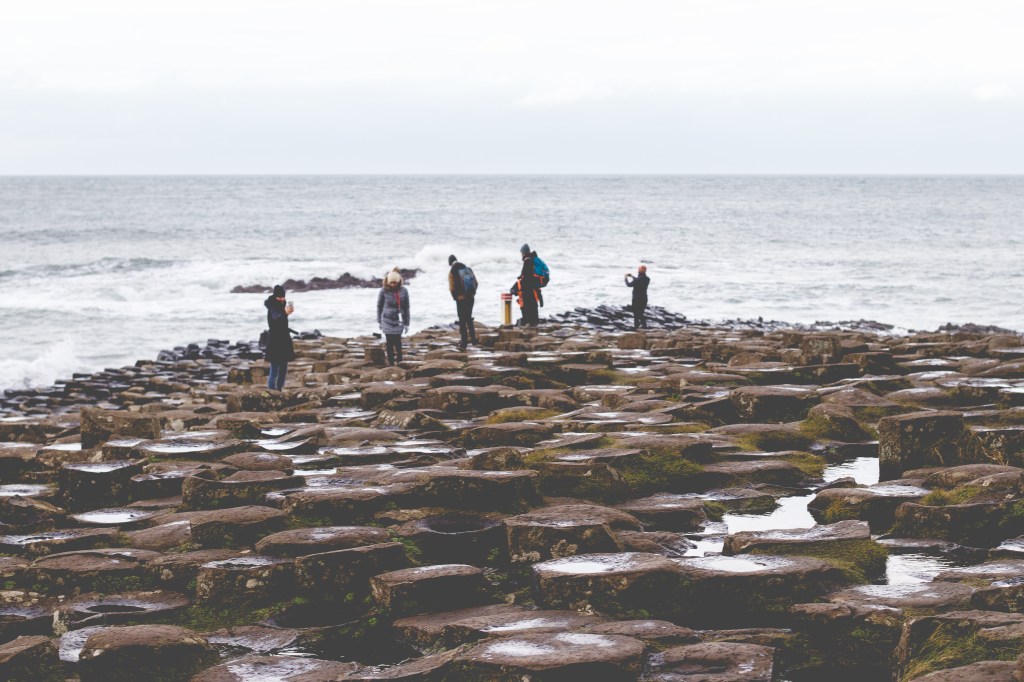
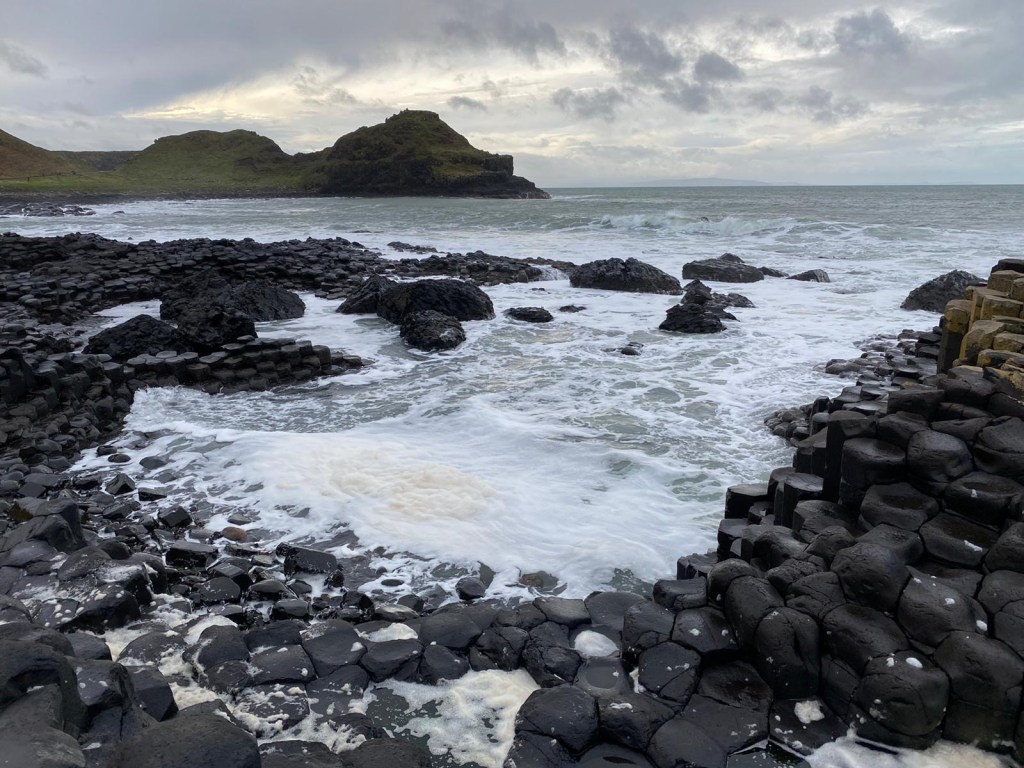
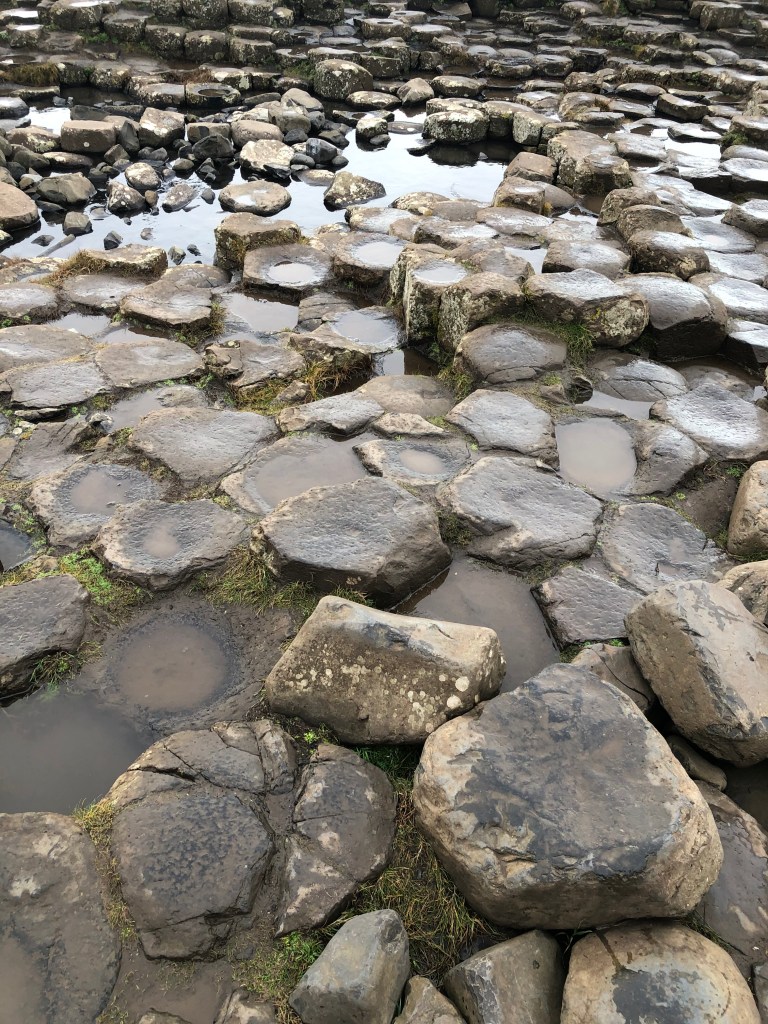
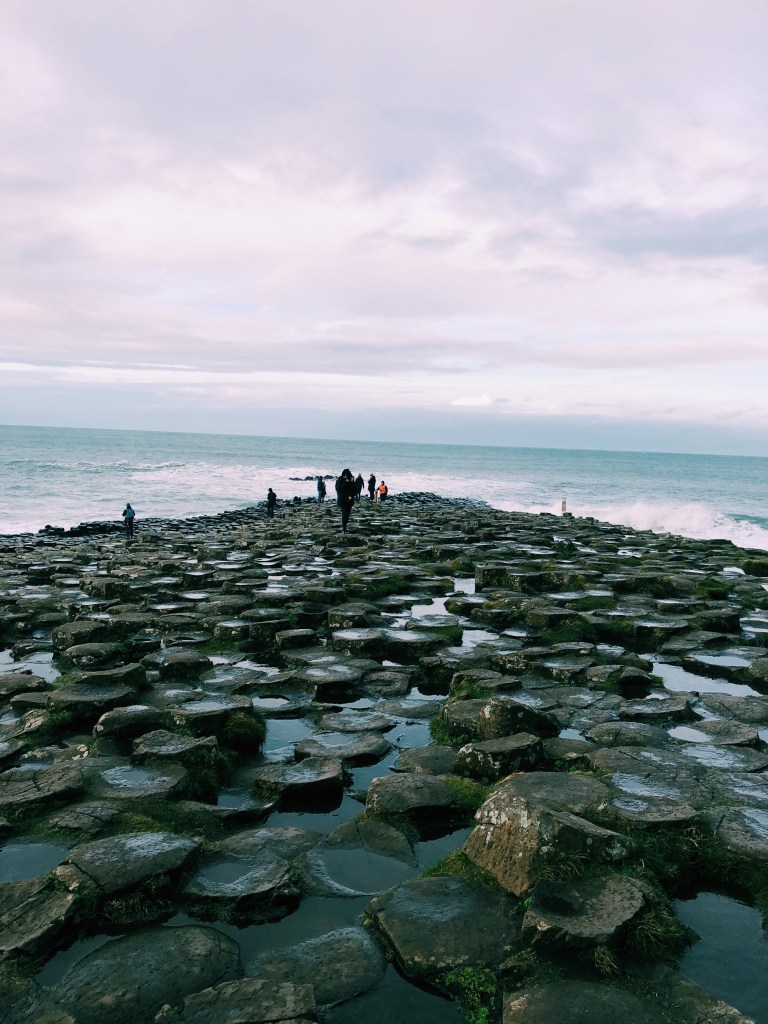
The Giant’s Causeway

When we visited the Giant’s Causeway a few weeks ago, I stood in awe of the beauty and expanse of the northern Irish coastlands. When I was not snapping photos or trying not to slip atop the stool-like rock formations, I stopped and simply listened—to the sound of the waves crashing against the shore, the seagulls soaring overhead, and the wind sweeping through the meandering coastal landscape. Oftentimes, listening seems like such a simple act, and yet it can take a lifetime to master. We have done much listening during our time in Derry, whether it be in our meetings with authors, social activists, or former paramilitaries. As demonstrated through Theater of Witness, I believe that listening is key to creating peace in any divided society.

The Peace Bridge, as seen from Ebrington Square on the Waterside

The man whom I interviewed, Gerry, told me that there must be trust in order for Northern Ireland to find true peace. In many ways, peace can be imagined as a bridge, such as the Peace Bridge across the River Foyle. As cliché as it may sound, trust is a two-way partnership in which both sides leave behind their respective comfort zones and meet in the middle, despite the raging currents of fear and uncertainty that flow around them.

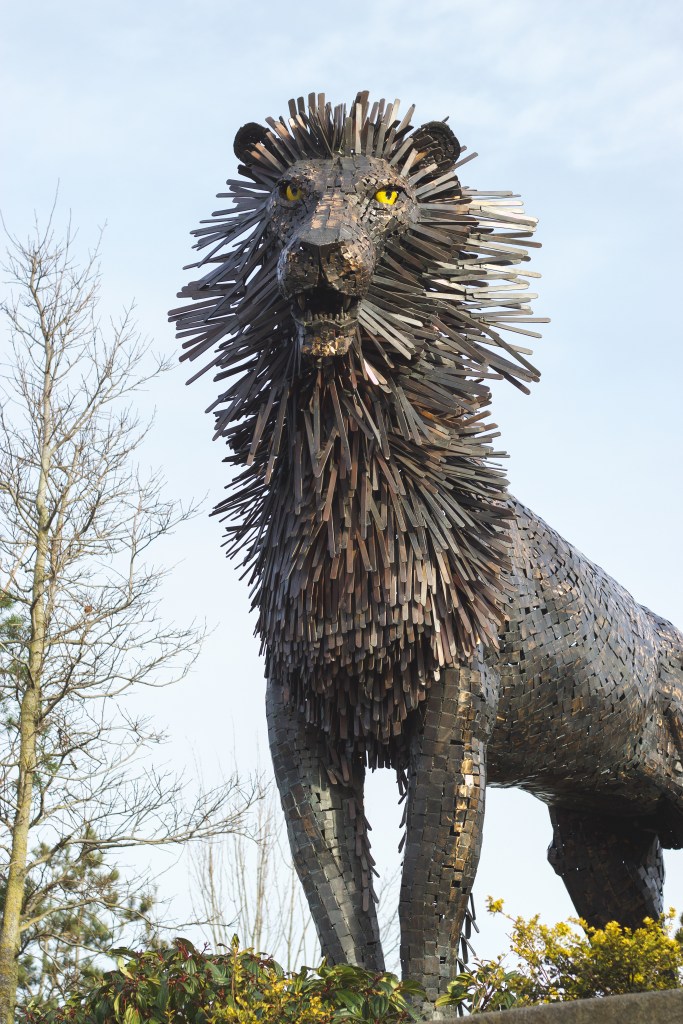
As I look to the future, I am reminded of the words of Aslan the Lion in C.S. Lewis’ The Last Battle. Even though the path to paradise was long with no immediate end in sight, Aslan encouraged the inhabitants of Narnia to keep moving “further up and further in.” In the same way, my time in Derry has inspired me to continually pursue peace in my own life, my community, and beyond.

Sculpture of Aslan at C.S. Lewis Square, Belfast

Saying Goodbye

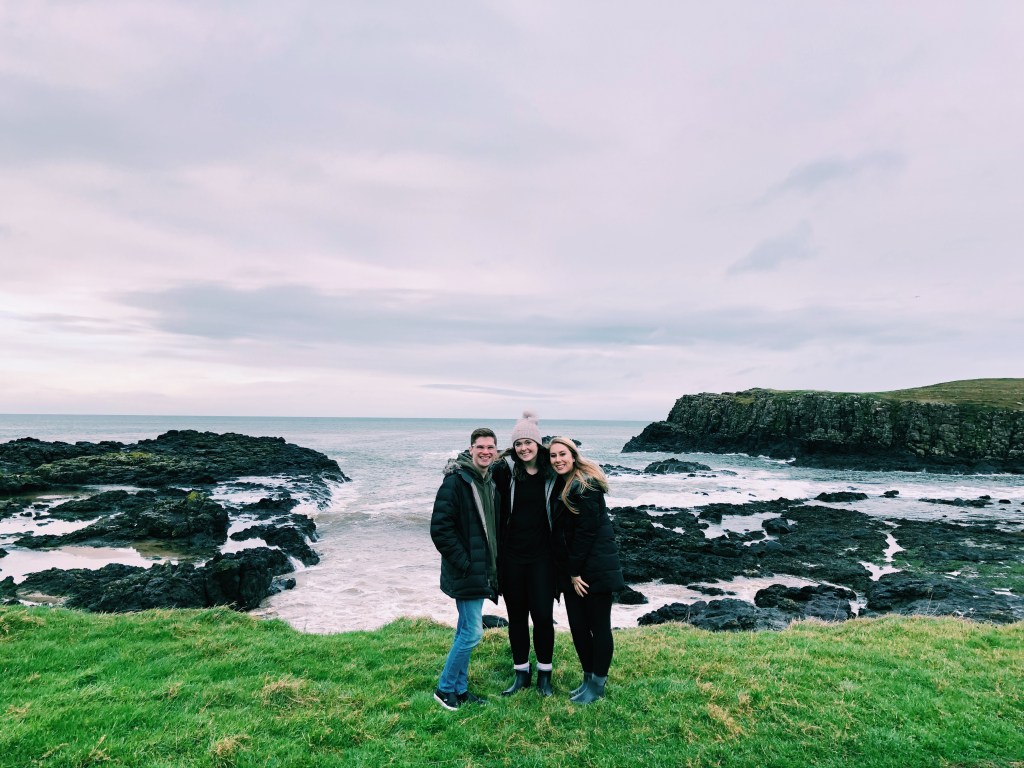
Giants Causeway

Over the past few weeks in Derry, I have learned so many things. Some of which included that Derry is the perfect size city, walk-able with a lot to see, I can get tired of eating chips, and that strangers are sometimes the kindest people you will meet. One of my favorite aspects of Derry was how often strangers were so open and welcoming to a group of students from the states. In a shoe store, a saleswoman, after a long conversation about where we’re from and what we’re studying told us to come back to say goodbye before we left for home. 

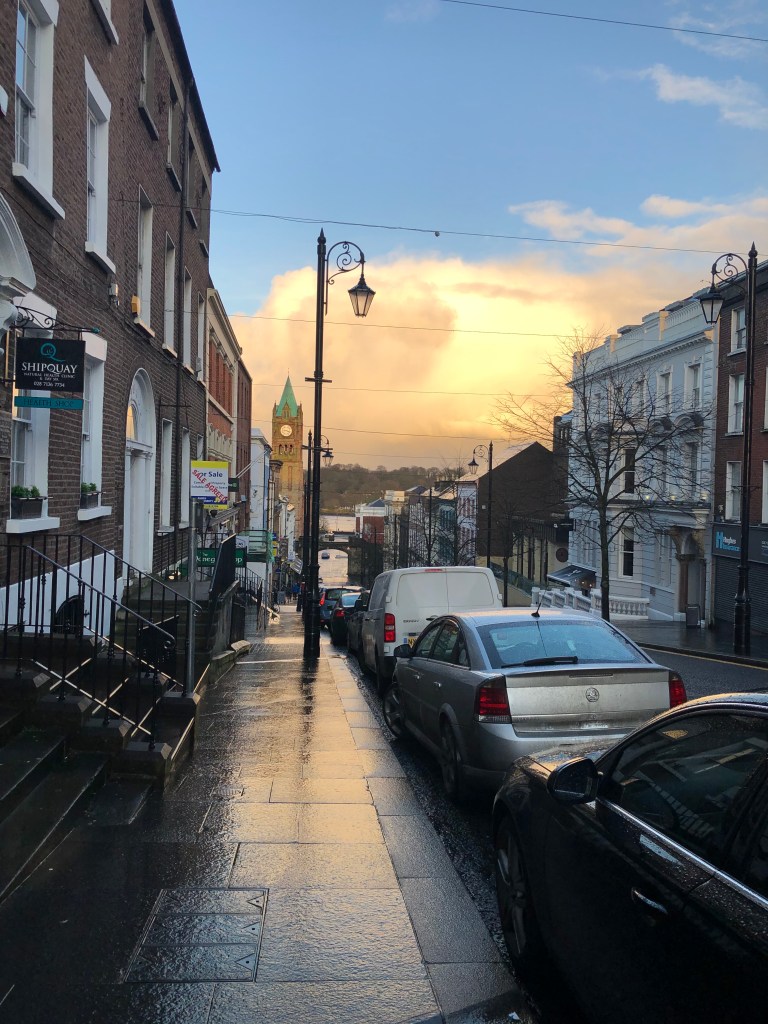
I am surprised at how quickly Derry felt like home. During a long free weekend of traveling to two larger cities, Belfast and Dublin, I found myself telling people that I was going home to Derry after our travels. And it was true, we stepped off of the Translink bus at the Derry Bus Center and breathed in the air. While walking up the hill on Shipquay street, I paused for a second and said “listen”, everything was quiet and we were content. I was even grateful for the walk up the hill that would typically leave me and my legs exhausted.

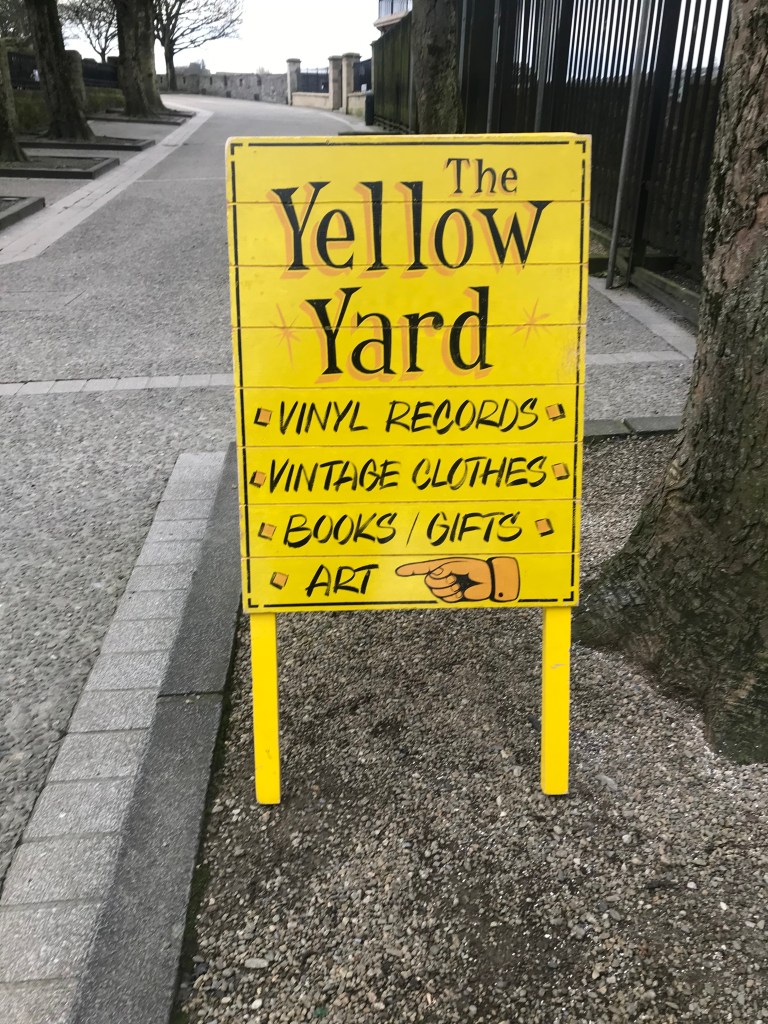
One of many signs directing people towards Yellow Yard

One of my favorite places in Derry, somewhere that I found myself feeling at peace, was at Yellow Yard. Very stereotypical, I know. Someone born and raised in the Pacific Northwest enjoyed the thrift shop/record/book store the most. The multiple times I visited Yellow Yard, I wondered for unknown amounts of time, sifting through the used books, enamel pins, and second-hand t-shirts.

A favorite moment from my time in Derry had to be having the opportunity to sit down and speak with Jennifer Clifford about trans* and non-binary youth in Derry. As I stated in another blog post, it is rare for a younger trans* person such as myself to interact with trans* people from older generations. It was incredible to hear her speak about her faith and confidence in younger generations of trans* people to fight against transphobia and violence to our community. 

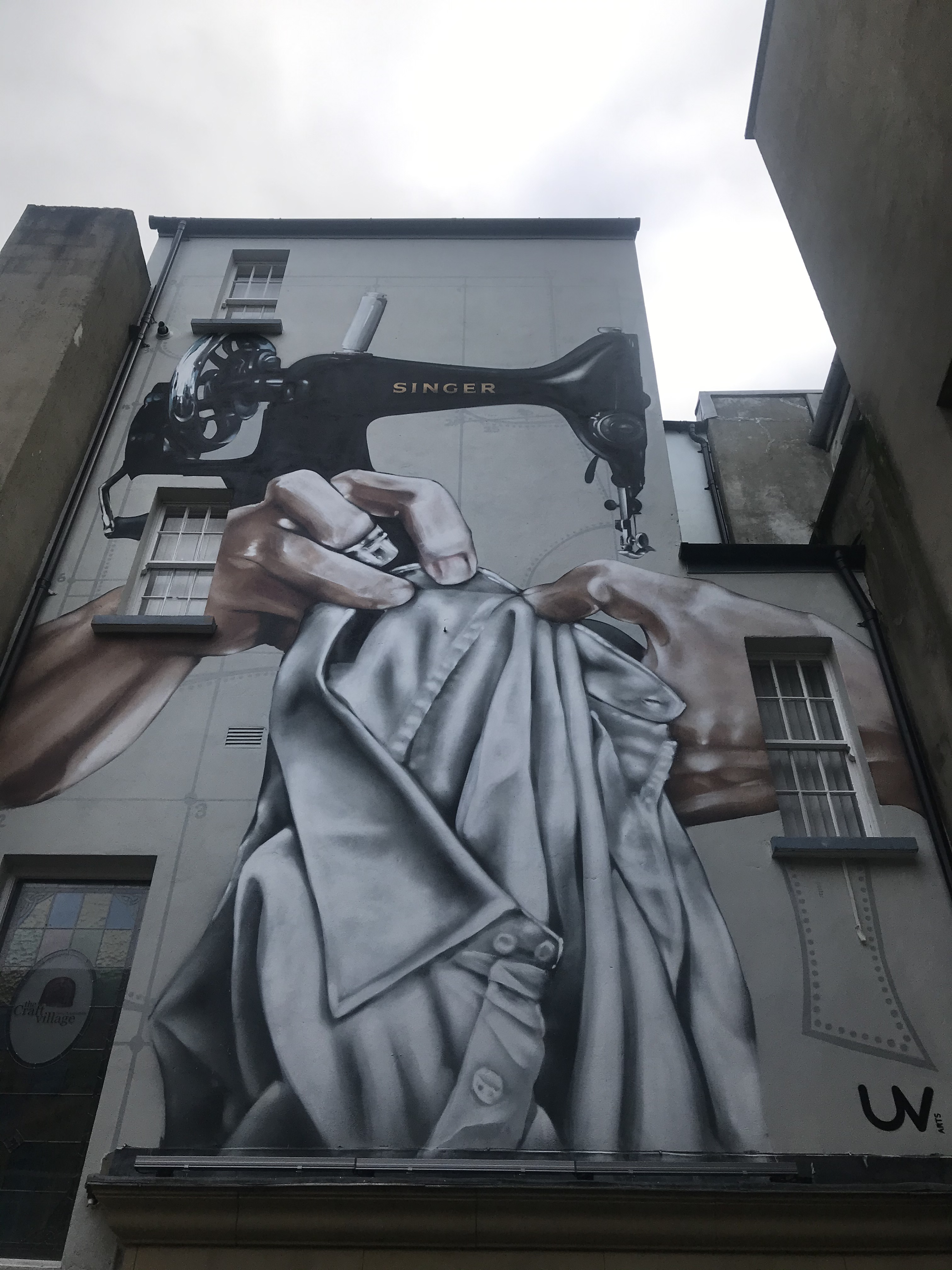
Throughout the trip, I have also learned that I am very interested in youth arts programs and art as a way of healing from trauma as well as a method of support for at-risk youth. I found myself drawn to programs such as UV Arts and Street Talk. Both of these programs focus on youth that are at risk for a variety of reasons including poverty and being targets of paramilitary recruitment. Art is an incredible outlet to put into the hands of young people. It gives them the opportunity to express themselves in a way that is productive and creative. 

Overall, I am incredibly grateful for my time spent in Derry and the peace building community that I was welcomed by and into. There is so much hope and resilience in the people of Derry and I was lucky to even experience a small amount of their passion for change. 

Northern Ireland and its Wonders

During my time here in Derry, there are three major highlights that come right to mind, and that I’d like to point out. I will also discuss what these highlights taught me about myself, and about the country. The first and most impactful highlight of this trip was the Free Derry Museum, it made me realize just how much people are affected by death, and how long this trauma holds on to the people, it helped me learn that I have yet to experience something to such an extent and I need to have more sympathy and empathy towards people who have. What the Free Derry Museum taught me about Northern Ireland, is that this country is still very much entrenched in the aftermath of the troubles and for many people, they hold this place and the story that it tells, in their very own identities. The turmoil is not in the past, it is very much still present today in the institutions, organizations, and people of Derry.

The second highlight of my trip to Northern Ireland was being able to see all of the beautiful landscapes, historical markers, and buildings here. The first thing that caught my eye as we drove into Derry were the walls, but what impacted me most about them was that when you stood on them, you could see out for miles and the air around them seemed old, some of the stones were chipped away and moss-covered, some of the paint on the cannons was chipped away from weather or people, it was beautiful and knowing that these walls were built hundreds of years ago, was humbling because I’d never seen something so old. A landscape that I saw in Northern Ireland that will stay with me forever is the Giant’s Causeway. The Giants Causeway was absolutely stunning, with the white waves crashing against the black, stair-like stones. It was cold and windy that day but the sky and sea seemed never ending-still. Seeing this beauty, it made me realize that this country has hidden beauty and that many other countries focus on the strife and despair that happened in this place and is still happening, but fail to realize that it is beautiful and this should be cherished more.

The third Highlight of my time in Derry was the assignments. They required me to go out and see places, meet people, and learn about them and their stories in a more intimate way than I would have on my own. They required me to delve deeper and search for the details, analyze and ask questions, and most importantly, think about the state in which Northern Ireland as more than a destination, but a place where the people are in an odd coexistence with each other but there are many organizations and people working to change that.

Roger McCallum: Building Peace from the Ground Up

It’s easy to make the argument that we will never be able to attain a state of peace in the world. That there will always be war, violence, death, and everything in between. But, peace isn’t just about stopping a war or holding back on using violence. Peace is a collective state of mind that respects people, human rights, and balance in all levels of society. It’s about sharing stories, ideas, and supporting one another (no matter what side you’re on.) But when we have an absence of harmony, an absence of respect, what do we do? Who do we turn to? How do we build from the ground up and start speaking our own truths? This is where people like Roger McCallum come in. 

Roger grew up in East Belfast, in a very heavily Protestant area. He went to Protestant schools and had Protestant neighbors and while he had no quarrels with Catholic people at the time, he was aware “of a difference between the North and South” and saw “the border as a dividing line.” In 1976, he joined the Royal Ulster Constabulary (RUC) and was quickly promoted a few years later in 1979. By the 1990’s, Roger continued to rise up to Chief Inspector and later witnessed the change of the RUC to the Police Service of Northern Ireland (PSNI) in 2001. In 2005, Roger began involving himself in more and more peace building initiatives and joined the group Healing through Remembering, a cross community group of people that examined ways to address the past and ultimately establish a more peaceful cooperative future throughout Northern Ireland. 

“We have more in common than divides us.”

Since the early 2000’s, Roger has taken a role as a peace builder, not only in his own backyard, but globally. Roger received his Masters degree at Queens University in Human Rights and Criminal Justice which has aided him in the important work that he does now in looking to establish a more peaceful and harmonious society. He feels that in order to move forward as a society “it’s all about telling our stories and listening to the stories of others.” While there is less violence than there was before, Roger argues that we are in a state of negative peace. Specifically, we focus more on giving praise to the “relative absence of violence rather than continually building positive achievements.” In order to ultimately move forward from all the trauma and violence that has occurred in Northern Ireland, we need to shine light on the steps forward that we are taking rather than the puddles we dipped our feet into before. 

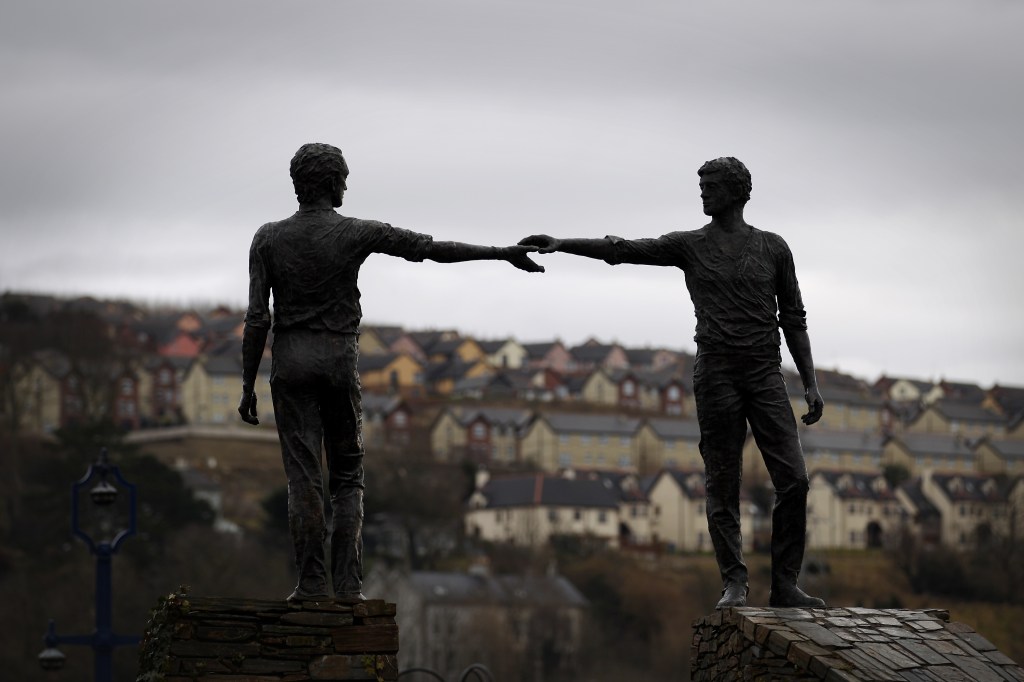
DERRY, NORTHERN IRELAND – MARCH 15: The Hands Across The Divide statue is silhouetted againts the sky on March 15, 2010 in Derry, Northern Ireland. The Bloody Sunday Inquiry chaired by Lord Saville was established in 1998 to look at the shooting dead of 14 civil rights marchers by the British Army in Derry, Northern Ireland on January 30, 1972. Lord Saville and his fellow judges have spoken to 921 witnesses during the longest legal proceedings in British and Irish history. Their report is due to be sent to the Government by the end of March 2010. (Photo by Peter Macdiarmid/Getty Images)

With people like Roger, advocating for societal and global peace everyday, we can only hope that in the future the divided society we live in now will be just a rough stepping stone in our past. 

A Vision for Peace

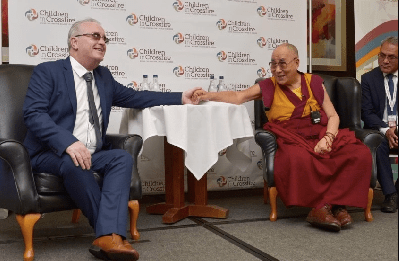
Meet Richard Moore. 

Born in 1961, Moore grew up in the Creggan Estate, the hill located on the bogside of Derry. 

It was a very beautiful and peaceful place to be raised, but what seemed like overnight, it became a warzone. 

Riots occurred on a daily basis, IRA men were patrolling the streets, the smell of smoke was not unusual, and listening to bombs exploding was something that created an element of excitement. 

The violence grew. 

January 1972 marks a tragic day in history. 13 innocent people were shot dead on that Bloody Sunday, one of which was Moore’s uncle Gerard. 

The violence was closer to home now.

“I can remember seeing the 13 coffins on the altar. It’s one of the [few] images I retained.”


Not long after Bloody Sunday, on May 4 1972, Moore was on his way home from school. He was about 10 feet away from a British army lookout post, and a British soldier fired a rubber bullet, which hit him in the bridge of the nose. 

That moment changed everything.

“I lost my right eye and was permanently blinded in my left eye.”

At 10 years of age, Richard Moore had to come to terms with the fact that he would never see again.


While Richard Moore could have easily been angry and bitter towards the British soldier who shot him, and even been justified in it, Moore has chosen to take a different approach.

 “I am a victim of the Northern Ireland conflict, but I refuse to be a victim of anger.”

A voice for change, Moore is a living example of the power of forgiveness in order to achieve long lasting peace. In his own words, forgiveness is “your ability to find peace and contentment, particularly when you have been hurt”. It was through forgiveness that Moore was able to open up his heart and mind to seeing Charles, the British soldier who shot him, as a human being. “It opens up a whole new world.” In fact, Moore has gone on to befriend Charles.

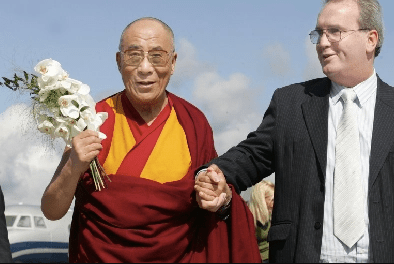
Moore made a point to say that in no way does he think what Charles did was right, but that does not mean he cannot forgive him. He went on to quote the Dalai Lama, saying “sometimes good people do bad things”. We must separate the action from the actor. 

While I could go on about Richard Moore and the profound wisdom he shared with me, I will leave you with this message of hope from the man himself: 

We hold the key ourselves to a peaceful world. It all starts within us.

For further information:

Richard Moore’s Organization: https://www.childrenincrossfire.org/

Richard Moore’s Book: https://www.amazon.co.uk/Can-Give-Him-My-Eyes/dp/0340918667

John Kelly: The Affects

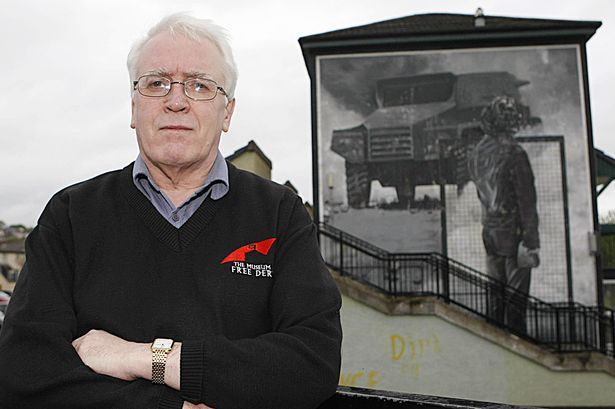
A person from Derry who I would like to introduce is John Kelly. Mr. Kelly is an education director at the Free Derry museum but before I go into the now I would like to talk about his childhood. He grew up on the bogside in Creggan. Although a poor neighborhood, he described Creggan as a good place to bring up children because there were so many of them with such big families and all the children would play together. He grew up in a family of 14. He had nine sisters, two brothers, and both of his parents were present in his life. Mr. Kelly grew up in a devout Catholic household where he and his family attended mass every week and his mother would attend mass every single day! He said his family was a fair family in which, “If one person got a pair of socks one week, another would get a pair of socks the next week, and so on.” Like many families in Derry, the Kelly family lived off of welfare because of the serious lack of available jobs but as Mr. Kelly said, “it was tight, but it was lovely.” Further on in life, Mr. Kelly married at the age of 20 to his beautiful wife. When he was 23, he attended the Bloody Sunday march where over 16 thousand people marched against the internment of over 300 people who were to be jailed without trial for being assumed as IRA soldiers. Michael Kelly, his brother, was shot and killed on this day. His and his family’s lives would never be the same. After the incident, he and his family came together to mourn, and to take care of his mother who took Michael’s death the hardest. Now, Mr. Kelly works in the Free Derry Museum where he educates visitors about the gruesome details of the troubles and Bloody Sunday on a daily basis. Mr. Kelly is also working with the Apprentice Boy’s siege museum to hopefully educate younger students on both sides of the story in Derry and have a more peaceful future. He said, “We are looking forward to the future, but we don’t know what the future is.” This statement is strong because right now, and the near future, is going to be a tumultuous time for Northern Ireland, and the people living here can only hope that peace is on everyone’s minds.

A picture taken by a photographer in the Irish Mirror of Mr. Kelly standing in front of a famous mural.
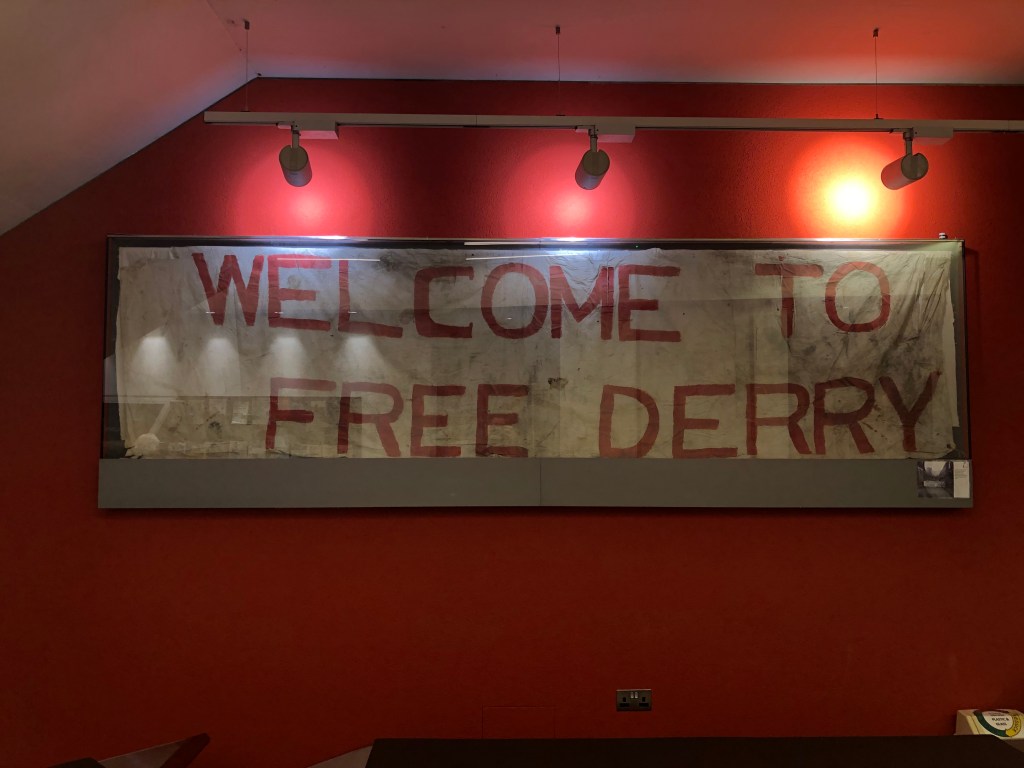
“Welcome to Free Derry” Sign displayed in the Free Derry Museum where John Kelly works.
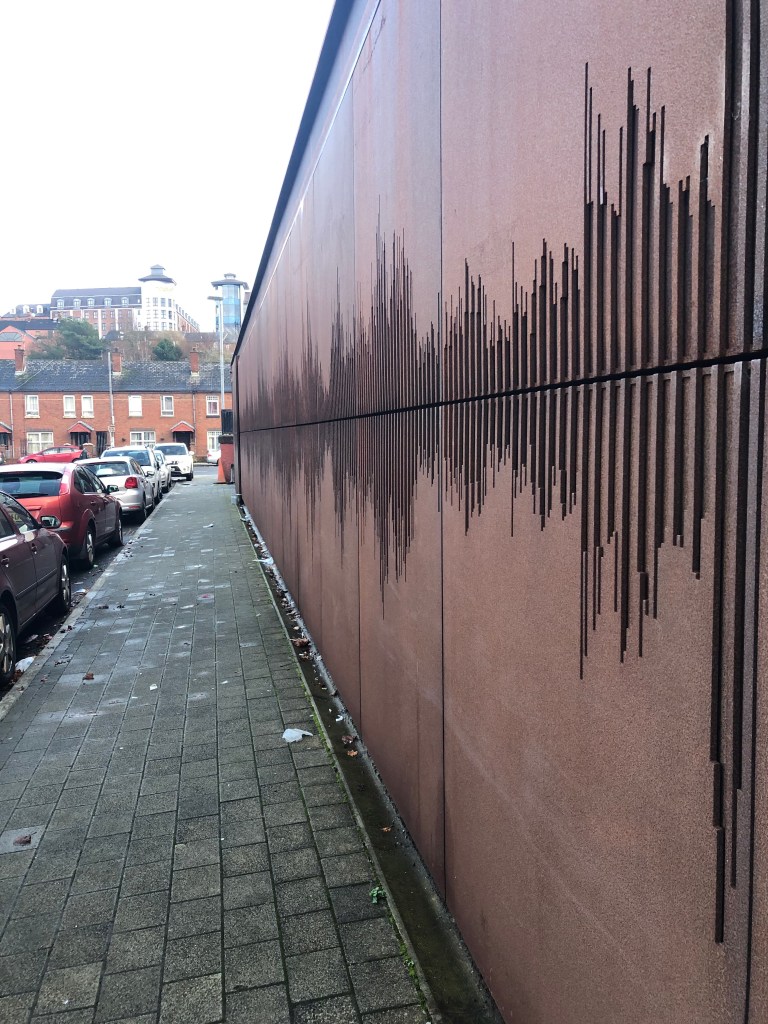
The wall of the museum displays a sound recording of the song the marchers sang on Bloody Sunday.

A Fight for Women’s Rights

Photo: Foyle Women’s Information Network facebook.

During our time here in Northern Ireland we have met a lot of incredible peace builders that have all had an inspiring story to tell. Maeve O’Brien was one of the people that stood out to me the most for her work with women in Northern Ireland. I had the chance to speak with her one-on-one and hear her story. Maeve is a feminist and overall human rights activist in Derry who works at Foyle Women’s Information Network (FWIN). Maeve’s passion for her work is something that is rare to find. Maeve grew up in a family that tried to be non-sectarian and tried to get to know people no matter what religious or political background they came from. This was the beginning of her journey to understanding the importance of peace-building in Northern Ireland. Maeve’s passion to fight for women’s rights all started when she was studying English at University. She was inspired by many women poets such as Sylvia Plath, whom she did her dissertation on during her Ph.D. at the University of Ulster. 

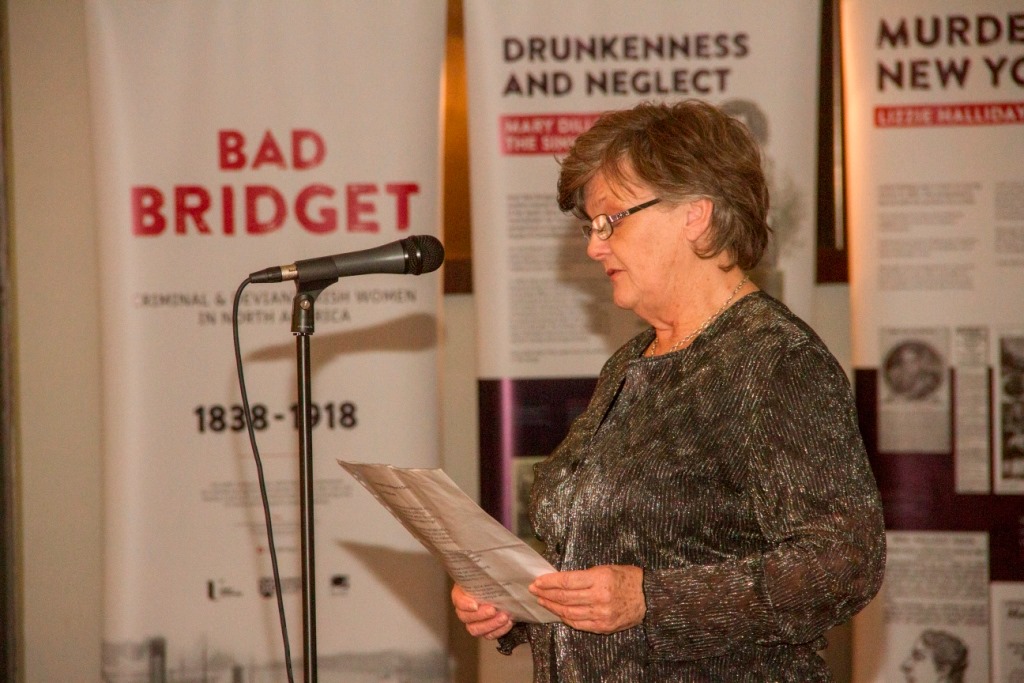
One of the Herstory project participants. This was her very first time speaking in public. Photo: Foyle Women’s Information Network facebook.

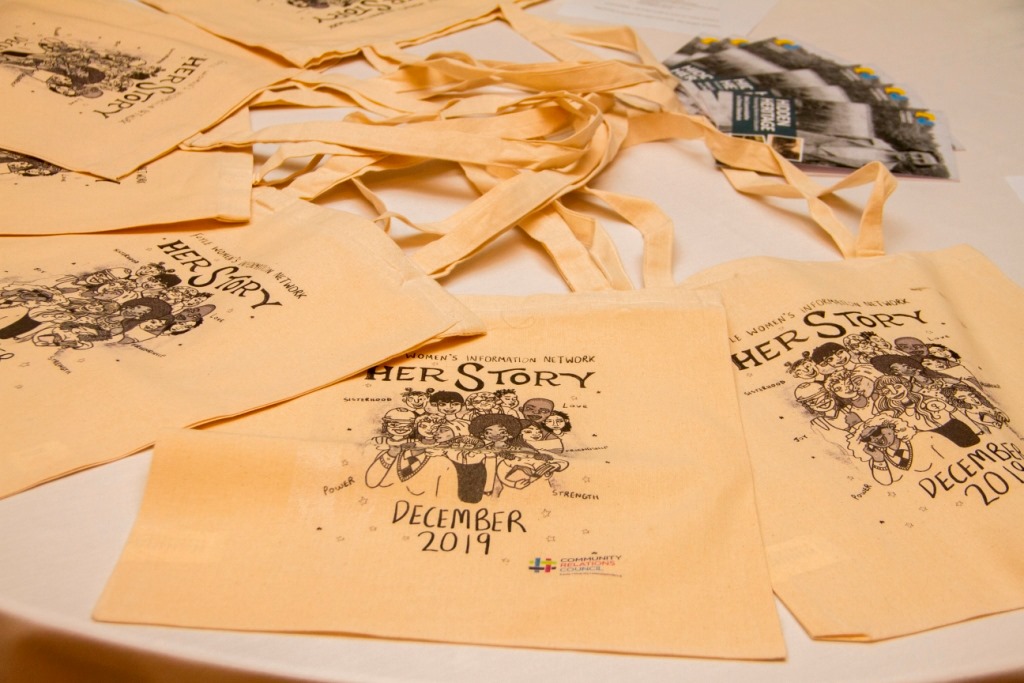
After obtaining her Ph.D. she went into activist work and has done incredible work for the FWIN. She has worked to advocate for women sent to the Magdalene Laundries, the “I Believe Her Movement,” abortion rights, reproductive justice, marriage equality, and so much more. She has helped to create and launch programs through the FWIN such as the Herstory Project, domestic violence workshops, “Healthy Minds” programs, and so many other amazing programs that empower women in Derry. The Herstory Project allowed women in the community to pick another woman in the community that they thought had an inspiring story to tell and had them share presentations on each woman. This project helped create a sense of empowerment for women in the community. All of the work that Maeve has done with women in Derry has empowered women to know their value. She has encouraged them to join in partnership to work towards the development of the community at large. Although her job is often extremely busy and full of hard work, she says that she truly loves her job and the community here in Derry.

Happy Days

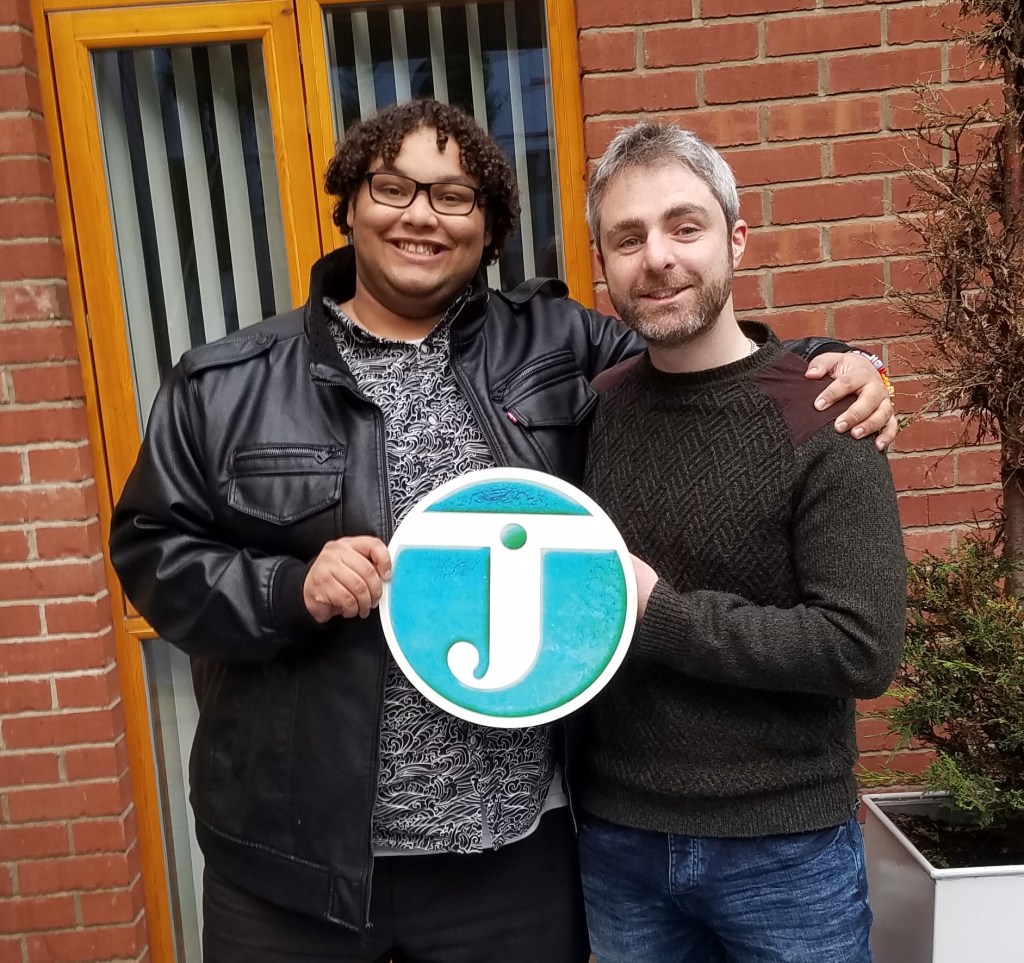
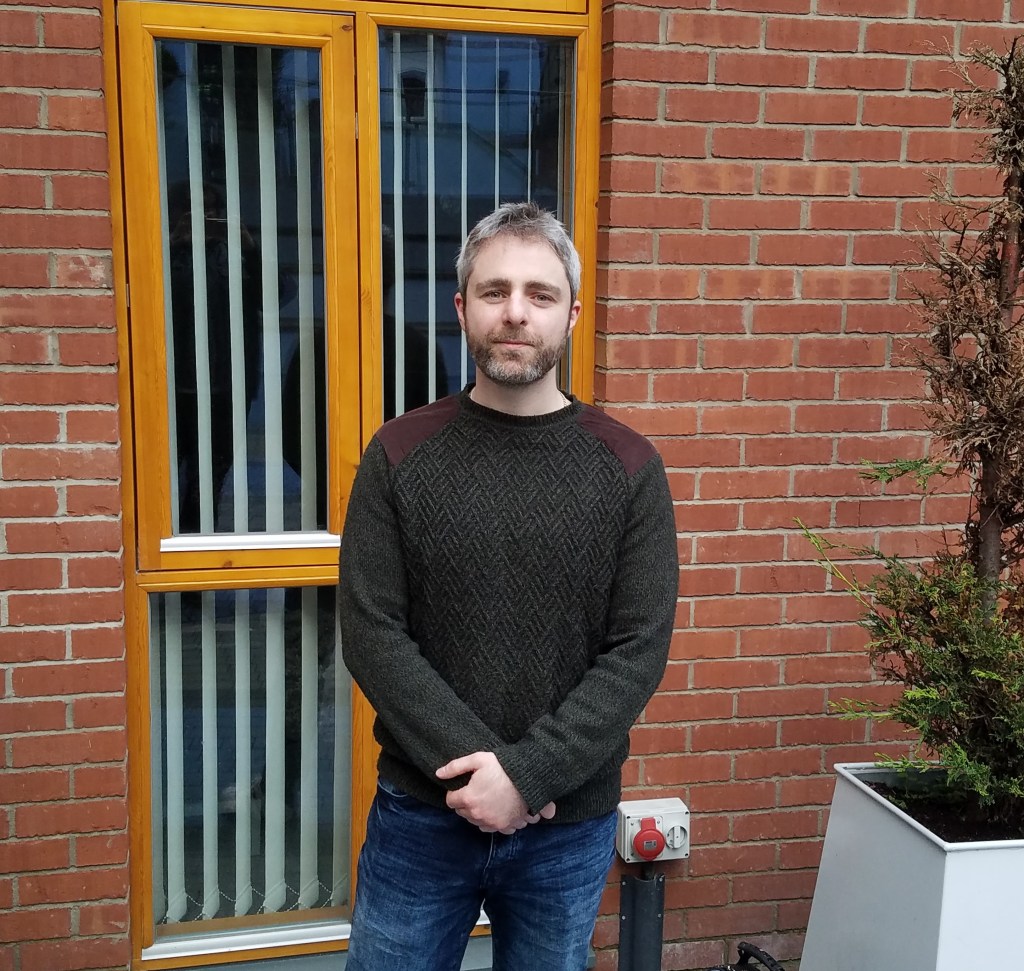
Modesty, I find is a dying trait. I often find that I am surrounded by people that seek to humble brag their way towards recognition. The good they do is often done simply for that recognition. Yet, every once in a while I find a person that is truly a good person. Richie Hetherington is a modest man. If you were to ask him what he does, Richie would probably say he does a bit here and there. The work he does is not easily seen. The work that he does is more akin to a bunch of little gears around a big gear. Richie works as the financial, administrative, and programming backbone of The Junction. 

This all being said Richie is a child of The Troubles, his history is very much connected to them. Richie’s father was a police officer and his mother worked for Derry City Council. During the time of the troubles Richie’s father was injured before he was born. Growing up his parents worked hard to make sure that Richie was not politicize by the event. In 1996 Richie’s family moved to Coleraine due to the increased violence against police officers at the time. Richie’s family while from a protestant area was rather not religious or political. This upbringing led him to be neither while also being culturally protestant.The nuance of his situation is important to understanding Richie now. 

The Junction Sign

In 2000 The Junction was founded by a group of community builders including Maureen Hetherington, Richie’s mother. During this time he was in school he was active in the junior Royal Air Force program. He would eventually quit after he witnessed the bombing of innocents in Kosovo by the RAF. After this he tried university then worked part time before eventually in 2004 he started working at The Junction. In 2018 he finished his degree in business studies and economics from Open University, which has helped him in his permanent position at The Junction. 

At his work at the Junction he has worked hard with his mother to build better community in Derry. As a person that is not politically or religiously aligned Richie is neither and that is an important part of his story. People like Richie are the future of the peace building community. Putting aside differences serve as basic building blocks for a better future, and Richie and Maureen are some of those building blocks. 

“This area of work is very rewarding, I can’t imagine any other career where you would get to meet such a variety of  people.”
-Richie Hetherington
Design a site like this with WordPress.com
Get started