Growing up an alter boy in the town of Dundalk, Cillian spent most of his young life surrounded by both religion and conflict. Religion was placed onto him at a young age as his parents pushed him into the arms of the Catholic church as an alter boy. However, his faith in the church was short lived as Cillian now identifies as atheist and has no belief in the Catholic church. When asked why he fell out with the church, he simply said that it was never something that he truly believed in, religion was just something that was a part of his family and community, religion was an expectation.
Violence was so rampant while growing up in Dundalk that Cillian said the town was nicknamed “Gundalk”. Dundalk is located in the Republic of Ireland along the coast, just south of the Irish border. Being so close to Northern Ireland the people of Dundalk were mixed with Catholics and Protestants, leading to plenty of tension which only escalated when tensions grew in the north. When Cillian was able to he quickly moved out of Dundalk, and now lives with his partner in Dublin.
Streets of Dundalk
When I asked Cillian about his feelings towards Northern Ireland and all of the conflicts he seemed rather uninterested and indifferent. Cillian does not feel concerned with the affairs of Northern Ireland because he says it is not his fight, and does not involve him. He finds the conflict to reside within the older generations, specifically those who reside in Northern Ireland. Growing up in the Republic he never felt that this was his fight, adding that he does not feel any pressure to choose and support a side of the conflict. However Cillian said that he does support a united Ireland, and it is something he would like to see happen. Cillian said that he was hopeful a united Ireland would exist within the next five to 10 years.
Northern Ireland’s community is more diverse than previously thought. The population consists of immigrants that have left their country of origin to reconstruct their lives in a new country as well as Ireland born people.Some of them choose to settle in Derry. The majority of the immigrant community in Derry consists of Indian, Chinese, Filipino, Polish and other immigrants who have come looking for a better life in Northern Ireland.
Part of the better life immigrants are seeking has to do with jobs. Immigrants that come to Northern Ireland that are not part of the Commonwealth or the EU must have a job offer before their arrival. However, if they are part of the EU then they are able to use local networks to find a job after their arrival.
Many immigrants that arrive in Derry work in the hospital or healthcare facilities.
Their work contributes to the overall well being of the society as a whole. Their children also live a similar life. The children of immigrants usually attend integrated schools depending on their location (rural or urban). Otherwise they attend schooling that reflects their religious beliefs. Even with the integration of them into the community by work or education, first generation immigrants alienate themselves and usually form groups based on their country of origin.
Even though they integrate themselves into the workforce, they still live separate social lives outside of work.Immigrants sustain the identity of their country because they alienate themselves by forming their social circle.The fact that they alienate themselves, by forming their group based on country of origin. The formations of these groups are used to keep their country origins alive. Forming a group to keep one’s origin alive is not bad , but it becomes bad when is their only form of social life outside of work or school . It can have a negative impact on their psychological well being and social well being, if they choose to leave this community.
One interesting fact about immigrants here is that these immigrant communities are able to vote based on immigration status and country of origin, which means that immigrants not only make a contribution to society by economic means but also they can make an impact on the political climate. A member of the Migrant Center explained to me that immigrants are usually neutral on political matters.
The migrant community is slowly integrated into the community of Derry. There has been an increased teaching of locals about migrant cultures and how to engage with them to provide services. However, there has not been a lot of work done to teach migrants local culture and traditions. With a push in learning about each other, both local community and migrant community can form a new identity that will benefit the city as a whole.
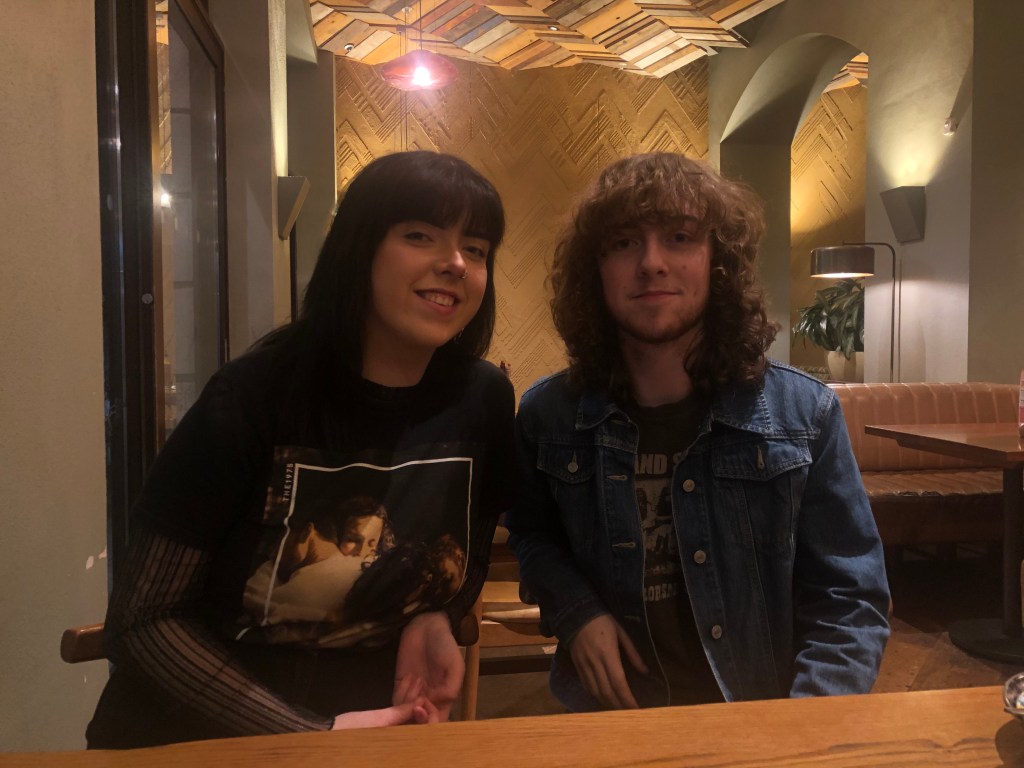
All the people we have met with so far have been of a generation older than us (by us I mean, the students) that went through the Troubles. This makes perfect sense for our course, but I was curious to understand what the life of the younger generation was like after the Troubles and the way in which they viewed the conflict. While visiting different bars and clubs in Derry, I met two best friends named Christian and Orlagh.
While Christian and Orlagh aren’t from Derry, they did both grow up in Northern Ireland in predominately Catholic areas (Limavady and Drumsurn) and now both identify as being atheists. Christian went to three different schools going up, St Columb, St. Mary’s and Limavady Grammar School. I was immediately interested in Limavady because he mentioned that it was an integrated school. I asked the percentage rate of the school and he estimated that it was about 30% Catholics and 70% Protestants. He told me that he experienced a lot of sectarianism during his time at Limavady by the teachers more so than the students. He said that the racism he experienced was from a generation that was hurt by the Troubles, their parents and grandparents war. I asked if students bullied each other for being different and he responded that it was mostly jokes. However, when Catholic and Protestant holidays such as St. Patrick’s Day and 12 July were approaching, the tensions grew higher amongst youngsters.
Orlagh had a different experience, she went to all Catholic schools, her entire life and told me she had never known you could be anything but Catholic until secondary school. After this realization she began questioning everything in her life, since one can be more than just Catholic. She said she had some cross-community experience, which meant for certain classes she went to the Protestant school nearby since she couldn’t take the courses she wanted to at her school.
They met at St. Mary’s and have been good friends ever since, bonding through shared experiences and love of tv shows. I asked if they both believed in a United Ireland and they said yes and that they have hope that it will happen in their generation.
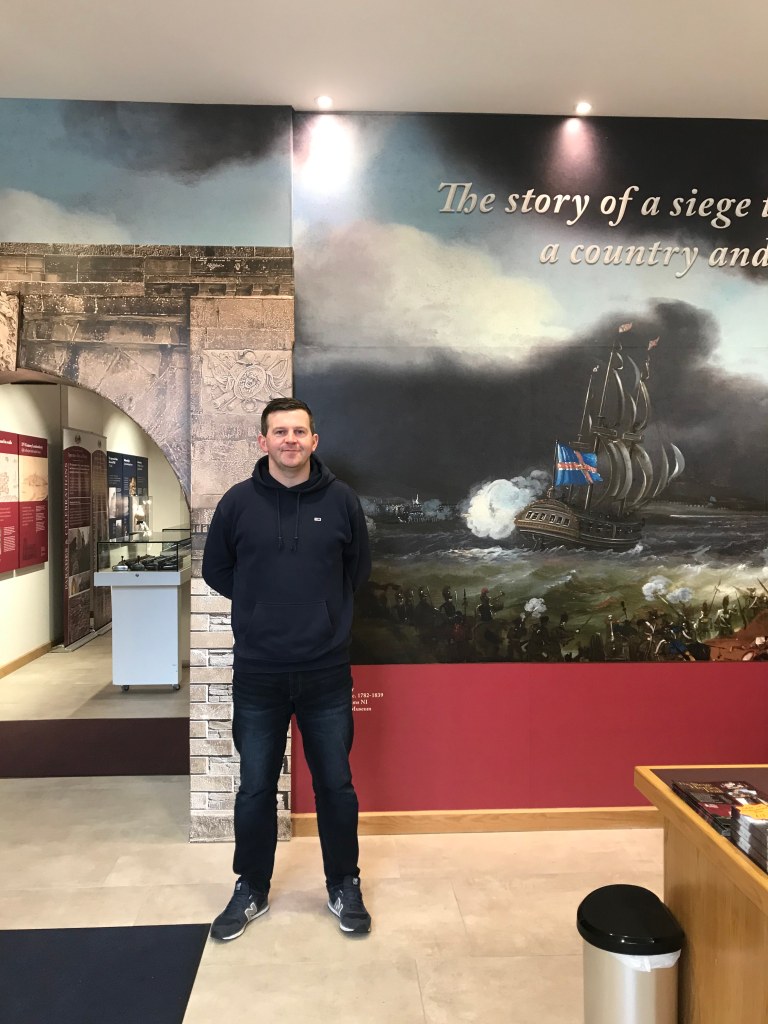
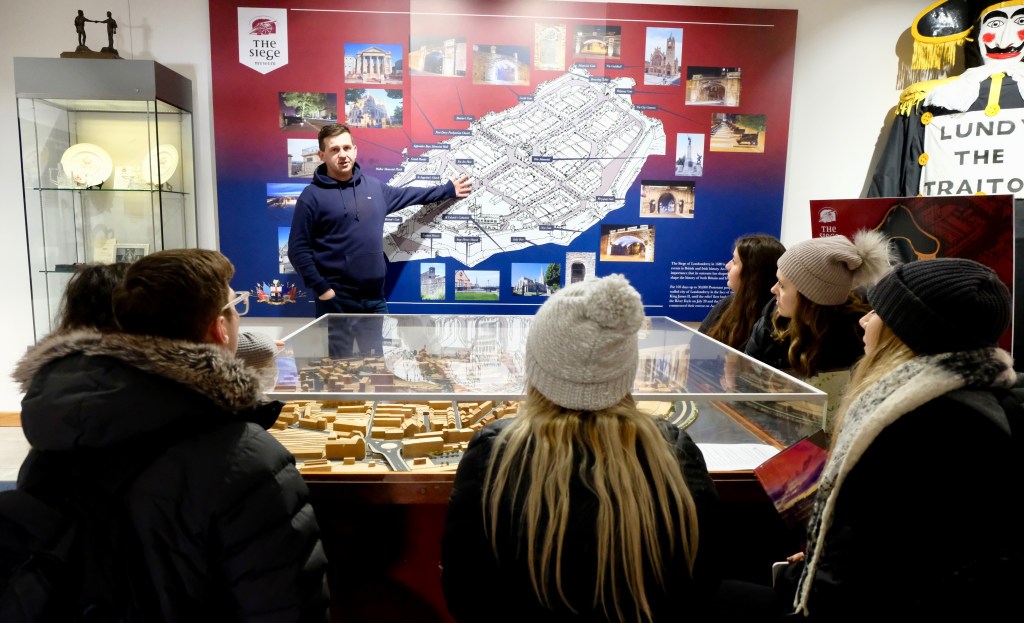
I had the privilege and pleasure of chatting with Stuart Moore, an member of the Apprentice Boys of Derry as well as an active member of the Derry community, this week. Stuart was able to explain to me a little more about The Associated Clubs of the Apprentice Boys of Derry and what their organization values, as well as what his experience in the Apprentice Boys has meant to him. The Associated Clubs of the Apprentice Boys of Derry is an organization that seeks to maintain “the spirit of courage and liberty displayed by the Defenders of Londonderry in 1688-89,” (http://apprenticeboysofderry.org/about/4590560772). Right now the Association has around 10,000 members from around the world.
Many know Stuart from his work as a tour guide at the Siege Museum. The Siege Museum is just one of the ways that the Apprentice Boys give back to their community. As highlighted in their mission, remembering and educating about the Siege of Derry is an important component of their work (http://apprenticeboysofderry.org/about/4590560772). Right now, the museum is highlighting several fascinating displays and a short video about the history of the original 13 Apprentice Boys of Derry, what life was like during the Siege, and what the Association of the Apprentice Boys of Derry do today. Along with their displays, the museum features educational resources online (https://www.thesiegemuseum.org/learning-education). They also partner with the Free Museum of Derry and Tower Museum to offer integrated tours to school children to holistically educate about the complex history of Derry. Not only are programs like this promoting education, but they are also promoting conversation and peace in Derry.
Photo of SOCI 387 Class taken by Professor Leon-Guerrero
Along with their work of education, The Association of the Apprentice Boys of Derry are involved in commemorative events, like the parade set on the day the walls of Derry were originally closed (December 18) and the day that the Siege was relieved (August 12). As Stuart highlighted, the Apprentice Boys are a social organization as much as a historical organization, and one of the values of the association is community which is built through frequent meetings, events, and attendance at special events like the parades.
The future of the Association and the Siege Museum of Derry seems bright. Membership to the organization continues to increase, and the Association is doing a lot of work to provide continued conversation and support for education in their community. According to Stuart, the Museum is planning to open several new exhibits in the future to continue to provide insight to those living in and touring Derry. They have also seen an increase in the number of visitors to the Museum.
Overall, this museum and Association are both important components to the Derry community, and their continued narrative and education are essential to the holistic view of the city of Derry. A big thank you to Stuart for sharing a little bit about the Apprentice Boys of Derry and his story!
Left – Katelyn Smitley, middle – Kelley Olson, right – Roy Arbuckle (Picture by: Professor Anna Leon-Guerrero)
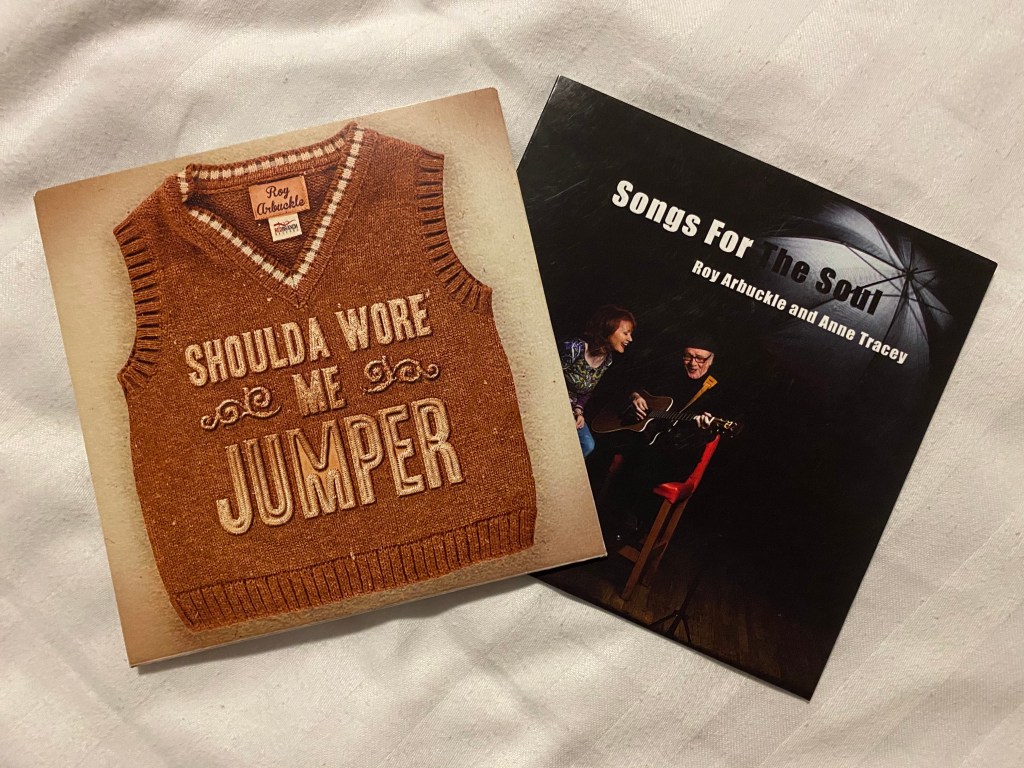
Roy Arbuckle is a true delight and leaves a smile on everyone’s face after talking with him. It was a pleasure to be able to meet with him, ask him a few questions, and truly just be in his presence. Roy tries to live by the mantra “be joyful,” and one thing that brings him joy is music.
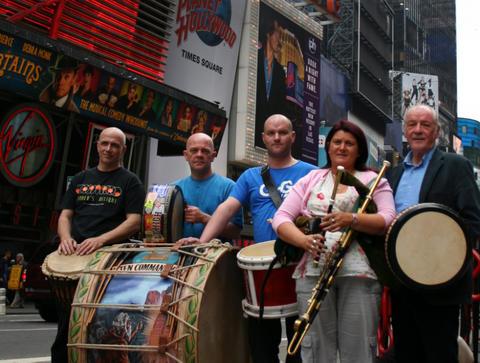
Roy grew up with a Protestant background and struggled with what that meant for him growing up and living in the time of the Troubles and Conflict. After getting an email from a friend in Canada, and talking with people from Holywell, he decided he wanted to start a group of musicians that came from both Catholic and Protestant backgrounds to create peace and eliminate the boundaries and tensions that lie between the two communities, Different Drums. Originally the name came from people having their own individual beat while also having to co-exist in community together. However, later the name also became literal as people added in multiple different drums from many different cultures. Roy said humbly that he didn’t know if what he did actually made a difference, but he would get people that would tell him years later that they remembered him coming to their schools.
In his dissertation, he stated that “music can be an agent of social change” and that “The project [Different Drums] gave Protestant/Unionist respondents a way to positively embrace a part of their musical tradition” (Arbuckle 2003). When interviewing him he talked more about this phenomenon and the impact Different Drums had on people of all ages.
One story he highlighted was when his band played at a school in Derry. The band consists of many drums, two of which are the lambeg (a Protestant drum that usually stroked fear into many Catholics) and bodhran (a Catholic drum). A little while after their concert at the school, he heard of three Catholic students that had gone and gotten a lambeg drum to try and practice. By doing Different Drum concerts around schools, they were eliminating the symbolism that was tied to drums meaning fear, and added a fun and more peaceful connotation to it.
Roy is a humble and amazing person. He went on to travel the world doing concerts whether or not it was for money. Today, he still gives back to his community by joining people to write songs, doing concerts in local places, and playing music for people suffering with dementia. After all that traveling he still comes back to Derry and feels a strong personal connection with the people here and his friends from Holywell Trust. I learned so much from Roy and I hope that I can be just as joyous through the roadblocks and the barriers that life throws at me.
Thank you Roy, may you be a joy to this world now and forever!
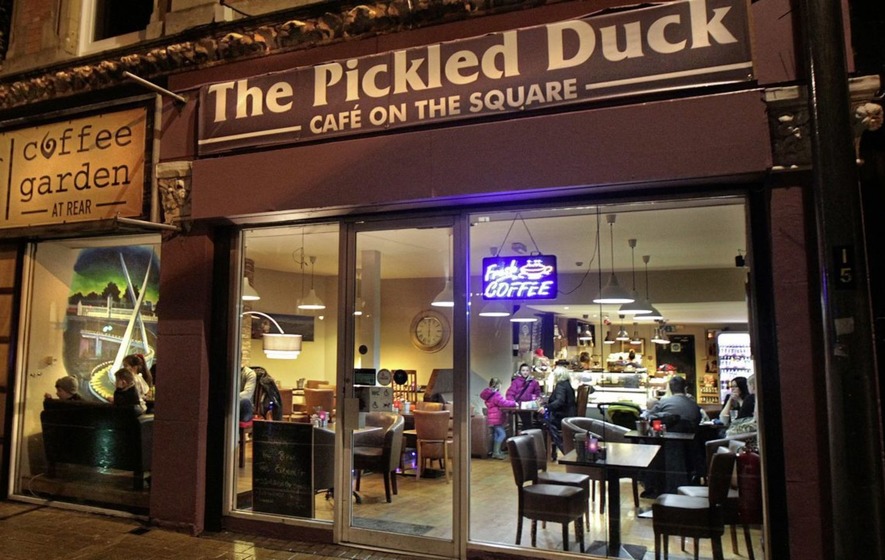
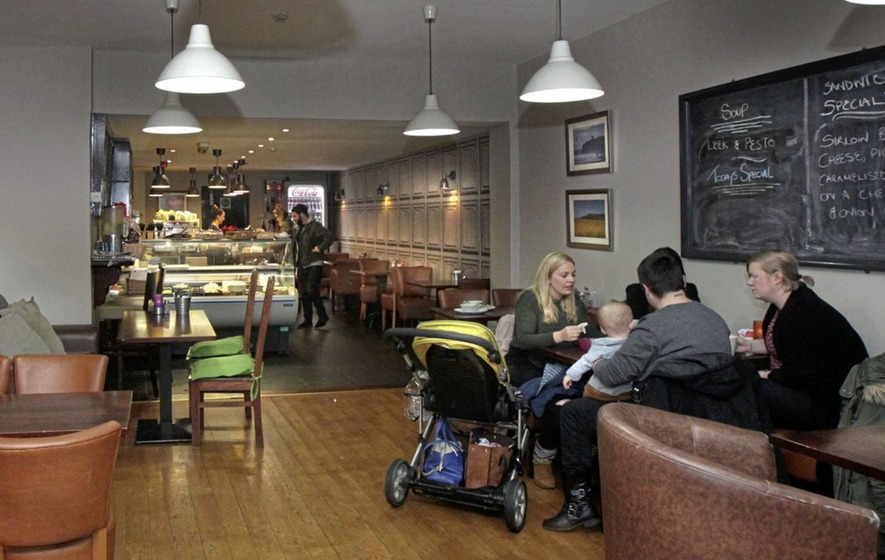
This week in Derry, I had the pleasure of meeting an individual who works at the Pickled Duck Cafe. We had a lovely conversation about the current climate of Derry and how it affects everyday life, especially as a younger individual. Kate was actually raised in Buffalo, New York; however, her mother is from Derry and her family moved back to Northern Ireland when Kate was a teenager. Kate, who is now in her twenties, has not had much experience or exposure to “The Troubles” of Northern Ireland. Like many younger individuals in the community, as she says, she did not want anything to do with the conflict and has tried to remove herself from it as much as possible.
Kate has a somewhat unique family experience since her family is of “mixed religions,” meaning one parent is Catholic while the other is Protestant, which has impacted the way she lives her life. In one sense, she said there are certain places where she cannot go because one religion that is identified in her family is not welcomed there. In another sense, it has made a positive impact on the way she views the political and religious conflict, because she is willing to see both sides as equally valid.
Throughout our time in Derry, we have seen how the culture can be polarized or categorized based on someone’s identity and I was curious if Kate had experienced that as well. Kate said she does not feel like society is as polarized as it used to be, because there is now more diversity of different religions being represented within Derry. The community in Derry has been known to put people’s identities in boxes; therefore I was intrigued to know if Kate was able to have a sense of belonging in her community, especially coming from a family of both religious denominations. Kate does feel she has a sense of belonging because of the community she is a part of, as well as being in a younger generation that has been striving to have more acceptance of one another, which I thought was a crucial part of the peace building process.
Everyday People of Derry
In my conversation with Kate, I was curious how the conflict in Northern Ireland affects everyday people in everyday life. She views the status and culture of Derry to be a wonderful and peaceful place now. However, Kate knows that Derry has not completely healed from its past trauma. For example, she discussed how you cannot represent certain soccer teams in this area because of the political affiliation that team has and the fact that people will assume your religion if you represent that team. In addition, she discussed how there have been other issues or violent acts in the recent past, but emphasized that Derry has transformed greatly from the state it once used to be. She recognized the celebrations and parades that the different groups have to honor their past, describing that those celebrations are peaceful and the differing side does not react or get involved. It was interesting and inspiring to hear her view of hope and that there has been resolved peace since “The Troubles.” While Derry has become a much more peaceful place, there is still a lot of work to be done. Kate carries a message of hope with her that acceptance of one another will replace the division that has previously torn the country apart.
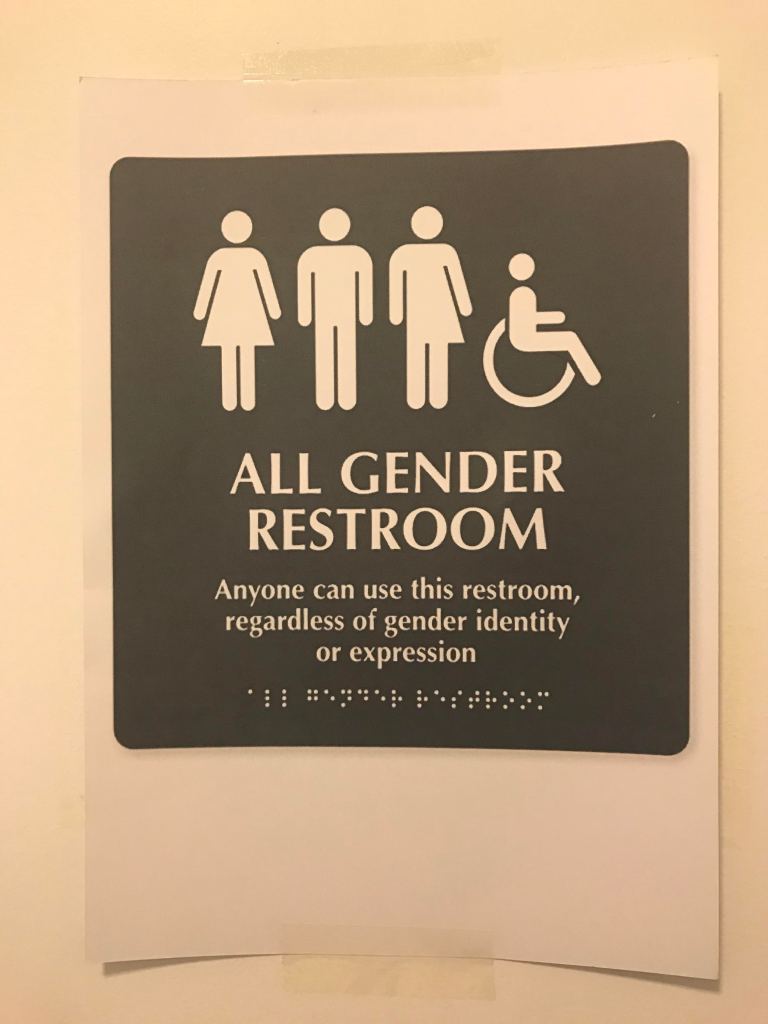
Gender Neutral Bathroom Sign In a Local Derry Craft Store
In a community such as Derry, trans* and non-binary visibility can often be difficult and sometimes impossible. However, according to Jennifer Clifford, the trans* and non-binary youth of Derry are really running the show when it comes to trans* and queer advocacy and activism. It’s through organizations such as Out Northwest that are encouraging younger generations of trans* people to be creative and follow their passions. Out Northwest, for example, offers courses in directing and cinematography to further encourage their creative spirit. This project, that is housed out of the Rainbow Center, is specifically focused on the youth in Derry, 16 to 24-year-olds to be exact.
Work that trans* youth are involved in covers a wide array of interests and topics. While some youth are involved in the planning of pride, some are campaigning for de-gendering school uniforms. They are active in politics that they care about and want their voices to be heard. They refuse to be silenced.
The trans* and non-binary community in Derry is small but growing and it is because younger generations are caring less and less about how their identity makes other people feel, especially if the feeling is comfortability. A point that Jennifer continued to come back to is how younger generations tend to view gender identity in a way that is much more fluid and flexible. She says that this is one of the best parts of the younger generation is their openness to new and different identities and ideas. This is part of the reason why younger people are leading the change for trans* acceptance in Derry and in Northern Ireland. In fact, younger people from Derry have rallied for changes to school uniform requirements and have even brought their concerns and issues to Stormont. This is also why younger generations are finding it “easier” (even though it is rarely easy) to come out regarding their non-normative gender identities. They are more willing to freely speak who they are into existence than older generations. This is one of the best parts of working with trans* and non-binary youth, according to Jennifer.
“Trans* and non-binary youth are incredibly politically astute” – Jennifer Clifford
Speaking with Jennifer was an absolute pleasure. It is rare in today’s society that younger generations of trans* and non-binary people are able to have these conversations with trans* elders or transestors. Change is slow, but it is coming and the trans* and non-binary youth are leading the way.
Since the Good Friday Agreement, Northern Ireland has spent much of its sociopolitical and cultural efforts on peace-building and reconciliation between the Catholics/Nationalists and the Protestants/Unionists. The Troubles were a time so focused on the conflict between these two groups, that progress for other minority groups was neglected. It has been expressed to me by locals that Derry is a generation behind the United States when it comes to “human rights” issues and I believe this is partly due to The Troubles.
While engaging in conversation with a local community leader in Derry who works with the LGBTQ+ community, I learned that the sectarian society, in combination with the stigma surrounding a non-religious identity, creates a conflicting dichotomy for the LGBTQ+ youth in Northern Ireland. In my experience in America, LGBTQ+ individuals often find comfort in a community outside of a religious context, but in a sectarian society such as Derry, that isn’t always an option for LGBTQ+ individuals. In some instances, upon coming out, LGBTQ+ youth in Derry experience an exclusion from their religious community as their church still opposes non-heterosexual identities. I found this to be disheartening, and when I expressed this to the local community leader, she expressed hope in the way that people’s opinions are changing. Additionally, in our conversation, there was an emphasis on the youth today explicitly and how they can enact the change that they feel is necessary.
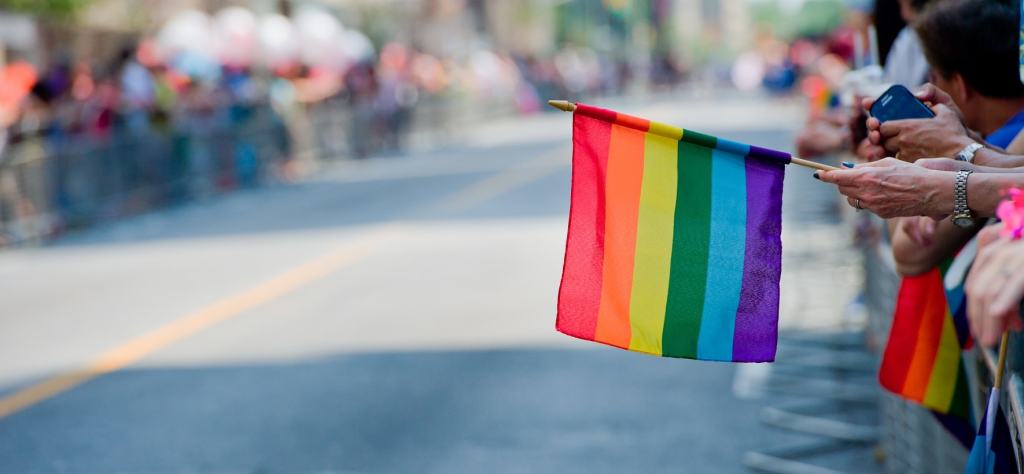
As a member of the younger generation that she was referring to, I appreciated her encouragement, but also I felt a fair bit of pressure. While hope in the younger generation has been expressed, change does not solely rest in their hands. In fact, as of January 13, 2020, same-sex marriages are legal in Northern Ireland, which was a win for the LGBTQ+ community. This video provides a history of the Northern Ireland same-sex marriage debate.
Beyond legislature though, there are local community groups working to promote a cultural shift in Northern Ireland surrounding the LGBTQ+ community, as well as providing support for members of that community in ways that the government has yet to do so. The Rainbow Project, one of these organizations in Derry, describes themselves as a “health organisation that works to improve the physical, mental & emotional health and well-being of lesbian, gay, bisexual and/or transgender people in Northern Ireland” (https://www.rainbow-project.org/about-us). To learn more about the work that they are doing, follow this link to a video that describes their services, or feel free to use the link to explore their wesbite.
Ultimately, the LGBTQ+ community in Northern Ireland has not progressed as far when compared to other countries. However, progress is beginning to be and continuing to be made, and the invididuals in Derry do express a hope for the future LGBTQ+ community. Additionally, through the community leaders that I have met while in Derry, I also have hope for the future of minority groups in Northern Ireland.
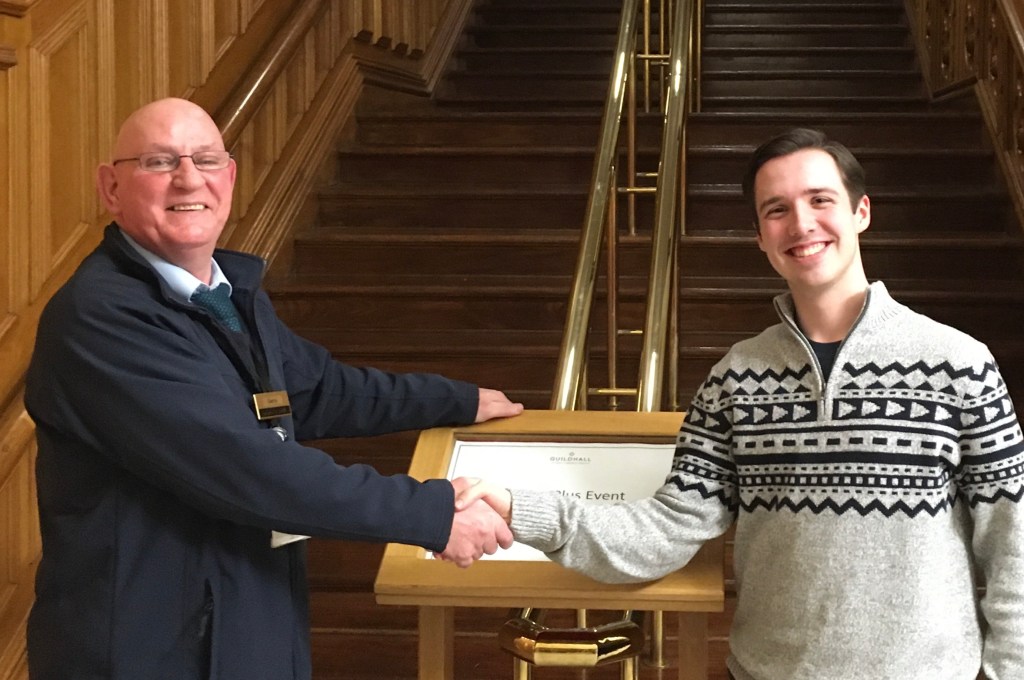
Meet Gerry, a tour guide at Derry’s Guildhall and the Tower Museum. Born in the Creggan, he witnessed the oppression of the Catholic community from an early age. When violence broke out at the height of the Troubles, an eleven-year-old Gerry and his friends, having no understanding of the political forces in conflict with one another, saw the fighting simply as an adventure. But as Gerry grew older, he came to recognize the deep divisions that he and other children, on both sides, were being taught as a fact of everyday life: Our cause is good, and theirs is evil.
“People say bullets have your name on it, but in Northern Ireland the bullet says ‘to whom it may concern.’”
As we have learned, sectarianism has deep roots in Derry, but the division came to a boiling point as Gerry reached adolescence. Taking inspiration from American civil rights movements, the Catholic community spoke out against the injustices of unionist government, and eventually the British Army was deployed to restore order. If the government would have only given the Catholics “one more slice of cake,” Gerry explained, perhaps the violence could have been prevented. Sadly, neither side yielded any political ground, and fighting erupted in the streets of Northern Ireland.
Gerry felt the foreboding skies over Derry grow darker when his father, an innocent bystander, was caught in the crossfire of a gun battle between British and republican forces. “People say bullets have your name on it, but in Northern Ireland the bullet says ‘to whom it may concern.’” Indeed, the widespread violence was no respecter of persons, and Gerry had considerable cause to feel hatred during that time, being repeatedly stopped and arrested by British patrols.
In the months following his father’s death, Gerry approached a crossroads: He could either harbor anger towards those who had hurt him, his family, and his community, or he could try to broaden his “sight.” He chose the latter path and soon dove into Irish history in hopes of understanding the longstanding conflict from various perspectives, even that of Protestants. Years later, he discovered what he believes to be the core of the conflict. Throughout Ireland’s history, Gerry told me, there have lived three peoples: the Presbyterian Scottish, the Anglican English, and the Catholic Irish. After James I ordered the Plantation of Ulster, which gave Anglicans dominance on the island, the three groups fell out of touch with one concept—trust. In Gerry’s opinion, the Troubles occurred because of a lack of trust between Catholic nationalists and Protestant unionists. In recent times, only two men, Ian Paisley and Martin McGuinness, have been able to rediscover that invaluable ideal.
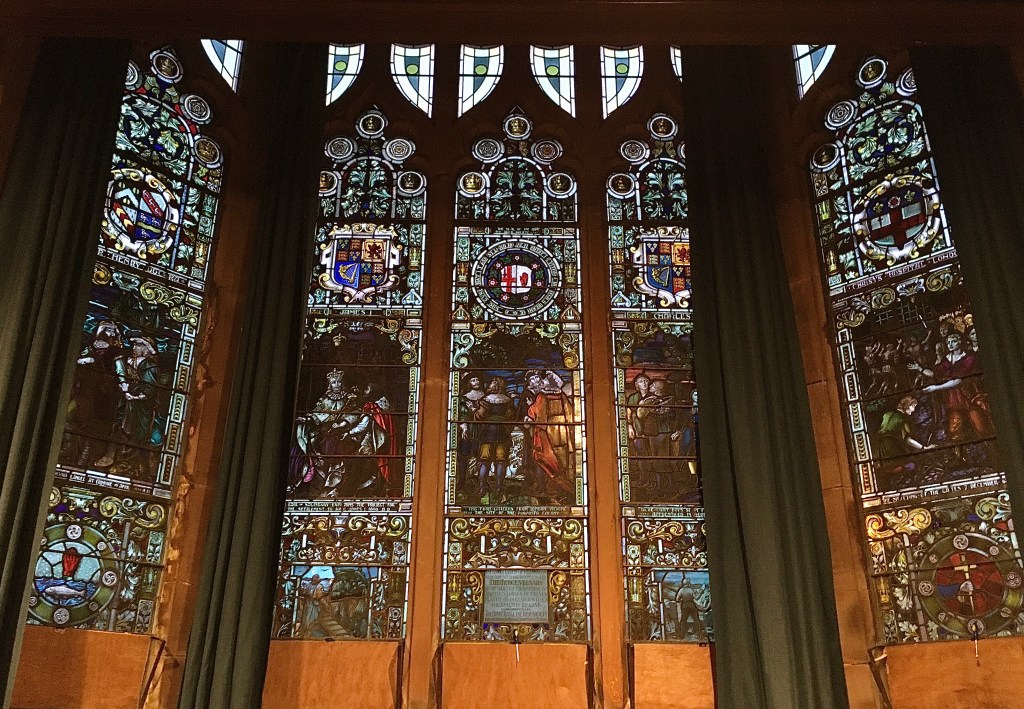
Some of the Guildhall’s panels of stained glass, which Gerry uses in telling the history of Ireland
Nevertheless, Gerry has a message of hope for the people on his tours, that peace can be achieved in Northern Ireland. Trust is essential to any effort for reconciliation, as is the ability to let go of the past. Ultimately, however, all human beings—including members of the IRA, the RUC, and the UDA—are flawed creatures. The human answer to difference is conflict, and so we must trust in a higher Power in order to find forgiveness, for ourselves and for others. Only God can provide lasting healing and peace, and His love will never end. This is even echoed in Northern Ireland’s national motto “Quis separabit?”, which is derived from the Latin translation of Romans 8:35, “Who shall separate us from the love of Christ?” [1].
Gerry has much hope for the future of his homeland, and he encourages others to heed the words of the apostle Paul in his letter to the Philippians: Forget what is behind, move toward what is ahead, and make peace in Northern Ireland.
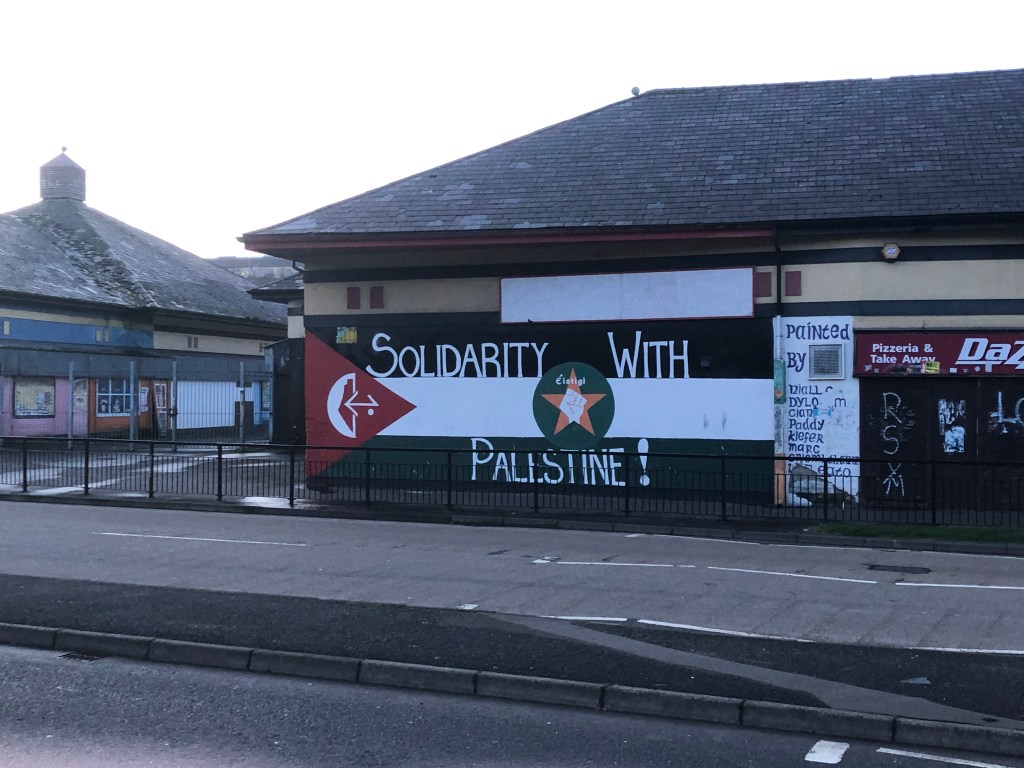
Since being in Derry, I’ve noticed quite a few Palestinian flags around when walking through the Bogside and beyond. It was pleasing to see so much support for a sovereign state that has gone through so much suffering at the hands of the Israeli occupation. The places where the Palestinian colors are most common are the nationalist areas of the city, since the Catholics stand with Palestinians. They see themselves on the same side of the same conflict; the fight for freedom.
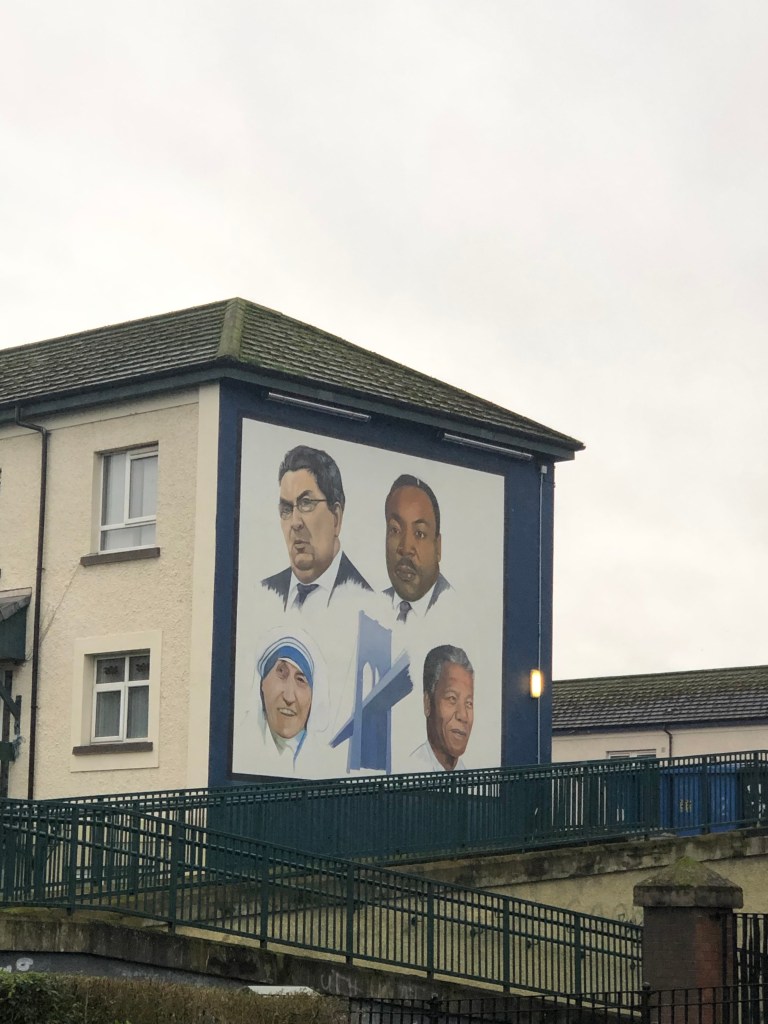
I have seen many freedom fighters throughout the city on murals, but the one that truly caught my attention featured the faces of John Hume, Martin Luther King Jr. Mother Teresa, and Nelson Mandela. These are the faces of revolution and justice worldwide; it comes to no surprise that Nationalist support and been influenced by these figures in their fight for liberation. While walking through the Free Derry museum, I saw signs used in marches during the Troubles that said “we shall overcome” a famous song and phrase used during the Civil Rights movement in [1]Turtle Island. The people of Derry have used various movements all around the world not just to stand in solitary with oppressed individuals, but also what I would say is a cry of war. A cry that signifies that the people will never surrender or give in to their oppressors.
[1]I use the name Turtle Island instead of the United States as it was the name used by Indigenous and First Nations people before their colonization
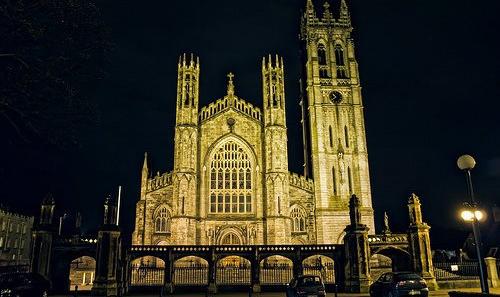 St. Patricks Cathedral in Dundalk
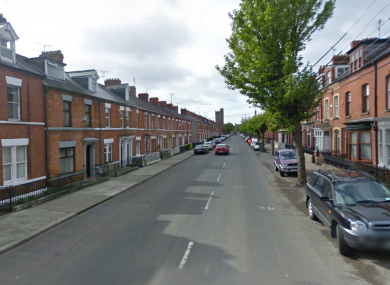 Streets of Dundalk


 SOCI 387 Diversity, Conflict, and Peace in Northern Ireland