The Steps We Take

Paul Coeltho once said, “Fortunate are those who take the first steps.” This quote couldn’t be truer for the people of Derry. Besides the marvelous peace bridge, the stone Derry wall, and the murals that showcase the troubling history of the town, the earlier times of the city is ingrained further in even the sidewalks we stroll along every day. In a place constantly under tensions from past conflict in the city such as the Siege of Derry and Bloody Sunday, a sense of identity and personal history can be seen right under our feet.

When Derry was first founded, the town was called ‘Doire’ which I have discovered is an Irish term for Oak Grove.(http://irishwalledtownsnetwork.ie/page/derry/derry-info) It was named that after the large oak trees that encompassed Derry and most of Ireland at the time of the settlement in 546AD. This settlement was a simple monastery that lied at the top of the highest peak in Derry. In 1613, a large Protestant plantation occurred in order to establish Protestants as the majority religion and therefore ruler in this part of the country. (http://www.bbc.co.uk/history/british/plantation/) The town was subsequently named Londonderry to accurately reflect the Protestant rule of the time and remains the official name to this day. Since then, history reflects the ever present battle that has been occurring in Derry between the Protestant Unionist Loyalist’s and the Catholic Nationalist Republican’s; the town’s two competing political and religious parties. Derry has bounced between these two powers for centuries and while the town is now almost 90% Catholic, the citizens have not forgotten the long and quite bloody struggle that had occurred here.
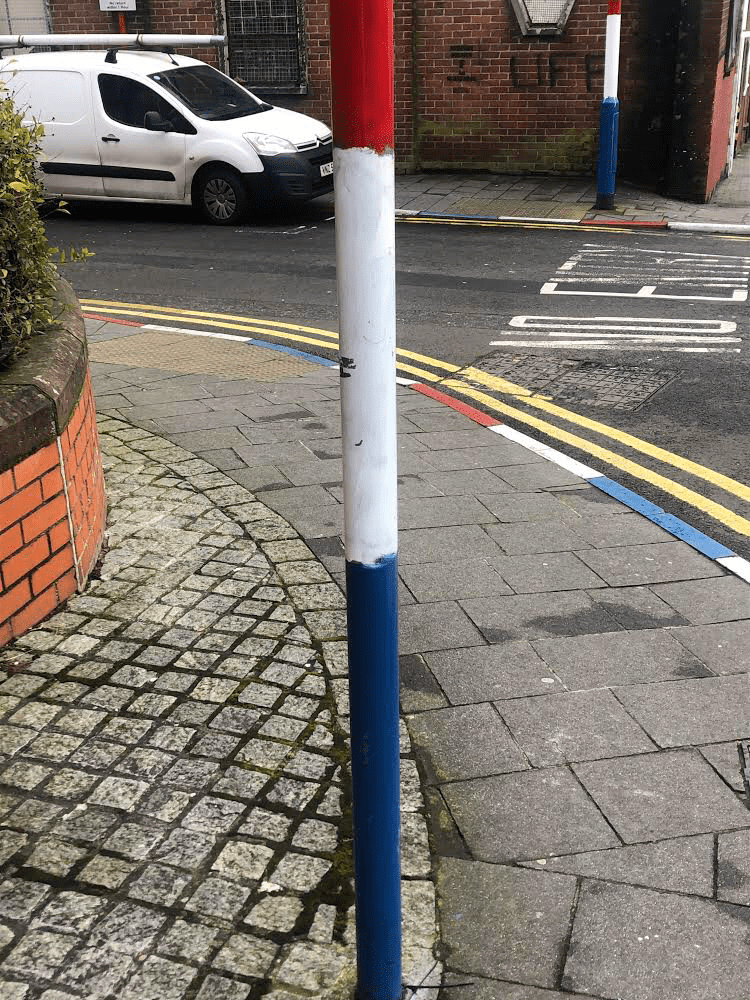
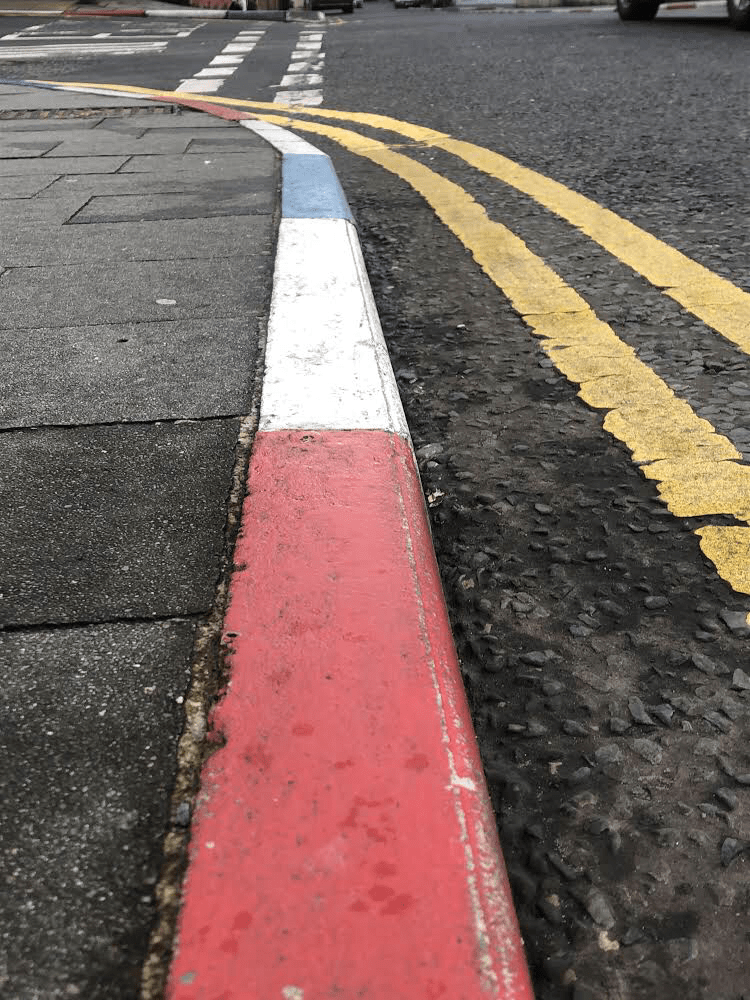
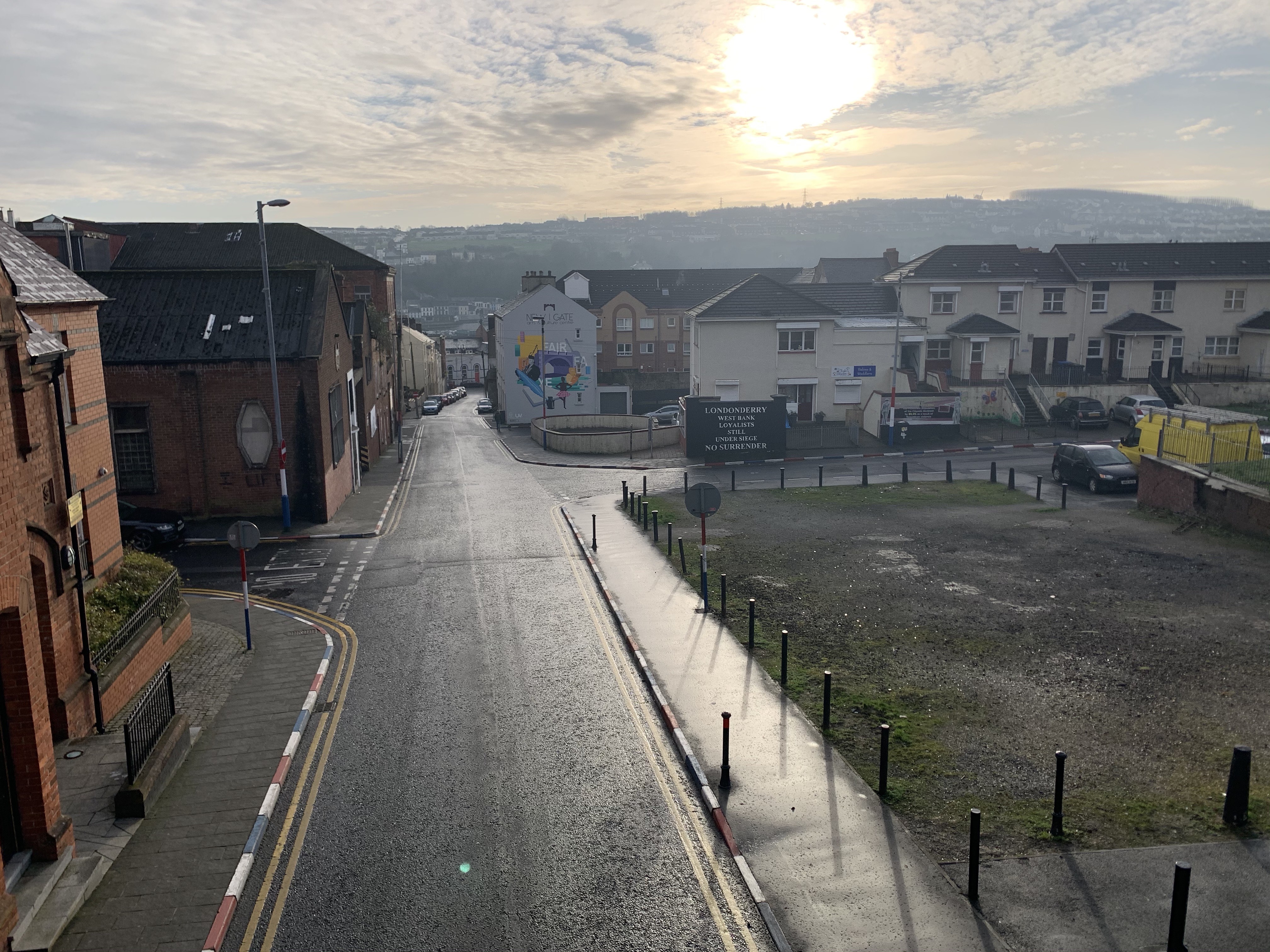
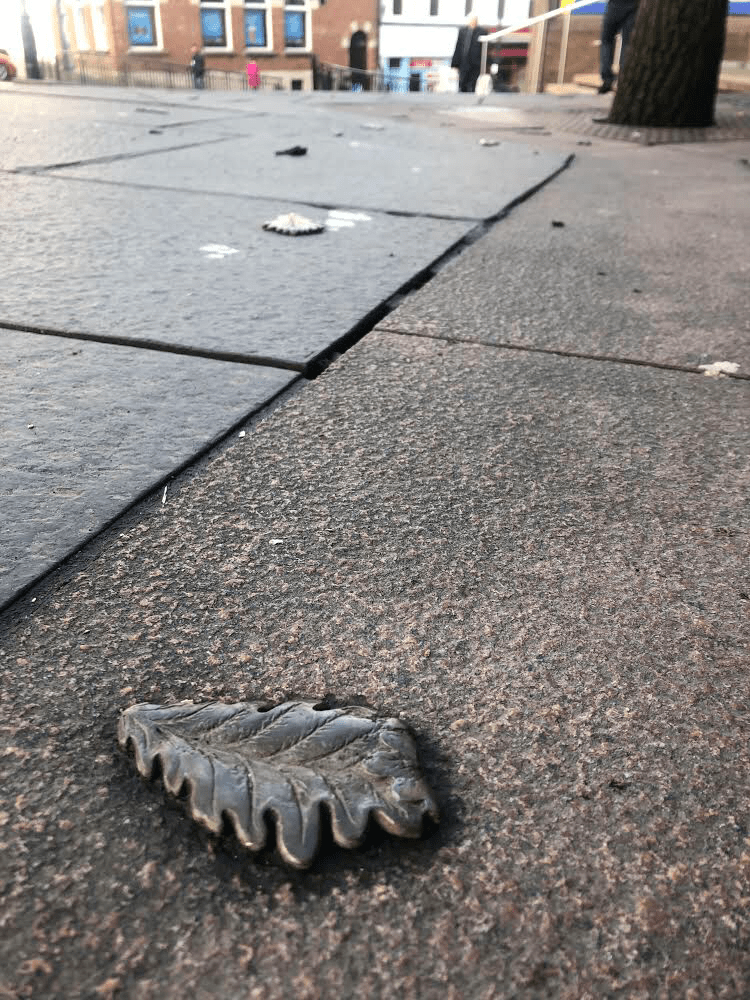
While most guides may gear you toward looking at the town’s marvelous murals, the peace bridge, and the famous Derry wall, I implore you to simply look down. Traces of the town’s history and boundary lines can be seen under ones feet. Small brass oak leaves lie implanted in the pavement around the city, they frequent the ground under oak trees and benches, giving tribute to the founding of Derry. Right outside the city walls, street corners and stop signs are painted in the famous red, white, and blue, marking the territory as a Unionist territory. Further showing who is and who is not welcome here. While it’s easy to see community partnerships occurring in Derry, there is still a lot to be done. All we can do now is take one step at a time.
More Than Where One Sleeps

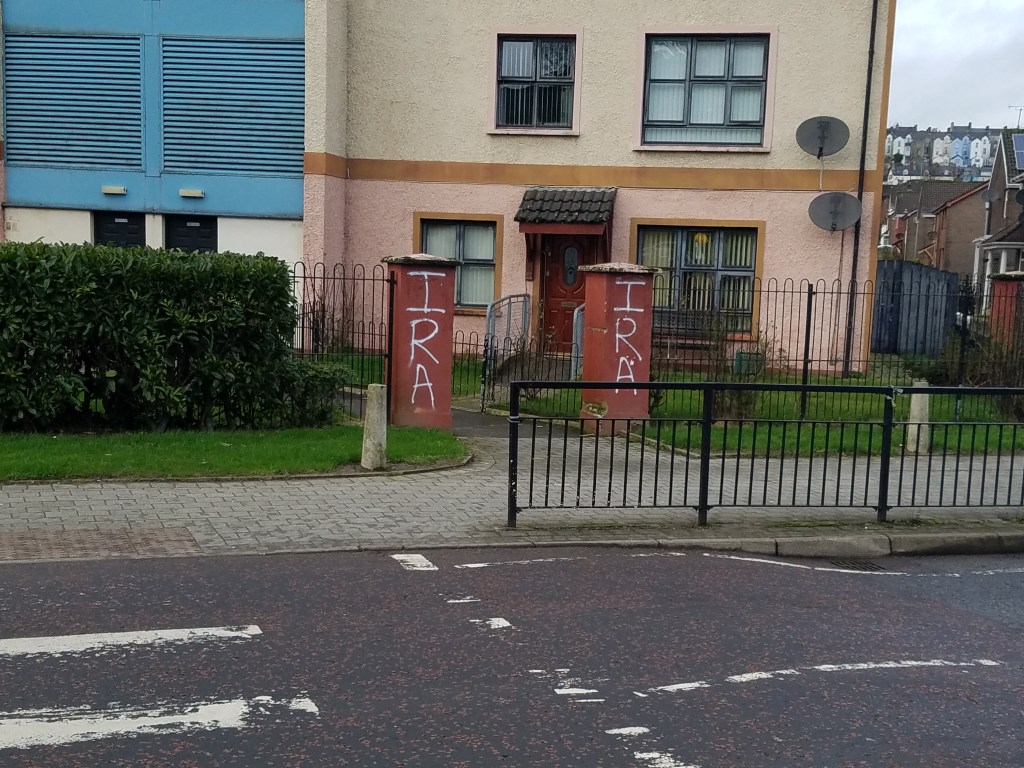
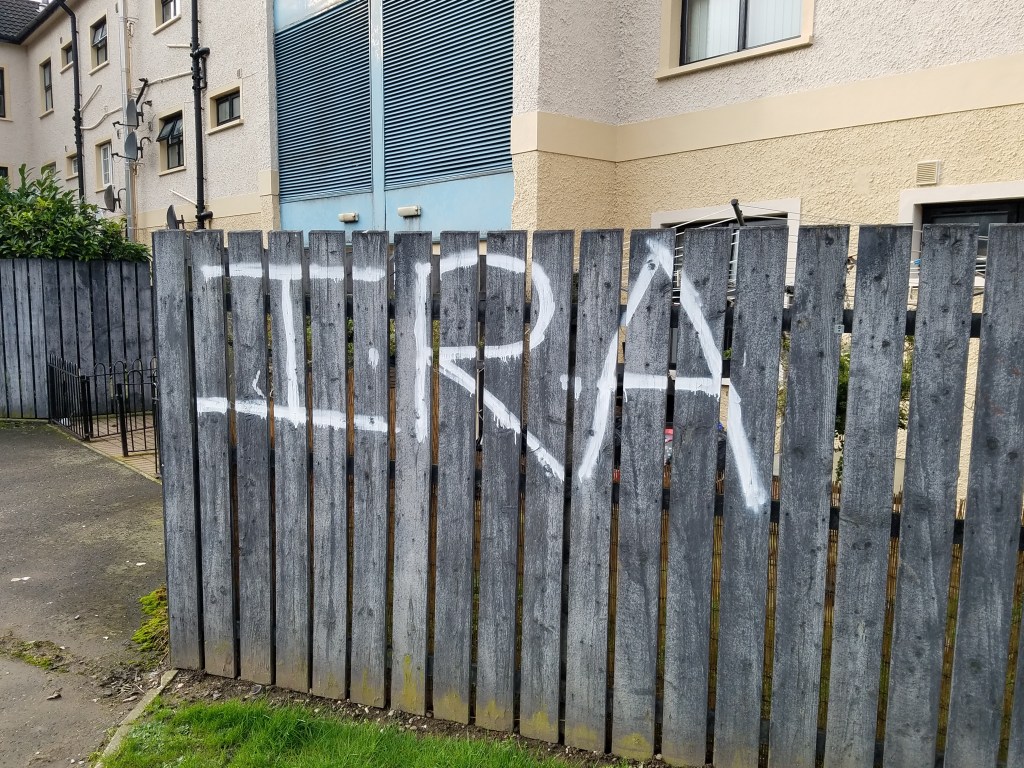
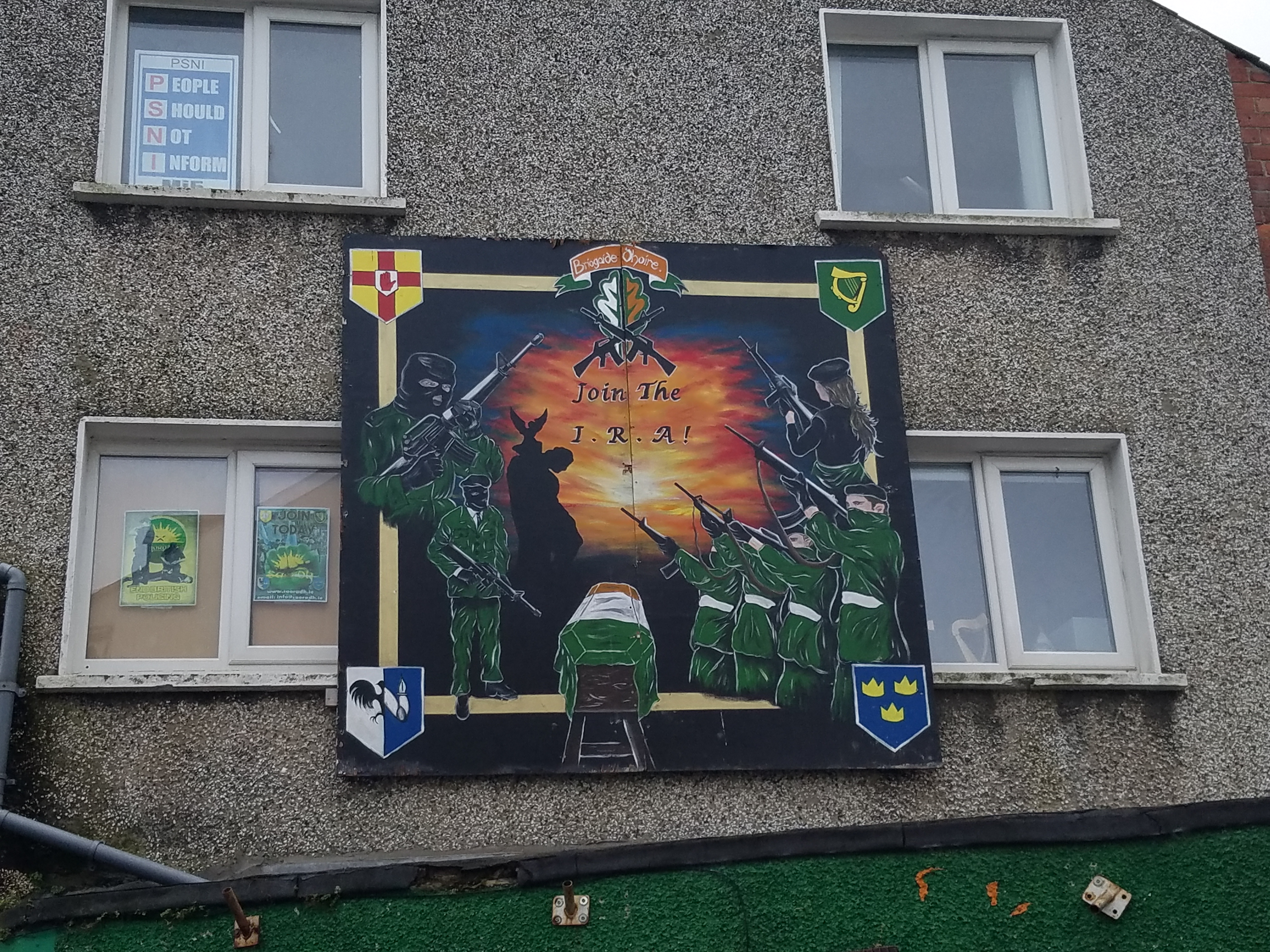
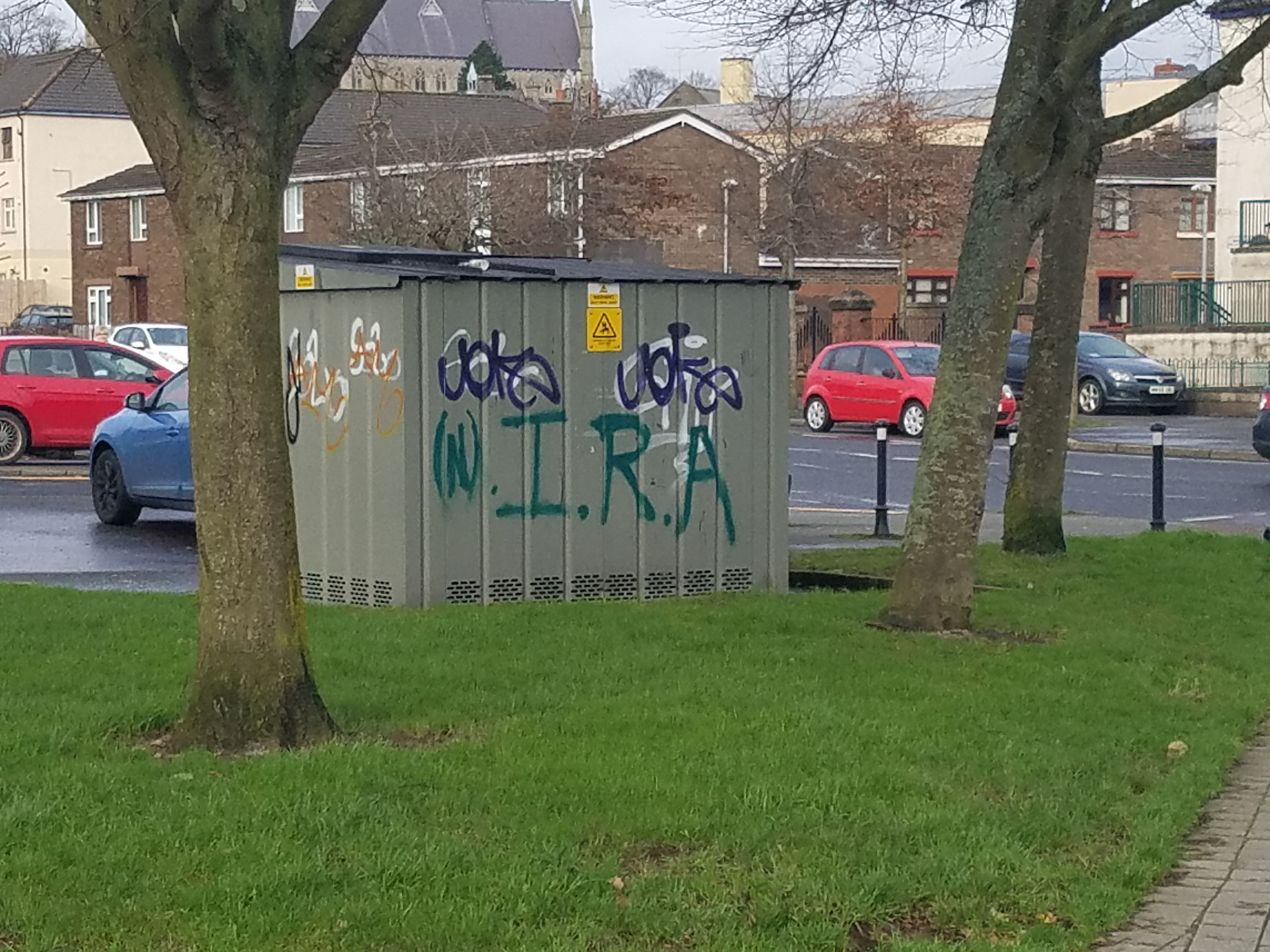
Territory, the grand determinant of power. Those who control it decide who shall reside within its sovereign borders. Marking such territory is in essence not just marking home, but rather it is a move towards declaring one’s own power. It is in claiming a place that an entity may create a community, or even preserve an existing one. Often groups mark their territory with flags, symbols, and monuments. The permanence of these things often align with the sovereignty that a group holds over an area. Conversely a lack of these well defined fixtures are indicative of waning control. It is in this regard that I am interested in the Irish Republican Army tagging around the Bogside of Derry (https://www.britannica.com/topic/Irish-Republican-Army).

The history of Derry is a history of territory, though I must admit the history of many things is really the history of territory. This can even be seen in the very name of the city itself, Derry or Londonderry, a thing mentioned by our tour guide when we first toured the Walls. The name changes depending on where or who you are talking to. In a city so divided by politics, names and territory carry great importance. 

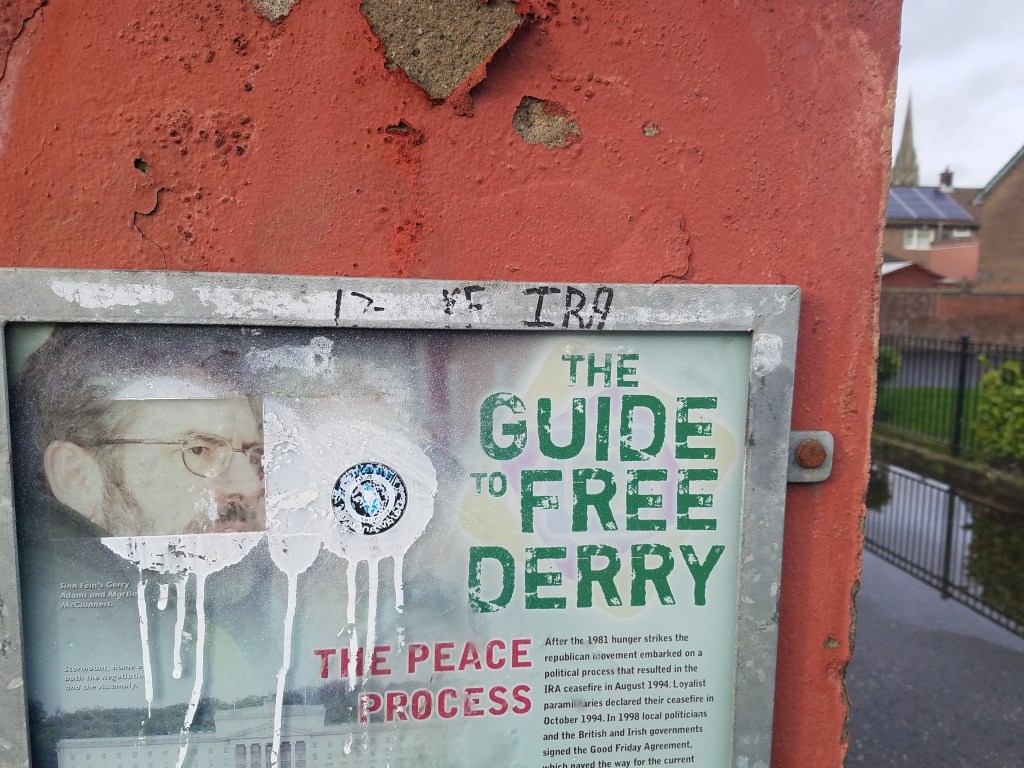
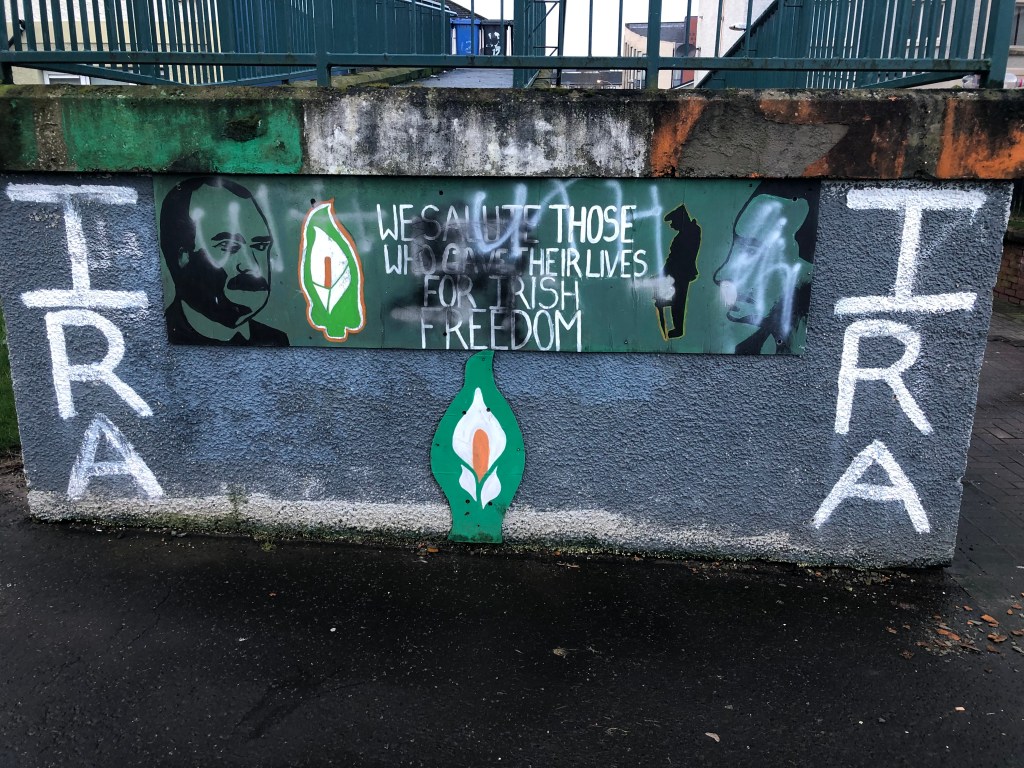
The tagging of Derry along the Bogside follows a border, starting at the Free Derry sign and follows down the row of murals. Between the two there is a sense of a territorial border, a sense of sanctuary for some. This border along the Bogside holds Irish flags from the Republic, memorials to those lost in territorial conflict, the markings of the IRA. The signs of a place claimed. More specifically it serves as a sign of an important place claimed, home. This part of the city marks the site of Bloody Sunday, a monumentally important part of history for the Catholic Nationalist Republican faction of the city. (https://www.museumoffreederry.org/content/bloody-sunday). 

For this faction the IRA represented something important, their ability to maintain sovereignty. So even in a time where they have reached less prevalence their name and symbols invoke a sense of independence. Despite the long road towards disarmament, the IRA still means something and that is important to the identity of those on the Bogside. It means not just the violence of the past, but the understanding of mistakes going into the future. For some the tagging means home, it means sanctuary.                    

“Bridging” the Gap

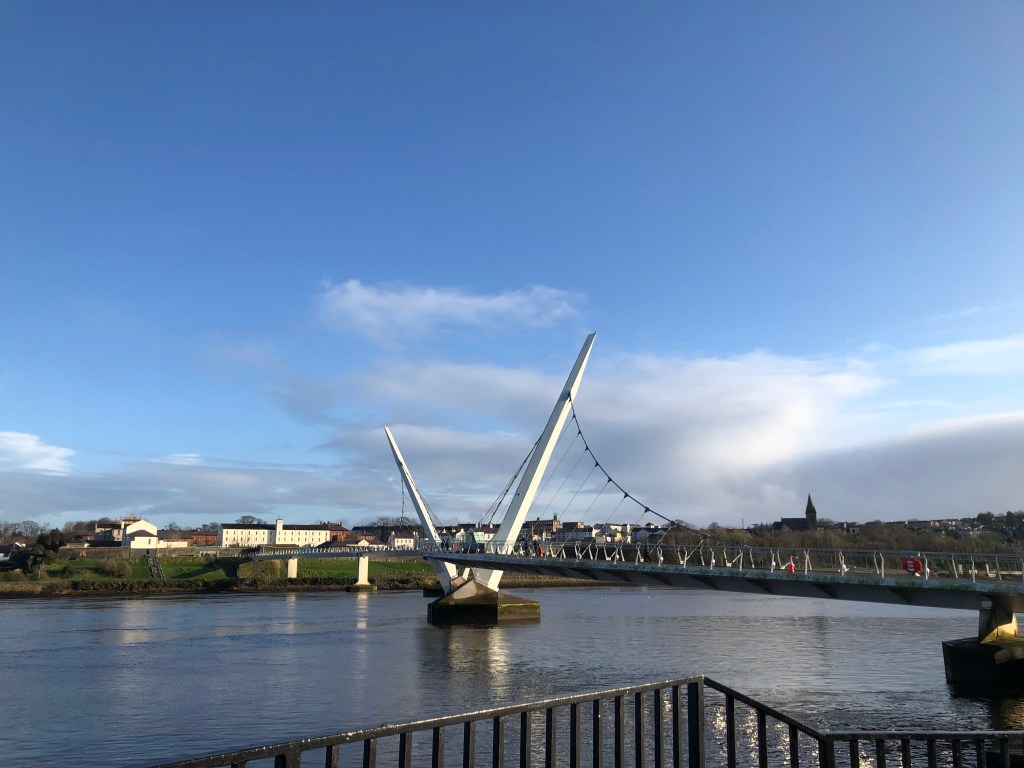
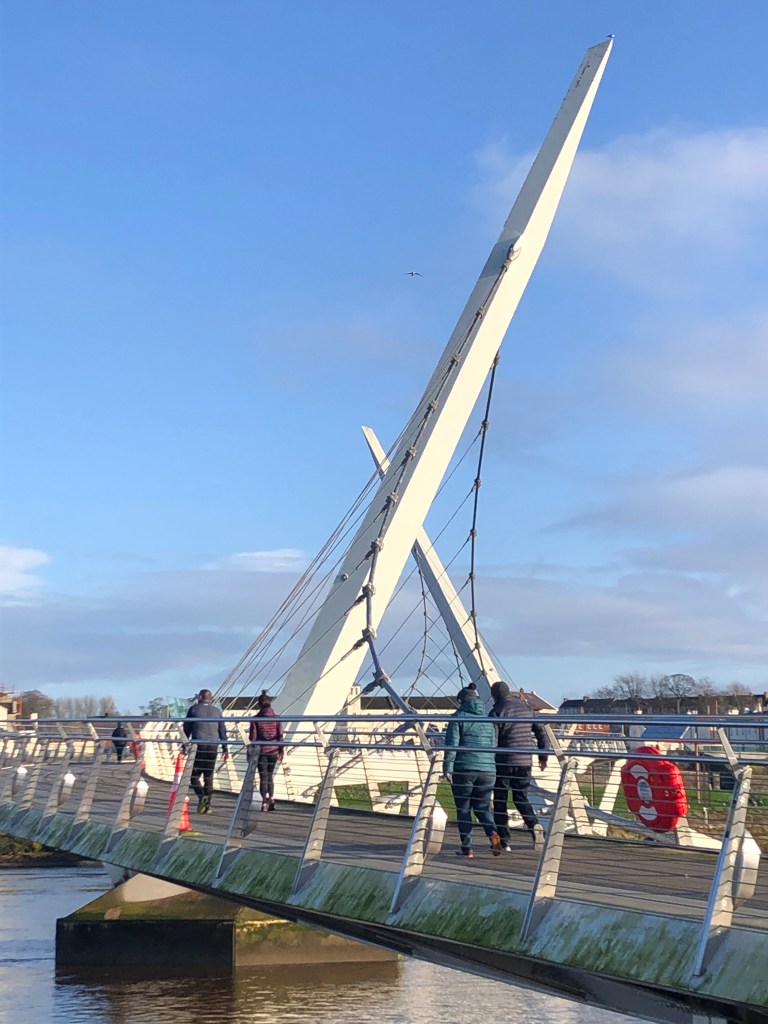
The Peace Bridge is one of Derry’s most famous monuments that has been powerfully significant for the city. This bridge acts as a commemoration of the city’s identity and healing. It was built in June 2011 and was funded mostly by the EU PEACE III Programme. (https://www.wilkinsoneyre.com/projects/the-peace-bridge).  For many years, the diversity of religions in the Derry community caused so much division within the city. These religious and political differences also allowed for a physical division as well, which has manifested as a wall around the city. The Peace Bridge was created to represent restoration of that division, since it is placed between Derry’s unionist waterside and nationalist cityside as well as designed to allow both Protestants and Catholics to use it to walk or bike across.

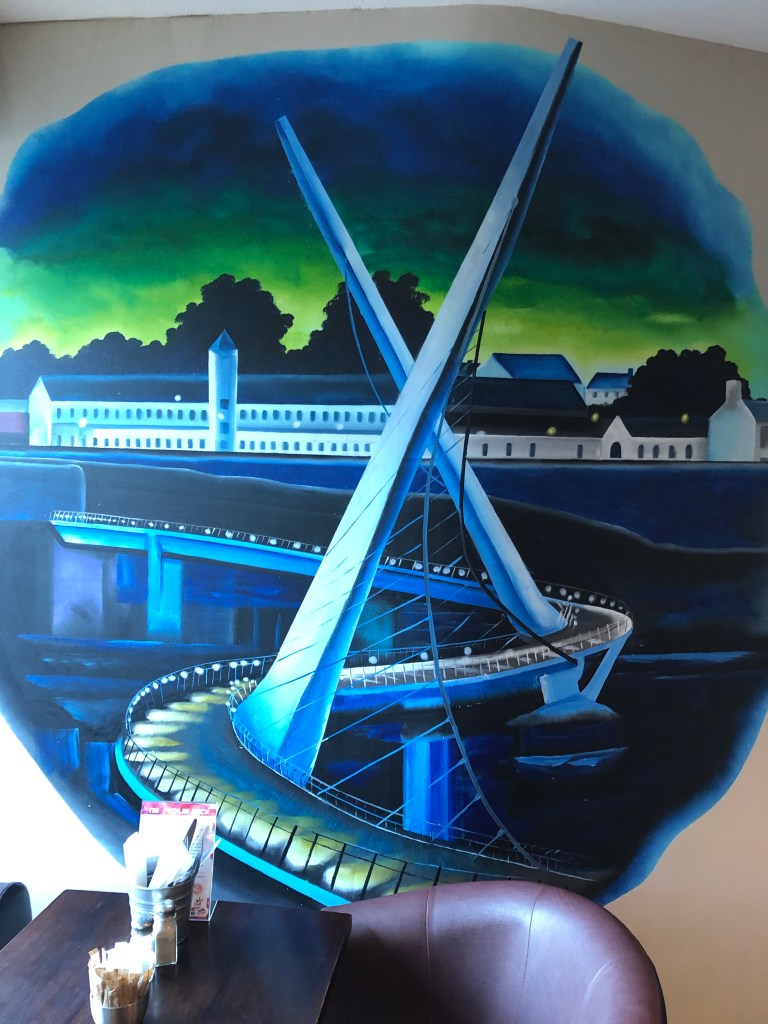
There are two branching arches coming up from two different sides of the bridge, almost like they are reaching out for each other. It has been said to be a “symbolic handshake across the river” (http://www.irelands-hidden-gems.com/derry-peace-bridge.html). The two structures are identical, which I feel is an important symbol of the unification of equal sides. This is showing and allowing the community to understand that one group is not better than the other. It is a physical and metaphorical bridge to the gap that used to cause so much hurt and division within the Derry community. There was a painting of the Peace Bridge located in The Pickled Duck Cafe, which is another reminder of peace, unity, and the restorative work being done. 

The Open Wound of the Bogside.

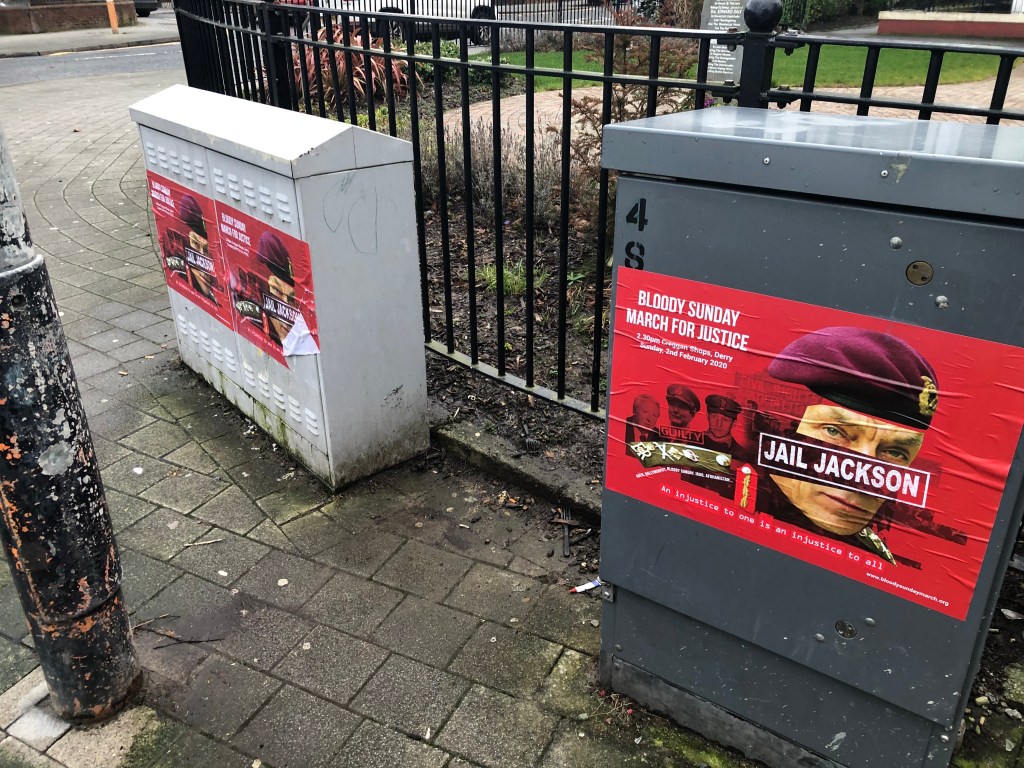
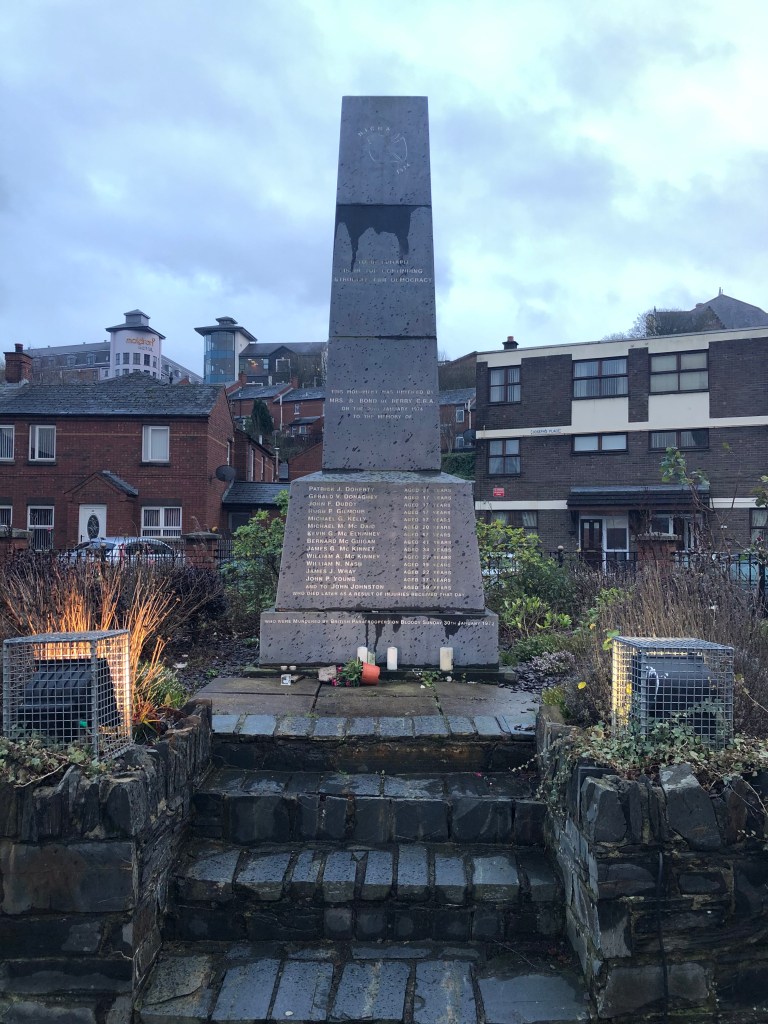
Rossville Street was once a normal street with humble housing on the Bogside of Derry Ireland, but after January 30th, 1972, it would never be the same. On that date, around 15 thousand people gathered to peacefully march against the imprisonment of over 300 people without trial for being affiliated with the IRA. (Irish Republican Army) Shortly after the march began, 13 lives were lost and 18 people were shot and injured by British paratroopers with no reason to open fire. One of the injured passed away only months after the incident due to their injuries. Now, Rossville Street is home to many murals that contain political messages. There are also the politically charged taggings and the Bloody Sunday Obelisk Memorial which displays the names of the 14 victims who died during the protest. The Obelisk sits as a sad and mournful reminder of lives lost. To some, they are innocent lives who were protesting for their rights, but to others, these people were not innocent, they supported terrorists and deserved to die. This thought process depends solely on the individual’s political affiliation. To the people of Derry, Rossville Street is a place of strife, with murals, taggings, and posters on every wall that you can see, it is a place to express the grief and anger of lost lives, it also serves as a place of remembrance and a place to express political grievances. Rossville Street is located parallel to the walls of Derry but the identity it currently holds was ascribed by the events in which took place on it and the people that were affected by the loss.

Soon, there will be another march for justice.
Flowers and small knick knacks sit fallen over from strong winds in front of the Bloody Sunday victim's memorial.
Flowers and small knick knacks sit fallen over from strong winds in front of the Bloody Sunday victim’s memorial.
Politics are still very raw on the Bogside.
Political grievances are displayed.

No Surrender

IMG_0447


No surrender. Two simple words spoken by the Derry Garrison over 300 years ago. Yet they still remain just as powerful to this date, and have been embodied by the citizens of Northern Ireland, no matter the group they identify with. You can find those two words posted within Derry, including just outside the wall on a placard. Or scattered throughout the Siege Museum located inside the walls.

IMG_0586

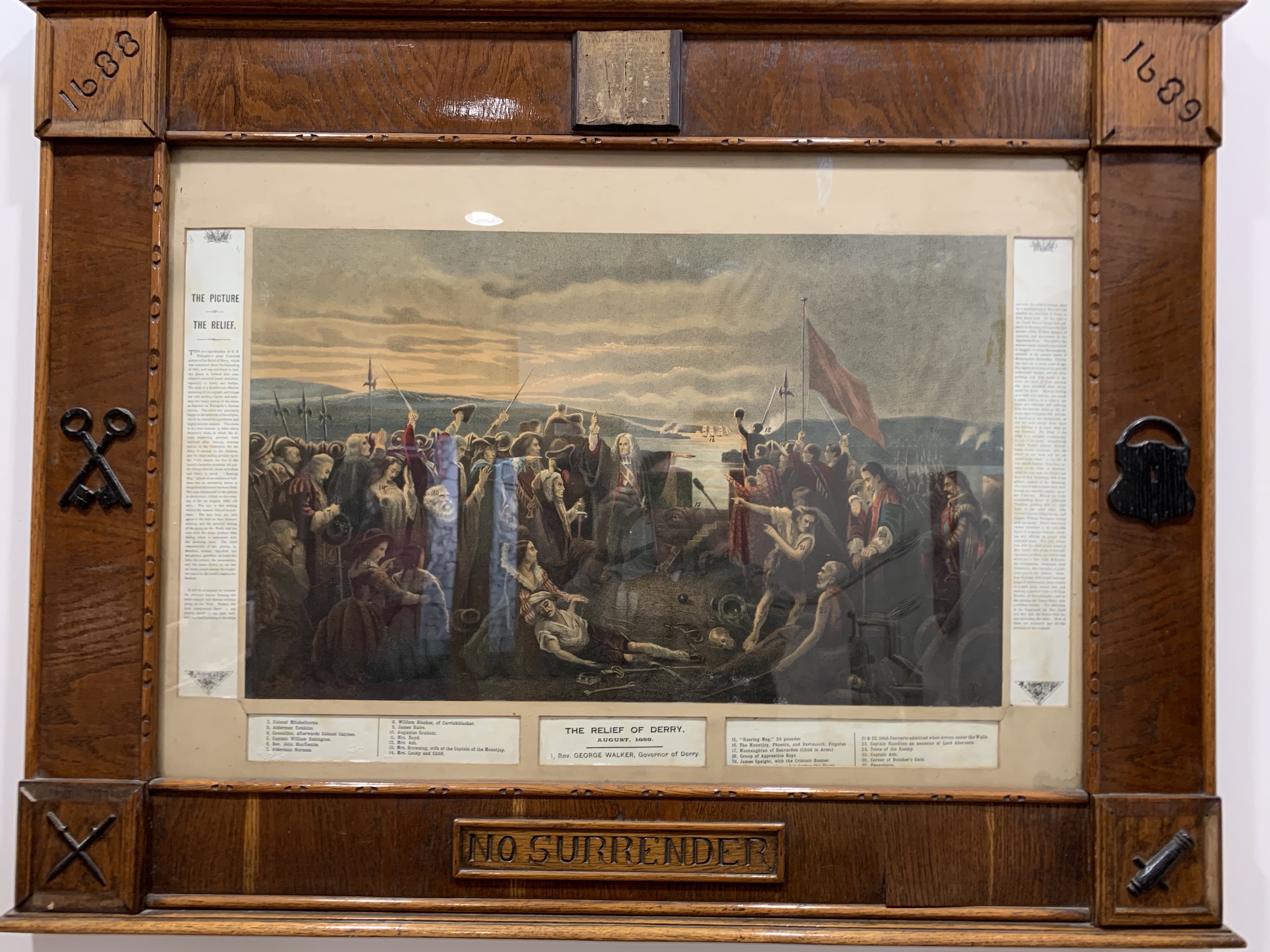
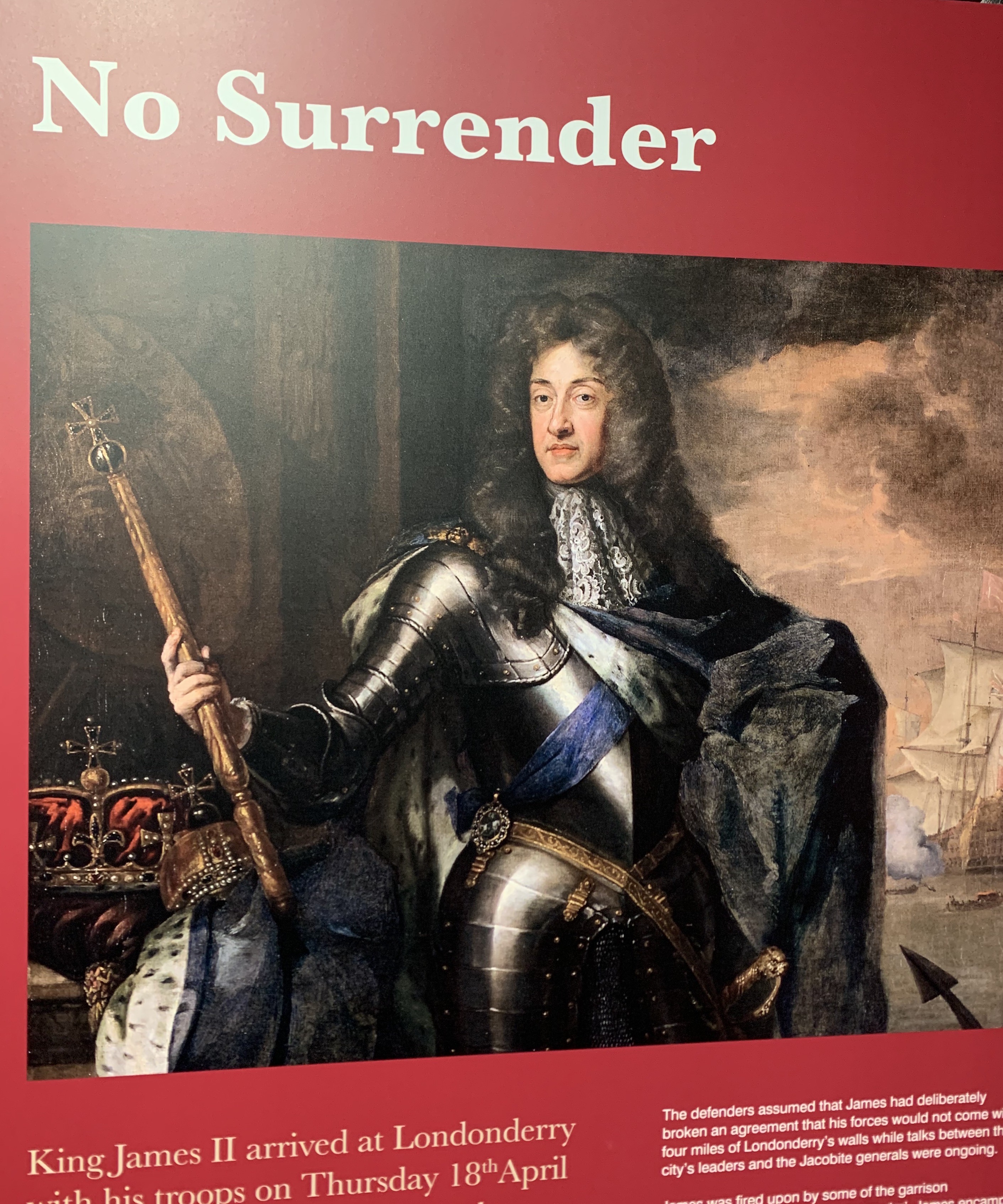
Throughout the Siege Museum you can find the words “No Surrender” all over. On the walls, on portraits, even on multiple items within the gift shop. This saying has been embodied by the population and is even being used for monetary gain by throwing it onto apparel and other personal belongings such as wallets or knick-knacks.

Those words that became famous in 1689, have remained a cornerstone in Northern Ireland to this date. With the seemingly never ending conflict still taking place, you can see “No Surrender” as a way of life. Both sides have refused to back down for hundreds of years, costing them an immense amount of casualties and pain along the way.

IMG_0591

“No Surrender” has turned into a lifestyle for these people, however, some form of “surrender” may be necessary in order to one day have a United Ireland. Neither side willing to cede and give way to the other group. The closest any side has come to any sort of deal was The Good Friday Agreement  in 1998, unfortunately conflict has remained even after this agreement. With Brexit quickly approaching, the world will be watching to see if Northern Ireland turns its attention to reuniting with the rest of their Irish kin and the Republic of Ireland.

St. Columb’s

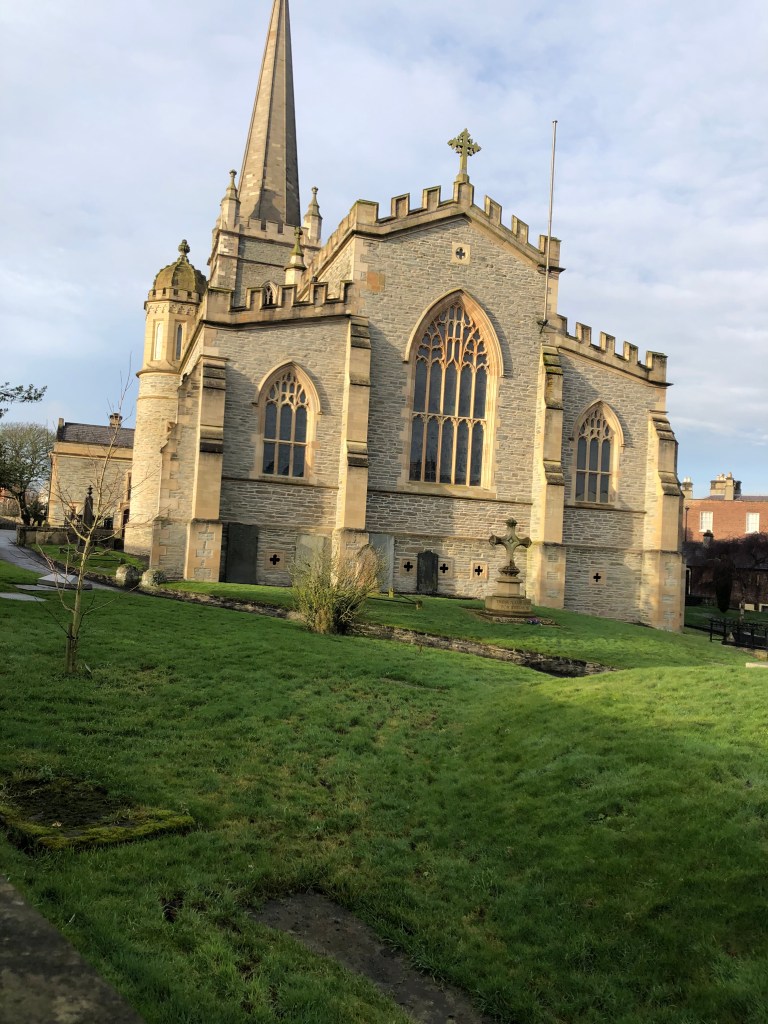
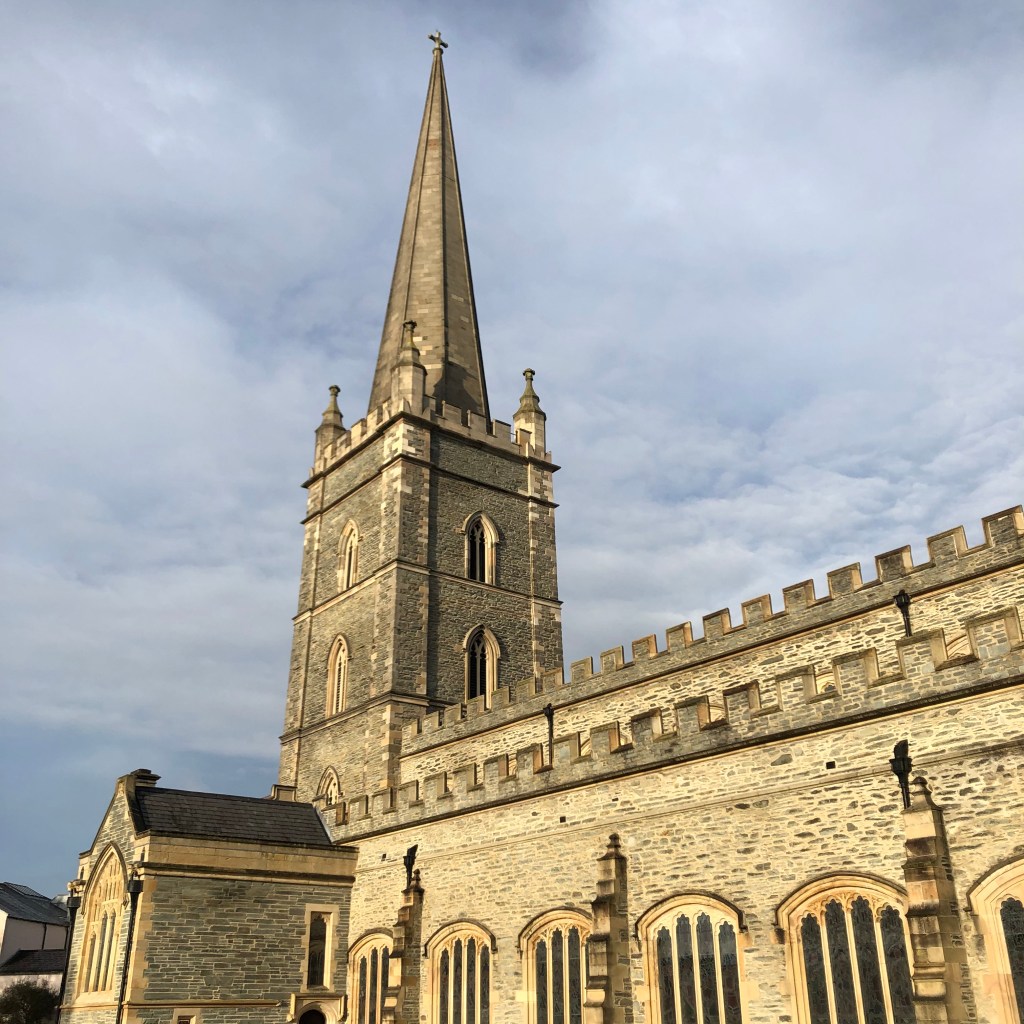
St. Columb’s Cathedral was built in 1633 and was founded by The Honourable The Irish Society. It was built after the Protestant Reformation and is one of the two Protestant churches that reside with in the walls of Derry. St. Columb’s represents a source of identity for both the Protestant/ Unionist and Catholic/ Nationalist communities. St. Columb’s is not only within the walls of Derry, but it resides in a community where the majority of the members are Catholic/Nationalist. The church is a reminder to the rest the community that there are other religious identities in the community and that these identities have been part of the city for generations.

There are many organizations that are pushing for peace in Derry. St. Columb’s is known for promoting unity for Christians churches (https://www.stcolumbscathedral.org/). As we know, both Catholic and Protestant religious derived from Christianity. Since ‘The Troubles’, the hatred between both communities has increased. St. Columb’s is showing that there are similarities between both communities and that there is a shared history, which is a step forward towards reconciliation between both communities .

There is no specific path to peace or reconciliation. It might take a few more years , but the time for reconciliation is near. It is not about who is “correct” or “wrong” but is about healing the wounds that have been opened. Having a religious entity pushing for peace building shows that there is hope for a peaceful tomorrow within the religious community . It is also very important that a religious entity is pushing for peace, and resides within one of the oldest building of Derry. Which holds significance to both communities. The building is a space that shows that both communities have a shared history. It is not a history of “us” and “them”, but rather a history of “we”.

Derry Girls

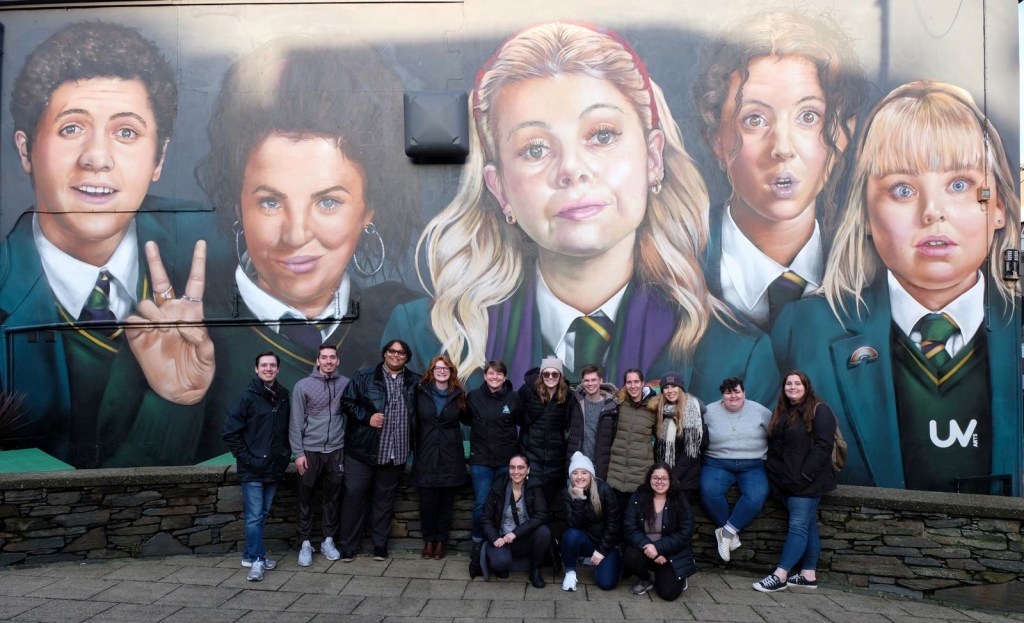
The group of students apart of the Northern Ireland Jterm trip in front of the Derry Girls mural.

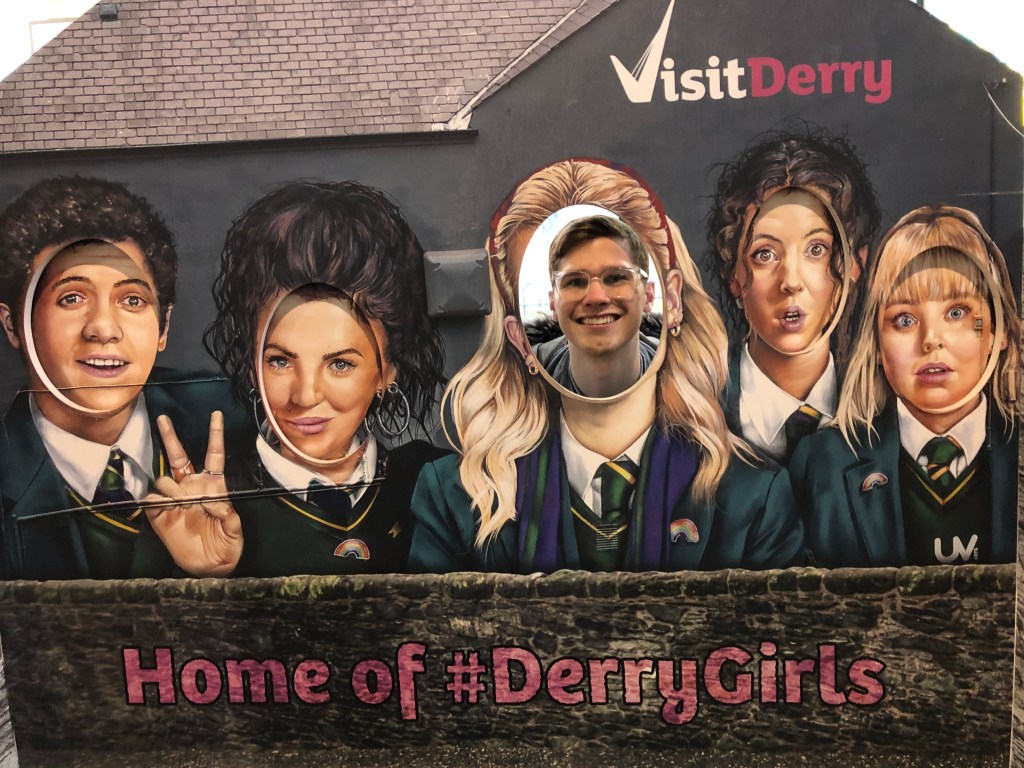
Right outside the walls of Derry, before entering into the city centre, there is a mural of the five main characters in the show Derry Girls. Interestingly enough, on our first day when we took a guided tour of the city, the Derry Girls mural was the first stop that our tour guide took us to. The whole city seems to have an affection for and appreciation of the television series. In fact, according to the Belfast Telegraph, Derry Girls is the most watched television program in Northern Ireland since that sort of information has started being recorded in 2002 (https://www.belfasttelegraph.co.uk/entertainment/film-tv/news/stall-the-ball-derry-girls-has-become-northern-irelands-biggest-series-ever-36628085.html). Additionally, in its short two seasons, Derry Girls has already received multiple awards including Radio Times Comedy Champion Award, Best Comedy from IFTA Gala Television Awards, Best New TV Sitcom from British Comedy Guide Awards (https://en.wikipedia.org/wiki/Derry_Girls).

It has become evident throughout the brief time that we have been in Derry that all the locals have personal connections to The Troubles. Whether they were alive through it all or not, they know the impact of that time on their family. I believe this is partly why Derry Girls as a show has meant so much to the people of Northern Ireland. It details what it was like for teenagers to navigate growing up during the end of the troubles. However, it displays their story in a light-hearted and comedic way. The sincere local who gave us our guided tour of the city shared with us what Derry Girls meant to her. She actually attended the same all girls, Catholic school that is shown in the series during the same time that the show is set on. Therefore, for her, the show reminds her of that time in her life.

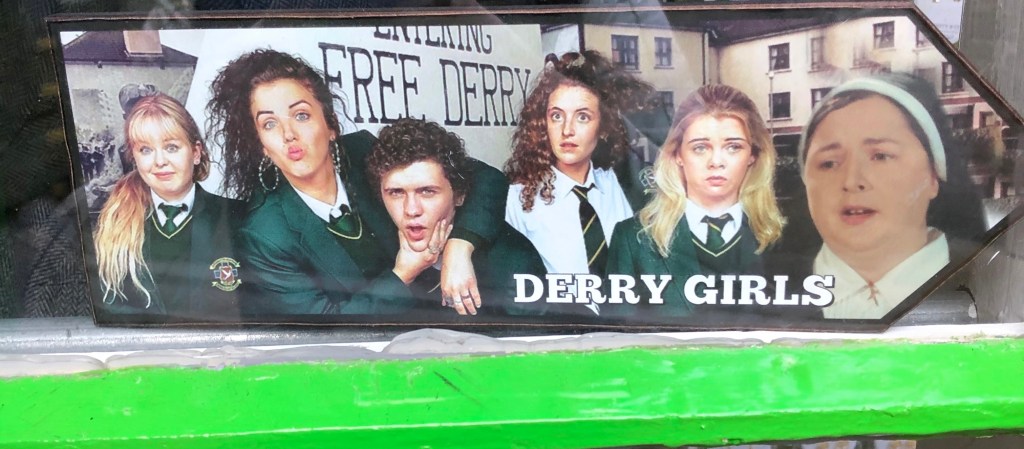
A sign of cast of Derry Girls available for purchase at a local gift shop.

I believe that the show Derry Girls has also had a positive effect on the economy in Derry. Gift shops sell merchandise or souvenirs from the show such as the sign depicted above. There were mugs and keychains for sale as well. Additionally, because the series was filmed in both Derry and Belfast, there have been tours designed to show tourists the famous filming locations and places where the characters go during the show. While looking through the guest book at the Derry Visitor’s Center, I noticed that a family from Texas wrote, “we had to come see the home of Derry Girls.” You can find information on how to book a Derry Girls tour here.

This is me at the Derry Visitor’s Center posing with the cast of Derry Girls.

Two seasons of Derry Girls are now avaiable on Netflix if you are interested in watching the show or learing more about where we are currently studying for our J-term class!

The History of Derry Ring

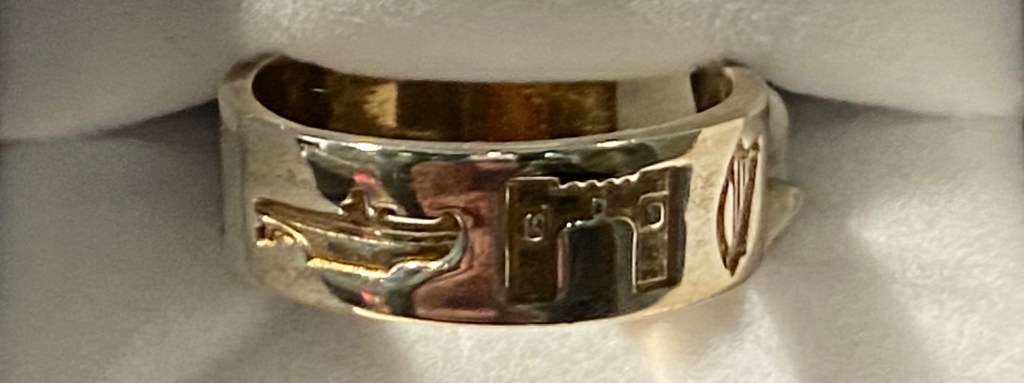
The History of Derry Rings are a small but well encompassed part of the Derry culture and history.  It started out with eight different symbols on it, all with the intention of remembering the history and being able to carry it with you.  As time went on, more symbols were added to the ring to continue showing the expanding history of Derry (especially because many of the new symbols are symbols of peace). The rings itself are made by a local Derry jeweler and historian that collaborated, with the release of the ring in 2004. Since then, people have used the rings as memorabilia, for wedding bands, or to remember the history and to carry it with them (https://www.derryjournal.com/news/the-historic-theme-with-a-modern-touch-at-danny-cooley-s-1-6138481).

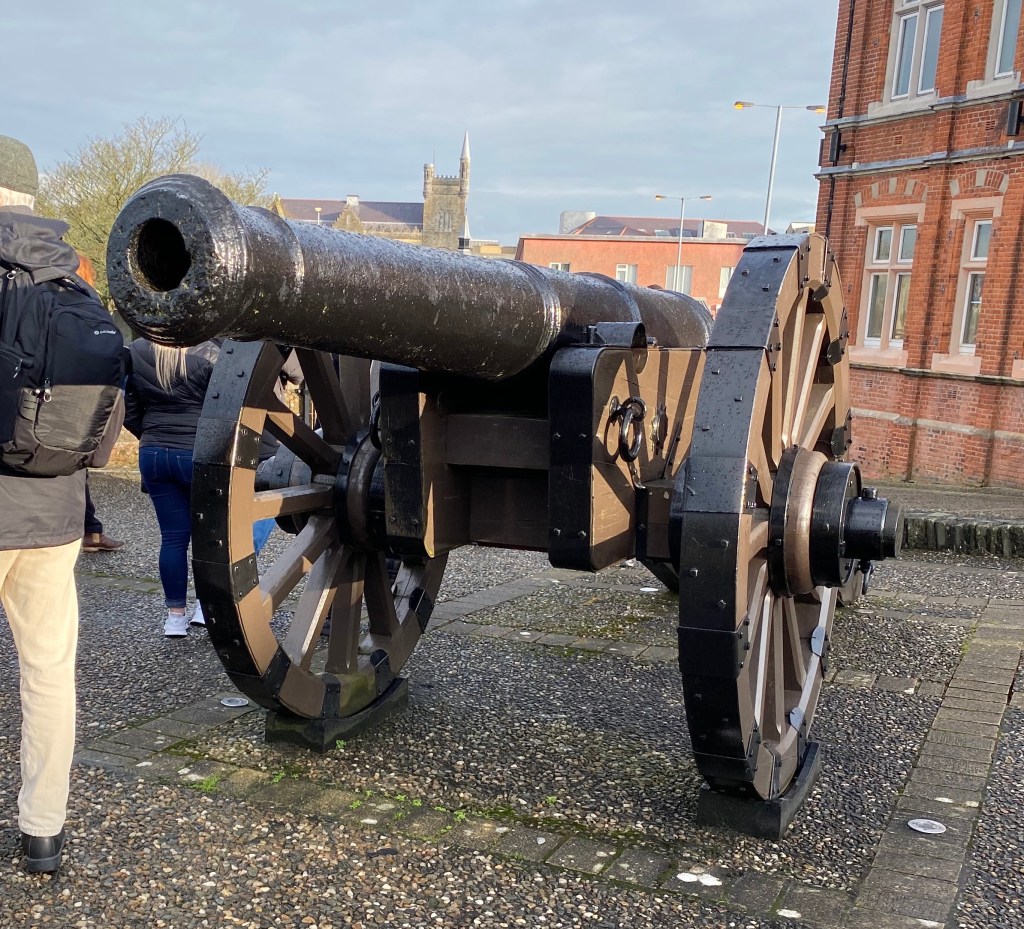
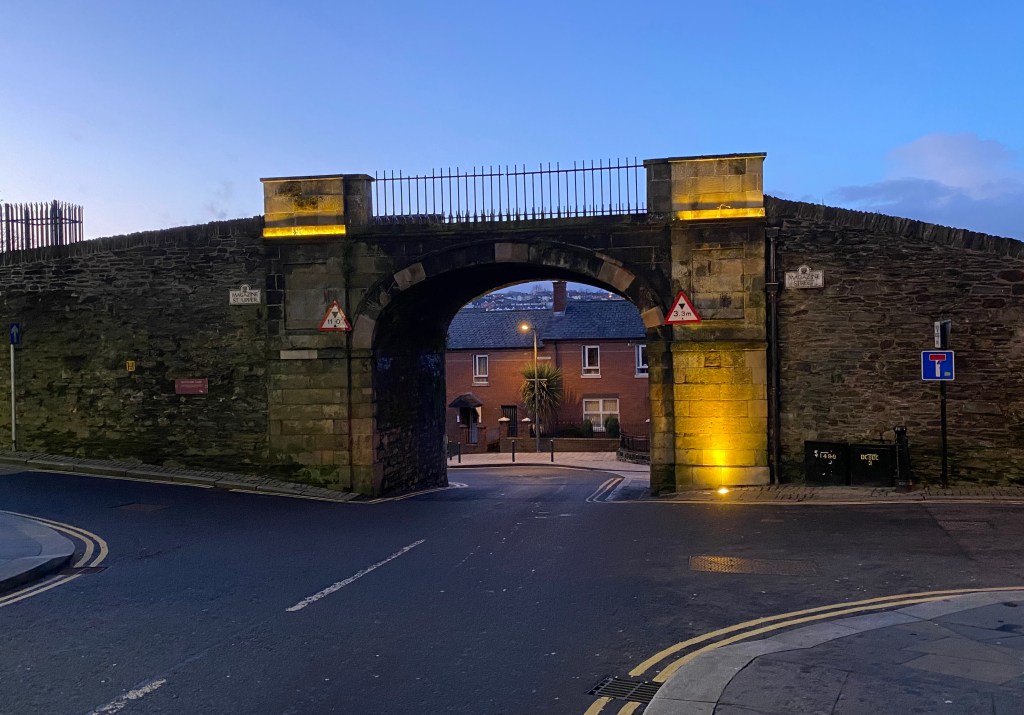
The eight original symbols were; the oak leaf, Roaring Meg, one of Derry’s city gates, a harp, a submarine, St. Columba, a sailing ship, and the Free Derry Wall.  This was to tell the history from origins of Derry and the Oak Grove, to The Siege of Derry, all the way up to the end of the Troubles and the Good Friday Agreement in the Free Derry Wall symbolizing a new Derry and a new start (https://www.derryjournal.com/news/the-historic-theme-with-a-modern-touch-at-danny-cooley-s-1-6138481).  

These original symbols, and the new symbols they have added after can be seen all around Derry.  The walls of Derry are still very strong, and have many gates that you can enter through. The oak leaves can be seen on the sidewalks and on the trees around the cathedral that sits atop the highest hill.  This ring is truly a circle of the history of Derry, and for a city with people that have lived through the history, and continue to remember in whatever form that looks like, this ring symbolizes their culture, their struggle, and the perseverance of Derry and its people.

Concerns & Interests of Derry Youth

UV Arts is a youth art collective in Derry, Northern Ireland that seeks to build community through creative expression and challenge the political and ideological divide, specifically, through graffiti, murals, and other forms of visual art (https://www.nesta.org.uk/feature/new-radicals-2018/uv-arts/). The following three murals were all created and designed by youth participating at UV Arts. 

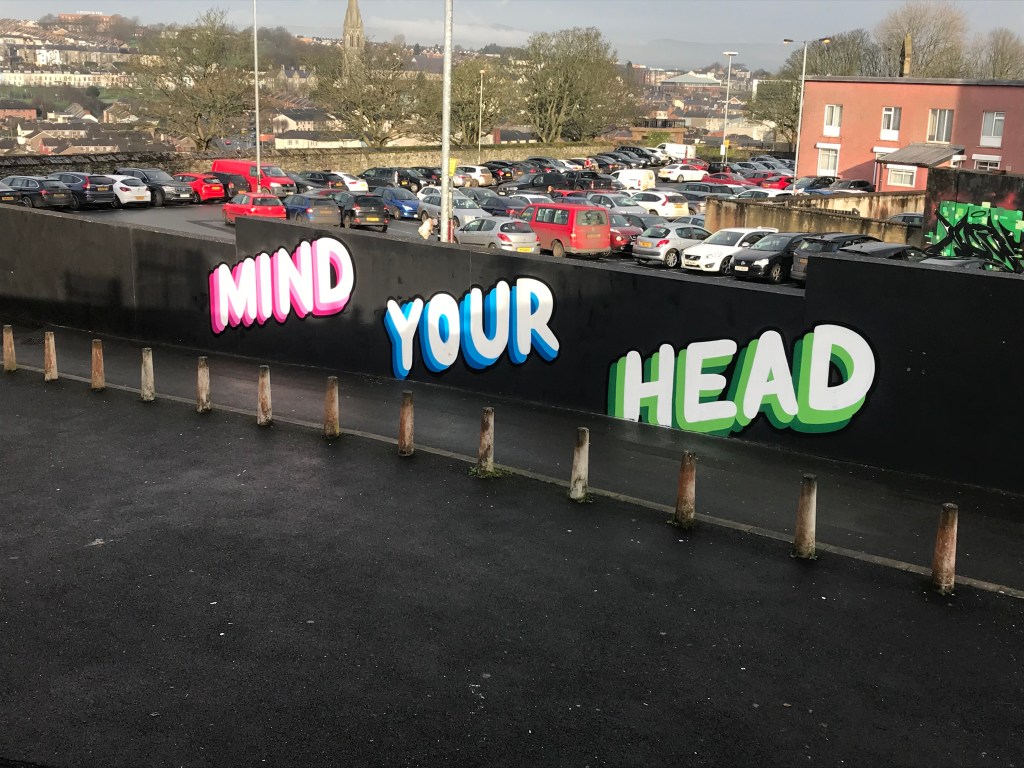
UV Arts “Mind Your Head” Mural along the Derry Walls

A UV Arts mural inside of the walls displays in colorful lettering the phrase “Mind Your Head”. This is in reference to a mental health campaign. The mural is meant to emphasize the mental health concerns of the people that live in Derry. Many residents are dealing with the lasting impacts of the troubles that have led to high rates of post-traumatic stress disorder, depression, and death by suicide among community members. In fact, Northern Ireland has the highest rate of suicide in the United Kingdom. It is reported that 5 people die by suicide each week (https://www.bbc.co.uk/news/uk-northern-ireland-foyle-west-49718458). Suicide and mental health issues touch every person in the Derry community and most recently a well-know radio show host named Stephen Clements who passed on January 7th, 2020.

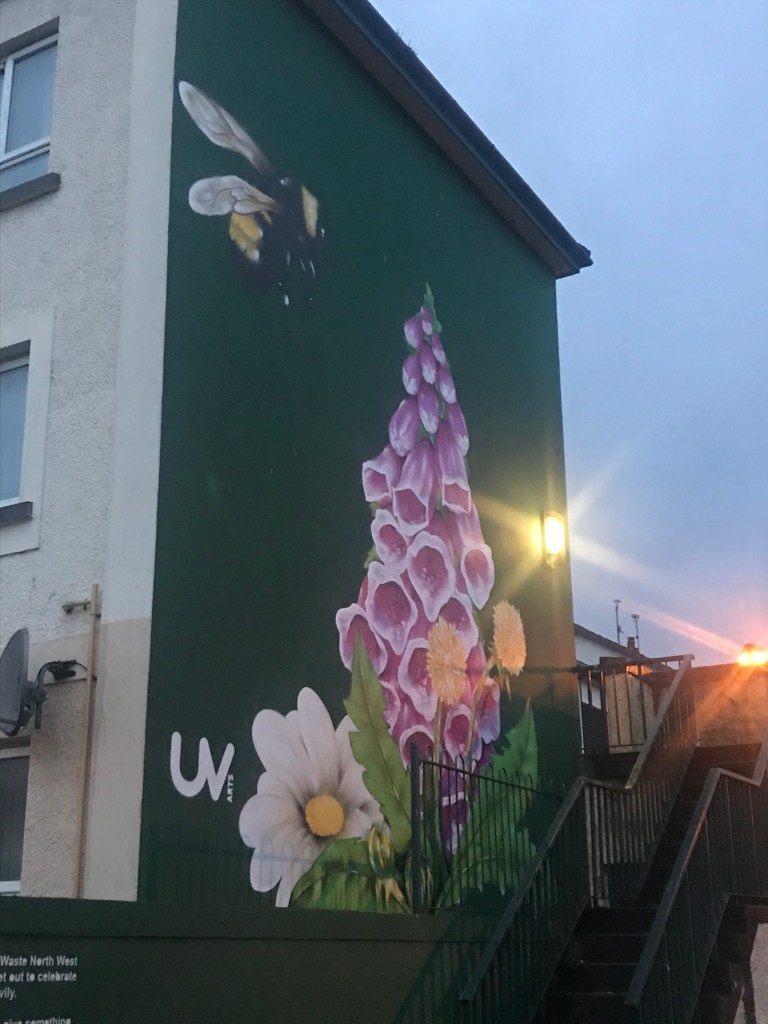
UV Arts “Weeds Shall Overcome” Mural in the Bogside of Derry, Northern Ireland

In Derry, murals are among the most common forms of political expression and remembrance. Some murals on the Bogside of Derry are dedicated to remembering the victims of the troubles and others showcase a more blatant political message such as anti-PSNI (Police Service of Northern Ireland). UV Arts, however, is changing the message of murals, not only throughout the Bogside but in every part of Derry. This mural, titled “Weeds Shall Overcome”, highlights a different, more environmental justice-focused message. The idea for the mural came from the EU and UK air quality findings in the Bogside, which found higher levels of nitrogen dioxide than reccommended. (https://www.derryjournal.com/news/weeds-shall-overcome-the-clarion-cry-as-mural-highlights-eco-issues-1-8641760). The bee and wildflowers represent the need to protect the environment through letting weeds grow and continuing to not use pesticides in the landscaping and supporting the local ecosystem. This mural highlights the concerns about climate change and the environment of the younger generation of Derry. 

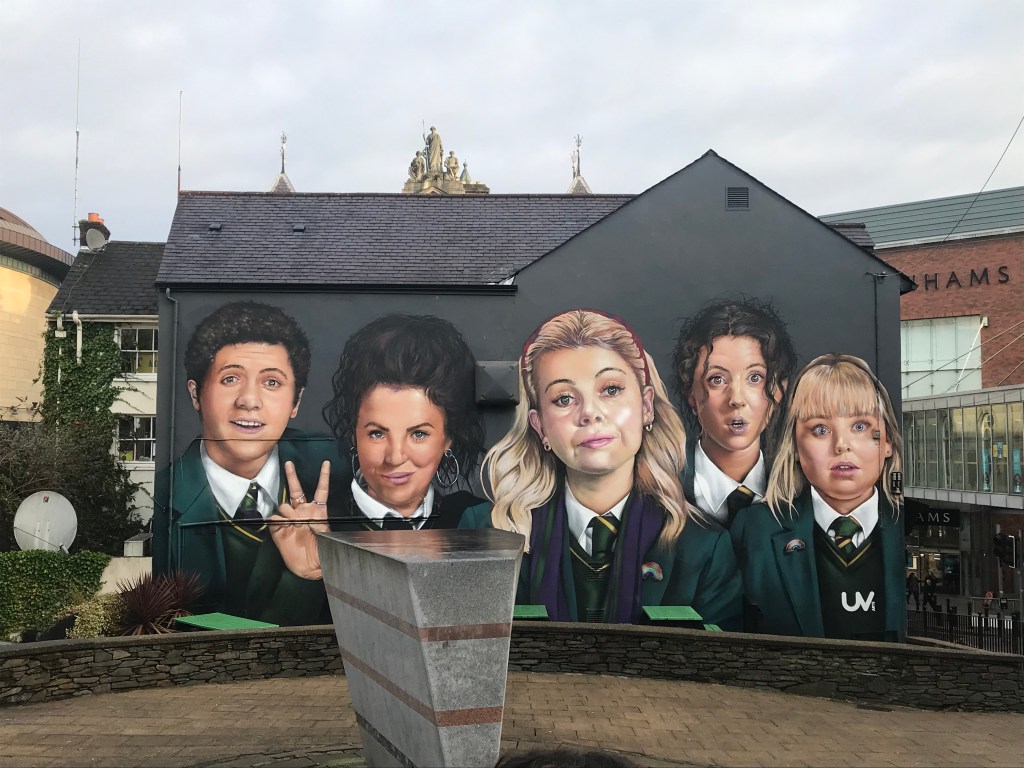
UV Arts “Derry Girls” Mural, just outside of the Derry Walls on the Foyleside

A recent addition to the side of Badgers pub includes a mural dedicated to the show “Derry Girls.” This mural represents what younger generations of Derry residents find important and want to showcase. There seems to be a shift from focuses on the past to a look towards the present and future of the community.

Amphitheaters: Creating a Context for the “C’s” to Occur

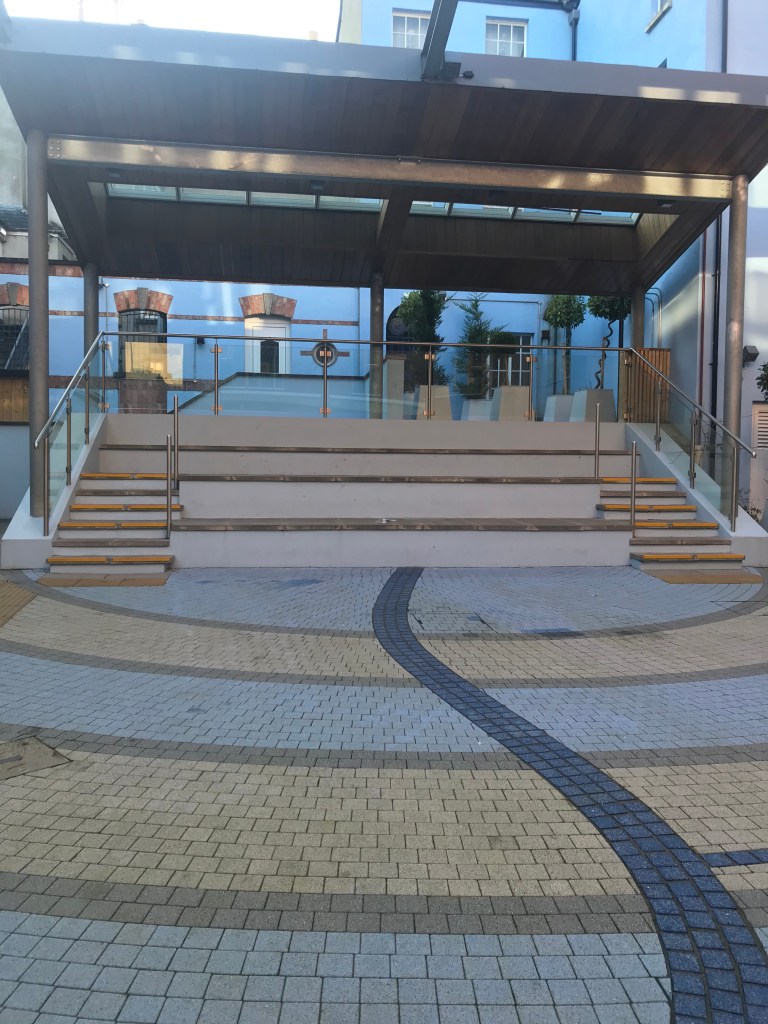
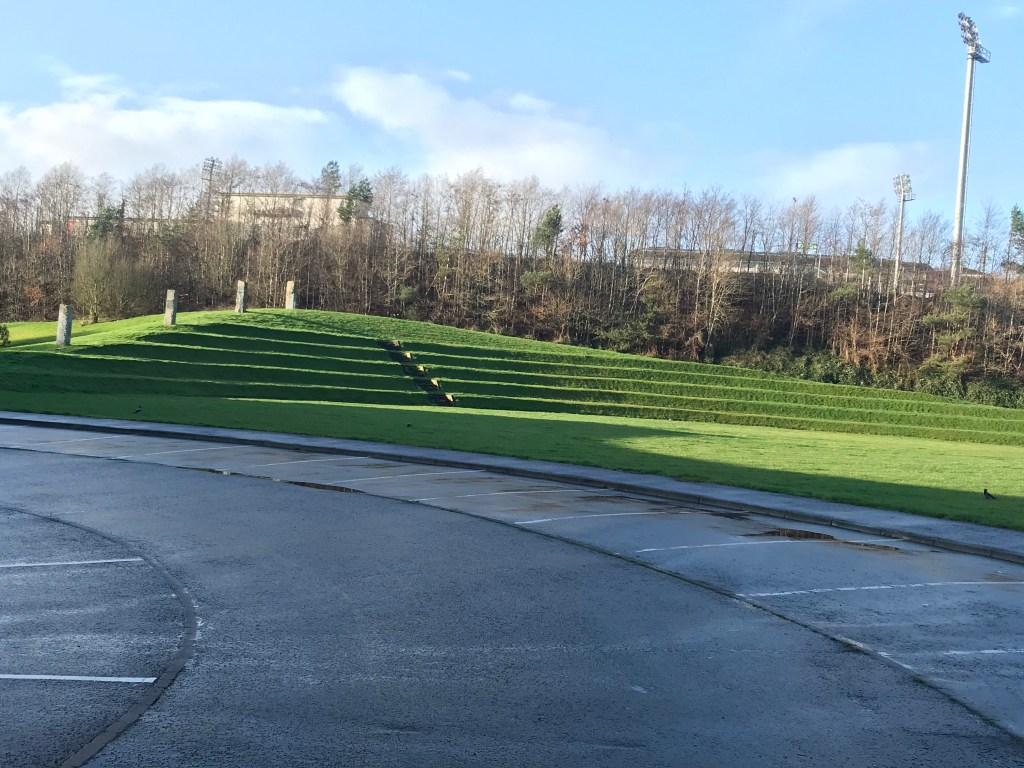
An amphitheater located on the cityside in the Garden of Reflection, a shared space to reflect, meet, and relax.

Londonderry is a unique area to study, considering the impact ‘The Troubles’ had on this place, and the conflict that is still present today. There is a clear division between the walled city and the bogside of town, which can be traced back to the 1600s. People’s identities are very much tied to their historical roots, and it could be argued that the past has been carried into the present.

While some may say the 1998 Good Friday (Belfast) agreement supposedly marked a new future for people to live into, the heart of the matter is that there is still a division among people today. There has never been a greater time to begin peace building than now. And in order to create and sustain peace, there must be:

Community. 

Conscious communication.

Collaboration.

Collective cooperation.

Conversation.

CONNECTIONS.

As you may have noticed, each of these words happen to start with the letter “C”. In my opinion, they are all crucial components for working towards a shared future. 

Yet there must be a designated space to cultivate connections across divides. 

Thus, the birth of the amphitheater, a shared public place where people can come together as one.

Rather than focus on a more traditional place such as Londonderry’s wall or its murals, I wanted to use this blog to highlight the amphitheater as a more abstract place at which people gather and have the ability to transform their identities. An amphitheater, much like the one pictured below, is a space where people of diverse beliefs and backgrounds can unite around a common interest. For example, in the case of Northern Ireland, Unionists and Nationalists can come together and share a meal, engage in dialogue, or play music.

An amphitheater located on the bogside at Gasworks centre.

I am fully aware that Northern Ireland has a complex history, and some could argue that amphitheaters make no difference in peacebuilding. Yet I choose to think optimistically and I believe amphitheaters have great potential. If amphitheaters are utilized with the intention of healing from the past, society will transform. People will form relationships despite their differences and this will ultimately lead to justice, peace, and reconciliation.

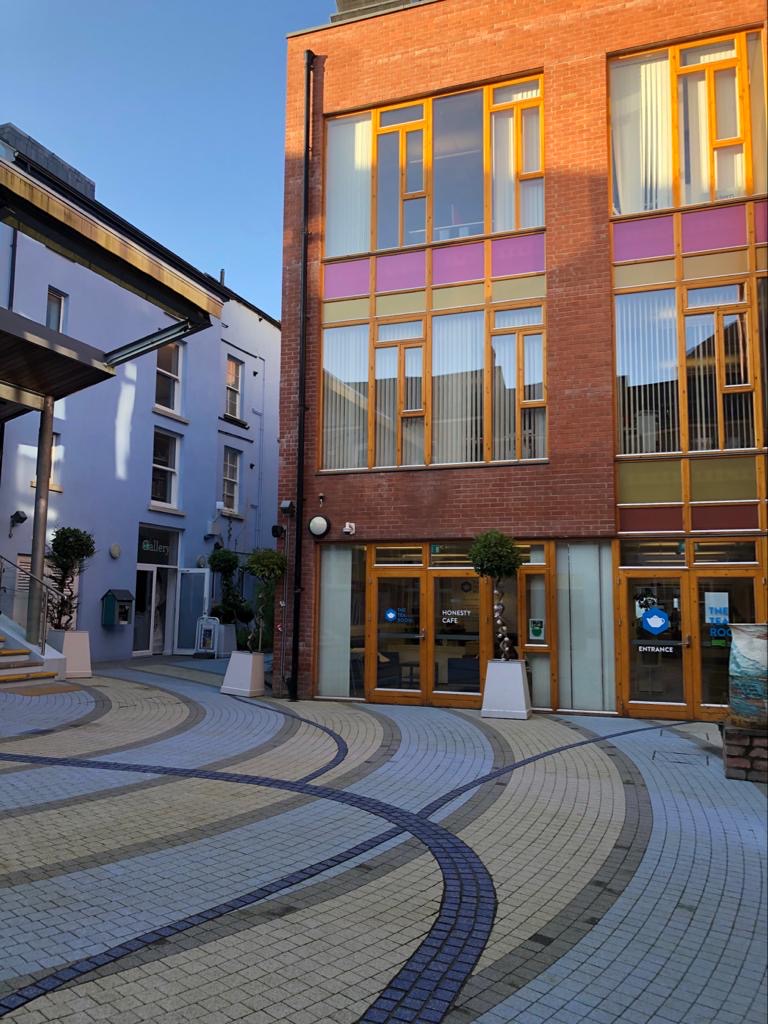
An alternative shot looking out from the amphitheater into the windows of the Honest cafe at the Holywell Trust.

Design a site like this with WordPress.com
Get started