The Walls of Derry

Memory is rarely simple or one-dimensional. Rather, it is multi-layered and informed by various historical and ideological lenses. Similarly, the experience of people in Derry has been framed by the existence of walls, which have characterized the long-standing conflict between Catholic nationalists and Protestant unionists throughout Northern Ireland. The city’s first walls were built four hundred years ago to shelter Protestant settlers from the predominately Catholic population of the region, and the fortifications successfully protected residents during the Catholic King James II’s siege in the late 1680s (https://discovernorthernireland.com/17th-Century-City-Walls-Londonderry-Derry-P7097/; https://www.culturenorthernireland.org/features/heritage/siege-derry).
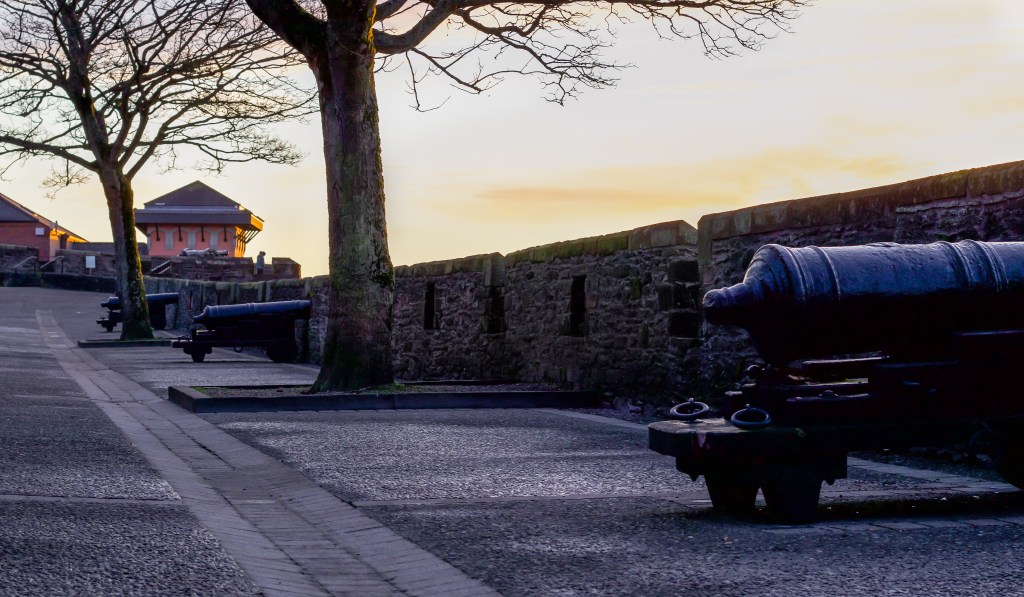
Although the era of vast battles and siege warfare had long since passed by the mid-twentieth century, walls once again hallmarked conflict during the time of the Troubles. The city walls themselves served as lookout points and defensive positions for British security forces against republican opposition, and a so-called “peace wall” was erected in the Protestant Fountain estate in the 1970s (Tower Museum; Derry Peace Wall, plaques on Bishop Street Within).

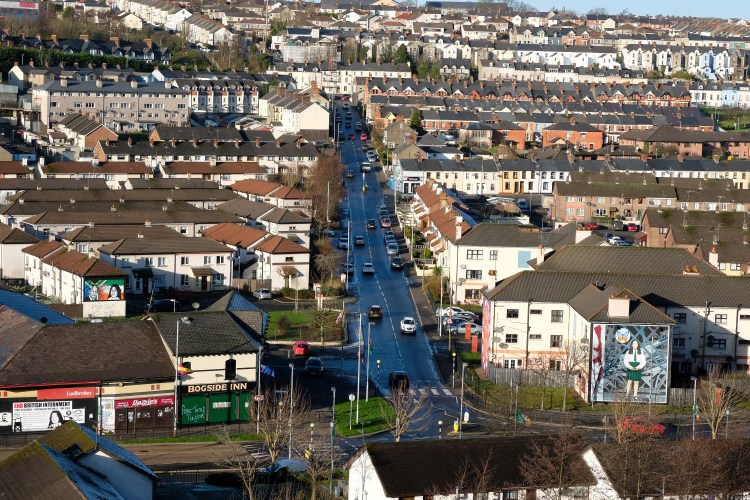
In the years since the signing of the Good Friday Agreement in 1998, walls continue to symbolize political division, as well as efforts to foster peace, through the creation of murals. One such painting, located in the Fountain district, proclaims that Derry loyalists are “still under siege” and recalls the Catholic attack on the city centuries prior with the words “no surrender.” In contrast, a mural in the Bogside area portrays the “Death of Innocence,” depicting fourteen-year-old Annette McGavigan, who was killed during riots in 1971, in remembrance of all child victims of the Troubles (https://www.irishtimes.com/news/mural-for-the-child-victims-of-troubles-1.222763).
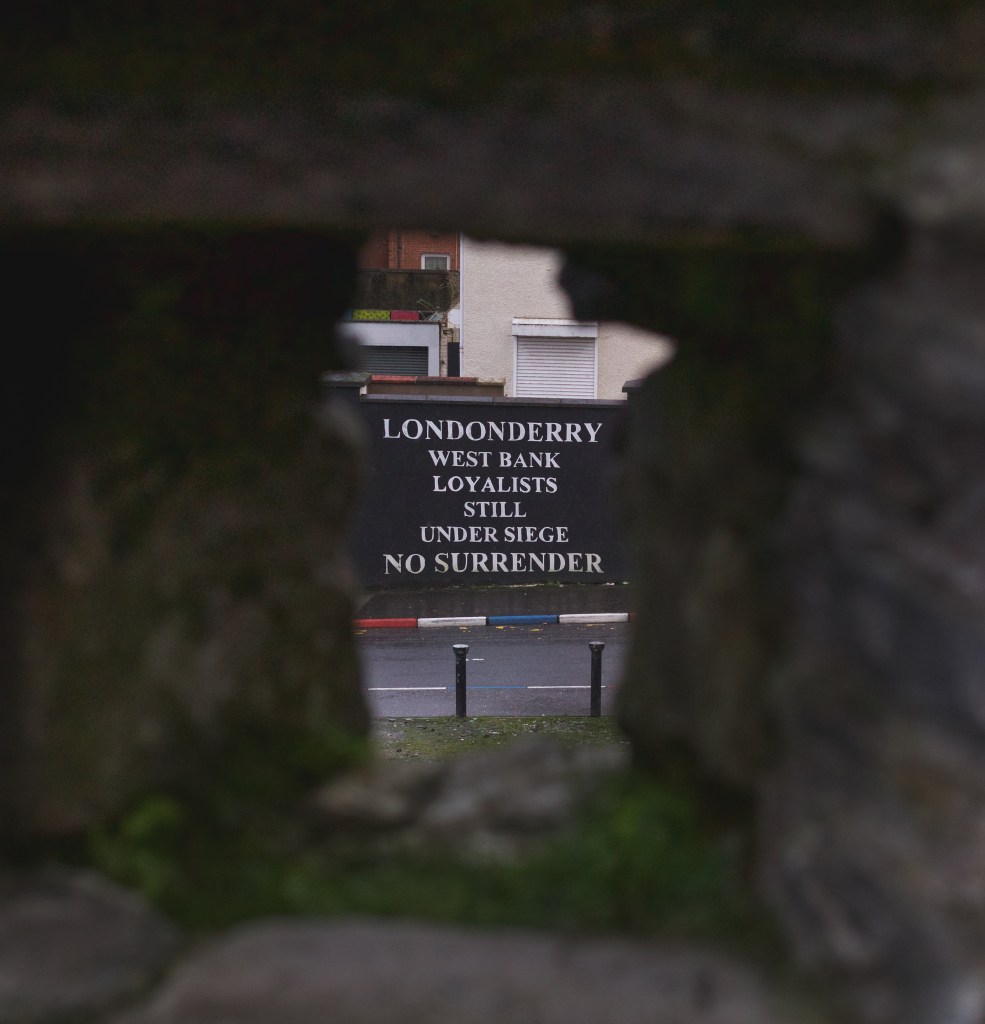
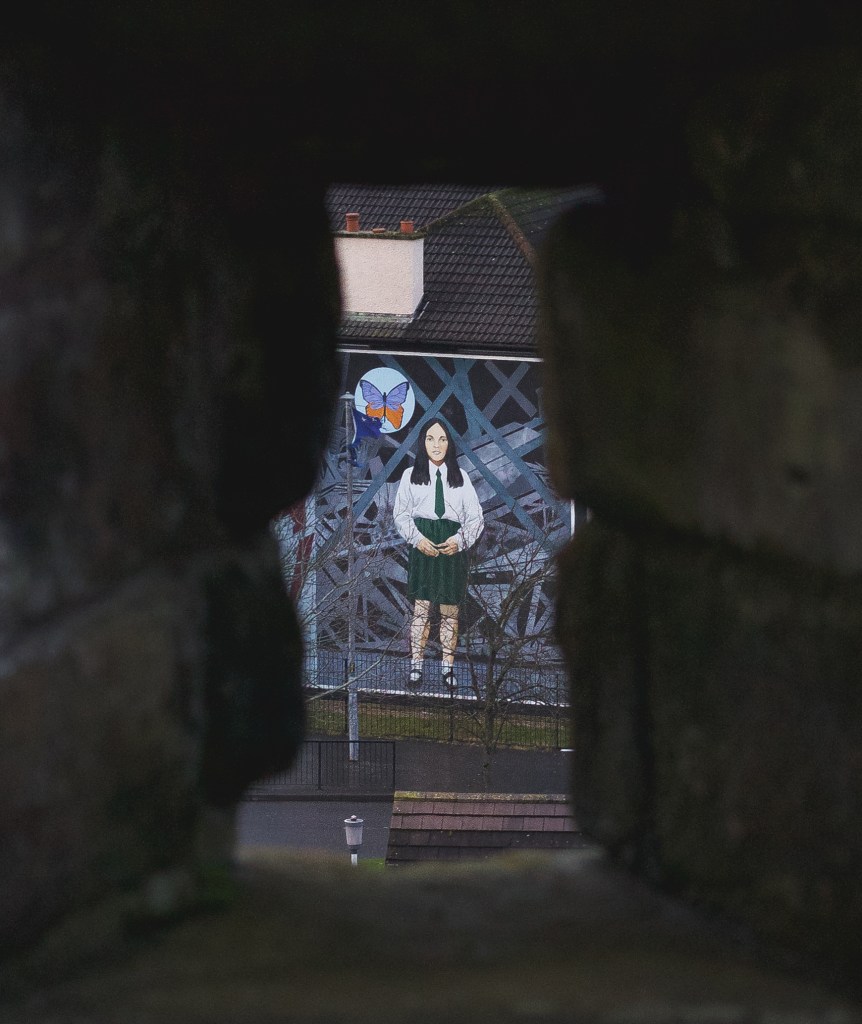
Views of murals from openings in the city walls.

Indeed, walls have transformed from physical barriers to canvasses for self-expression, political discourse, and remembrance, embodying the ever-present legacy of conflict in Derry.
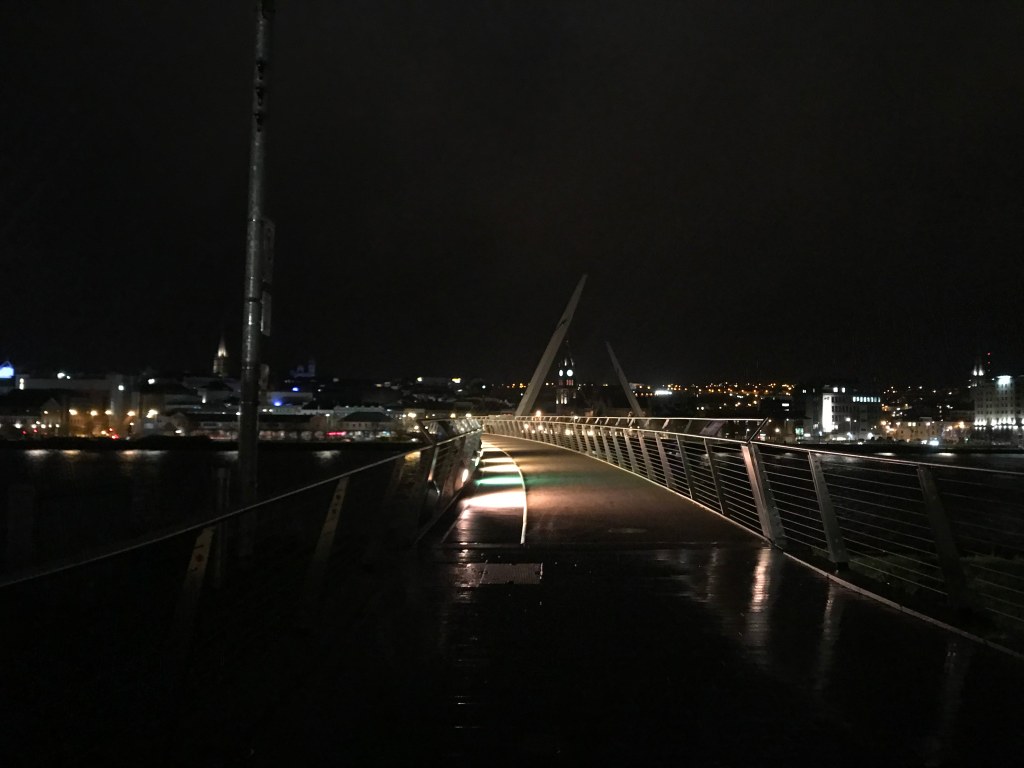
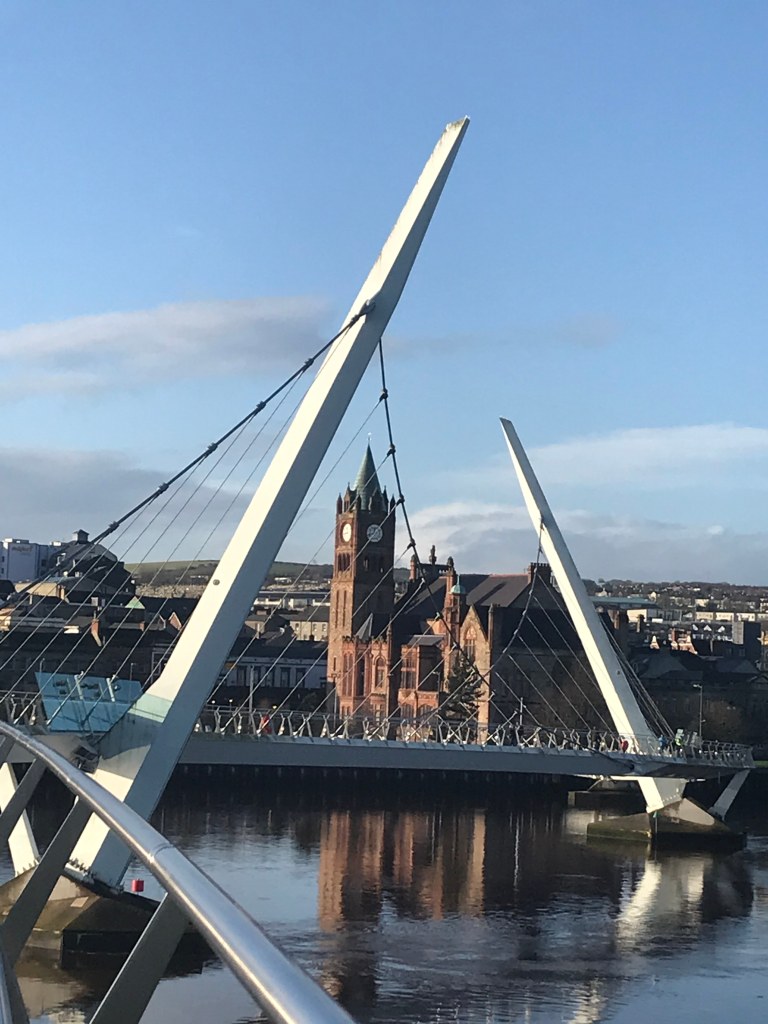
The Derry Peace Bridge

One of the most visited and stunning sights to see in Derry is the Peace Bridge across the River Foyle. This 235-meter piece of art is not only a functional bridge connecting Ebrington Square to Derry, but is also a powerful symbol of peace, healing, and cooperation in a long conflict. The bridge was designed by Wilkinson Eyre Architects in London and the £14 million project was funded by the Regional Development Fund for Peace (http://www.irelands-hidden-gems.com/derry-peace-bridge.html). The bridge opened in 2011 and is designed to look like two arms from opposite sides reaching out towards each other in a sign of peace. This is to symbolize the coming together of the primarily Protestant Waterside and the primarily Catholic Bogside. The conflict between the sides is one that is deep and personal for Derry residents and while it seems like a historical conflict from an outside perspective, is truly relevant and real for those living in Derry and Northern Ireland today.

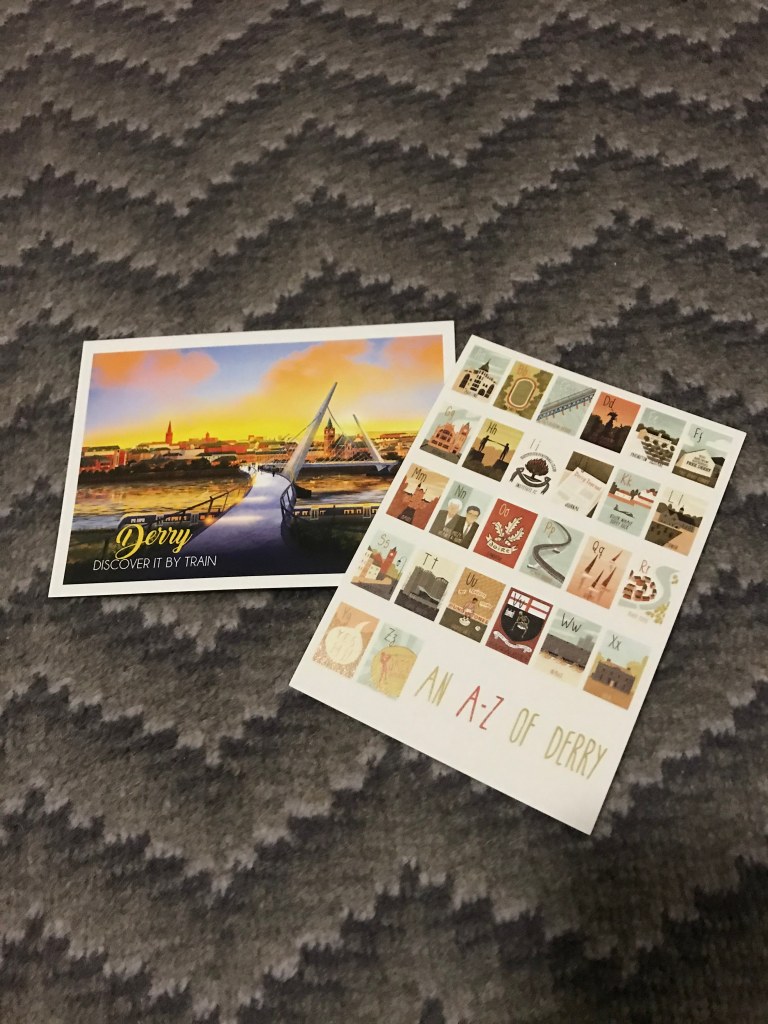
Symbols like the Derry Peace Bridge are important in the illustration of the work the residents are doing to bring peace to their community. The Derry Peace Bridge has quickly become a large part of Derry’s architectural identity, and images of the bridge can be found all over town, like in the postcards shown in this post. Something almost every person in Derry can agree on is the beauty and performance of the bridge. While this bridge has become a symbol in the peace-building community, it is also a functional piece of the city that is widely used and rarely empty. On one side of the bridge is the Guild Hall and on the other is the refurbished Ebrington Square. Formerly used as army barracks, the square is now used for art and music events and features a local craft brewery (https://www.walledcitybrewery.com/).  

While there is still a lot of work to be done in the Derry community regarding conflict resolution and peace building, there is hope in the residents shown through art and architecture like the Derry Peace Bridge. I, for one, am in awe of the rich history and important work done here in the resilient city of Derry.

Saint Columb’s Cathedral

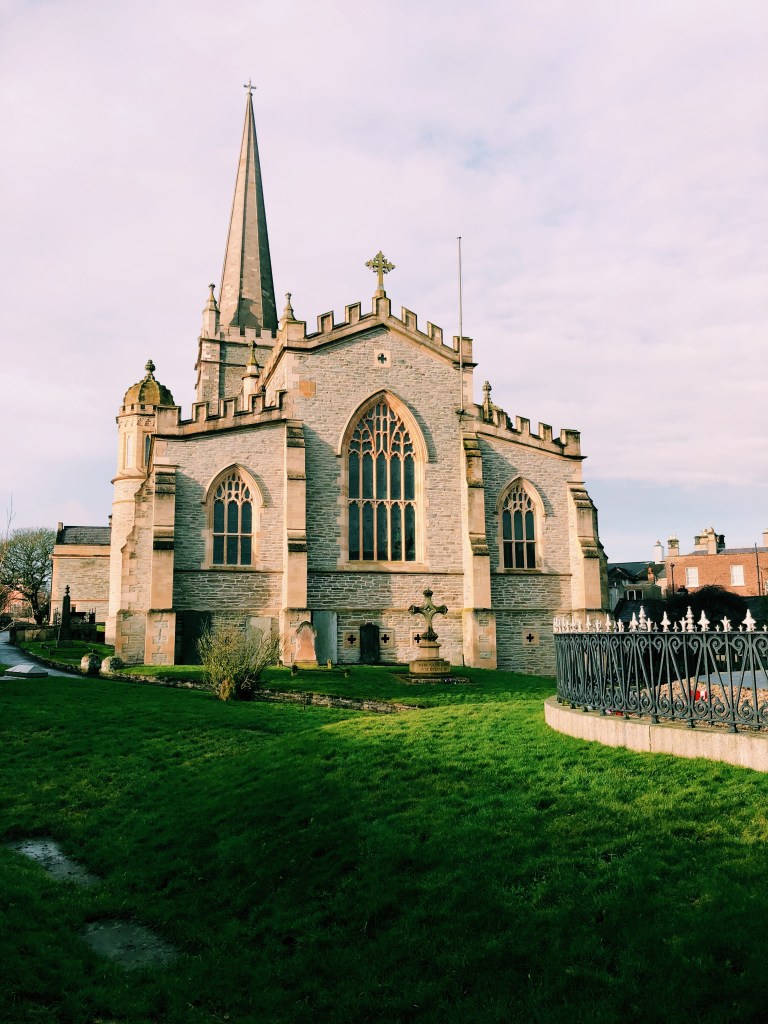
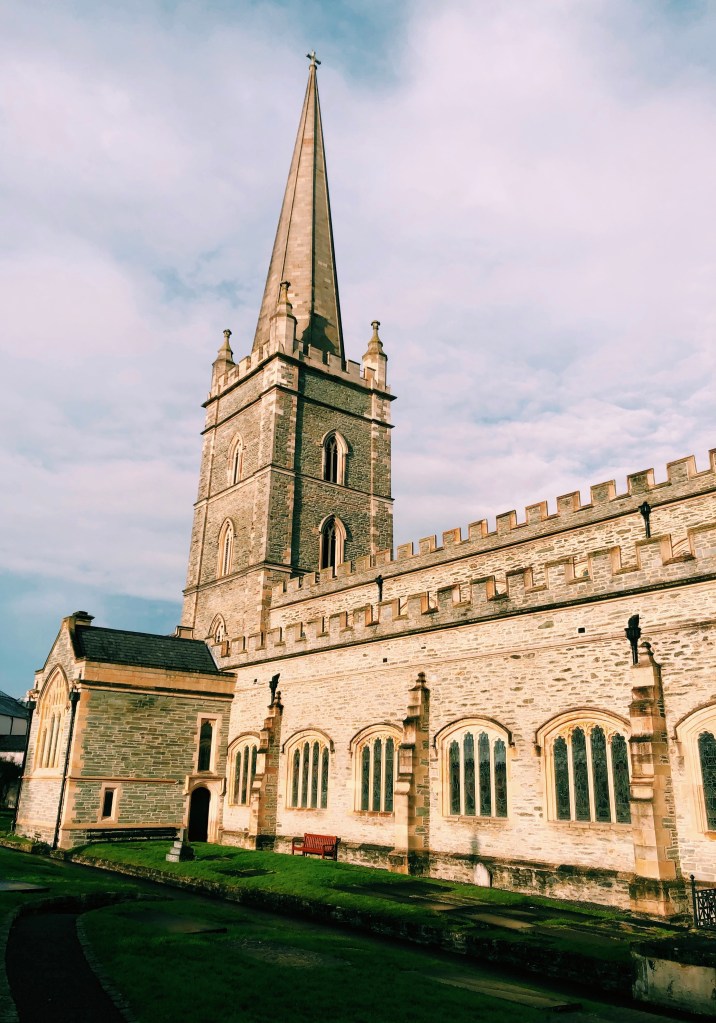
St. Columb’s Cathedral was built between 1628 and 1633 by the Honourable The Irish Society. It was the first cathedral to be built by the Anglican church in the British ‘Isles after the Reformation. It remained in its original structure until 1861, when the entire inside of the cathedral was re-modelled. Later, in 2011, the entire Cathedral was restored. The cathedral contains a large display of artifacts from the Siege of Derry such as old flags and the original keys and locks to the city gates (https://www.stcolumbscathedral.org).

The Cathedral has been known locally and internationally for its work with promoting unity among Christian churches. It has also put in a lot of effort to work towards building bridges within the community of Derry after The Troubles took place. Because Derry has been a city that has been divided between Protestants and Catholics, St. Columb’s has taken steps to encourage the mending of broken bonds between these two groups. This is important to the people of Derry because they are actively working to build peace into the community. To have a church that is trying to help build bridges between the Protestants and Catholics is extremely important in the healing and peace-making process (https://www.stcolumbscathedral.org). 

When another student and I attended a communion service at St. Columb’s we were able to talk with a local from Derry that was actually Catholic but had gone to the Protestant church for that morning’s service. He told us that the former minister of St. Columb’s had just recently passed away so he had come to the service to pay his respects. This was very interesting to us because we thought that Catholics would never attend Protestant churches. However, it was very powerful to see that the church really had been taking huge strides in making the cathedral a place for all to come, no matter their religious background.

Design a site like this with WordPress.com
Get started